- Primary elections are used to select party nominees for general elections — held before November's general election, typically in spring or summer.
- There are three main primary types: closed (party members only), open (any voter), and jungle/top-two (all candidates on one ballot).
- Primary electorates are more ideologically extreme than the general public — creating incentives for candidates to adopt more partisan positions to win primaries.
- Presidential primaries use a delegate-based system — proportional (Democrats) or winner-take-all (many Republican states) — making the delegate math often decisive before all states vote.
Types of Primary Elections
Closed Primary
Only registered party members can vote in their party's primary. If you are registered as a Republican, you vote in the Republican primary; if you are registered as a Democrat, you vote in the Democratic primary. Registered independents cannot vote in either party's primary. States with closed primaries include Florida, Pennsylvania, New York, Arizona (for presidential primaries), Kentucky, and several others. Closed primaries tend to produce more ideologically consistent nominees because only committed partisans vote.
Open Primary
Any registered voter can choose which party's primary to participate in on election day, regardless of their own party registration. You do not have to vote in the same party's primary each cycle. States with open primaries include Michigan, Wisconsin, Virginia, Ohio, and others. Open primaries allow independents to participate and theoretically produce more moderate nominees — since candidates must appeal to voters beyond their party base. Critics say they allow opposing-party voters to "raid" primaries and pick weak nominees.
Semi-Closed Primary
Registered party members vote only in their own party's primary, but unaffiliated independents can choose either party's primary. This is a compromise between closed and open systems. States including Colorado, Iowa, New Hampshire, and New Jersey use variations of semi-closed primaries. The key variable is whether independents must request a party ballot in advance or can decide at the polls.
Top-Two (Jungle) Primary
California (since 2010), Washington state (since 2008), and Alaska (with ranked-choice modifications) use a top-two primary where all candidates regardless of party appear on a single ballot. All registered voters participate, and the top two vote-getters advance to the general election — even if they are both from the same party. The system eliminates the party-specific primary and can produce same-party general elections in heavily partisan districts. In 2016, California's US Senate majority between Kamala Harris and Loretta Sanchez was a Democrat-vs-Democrat general election because no Republican made it out of the jungle primary. Louisiana uses a related system called the "nonpartisan blanket primary."
Primary System by Key State
The Low Turnout Problem
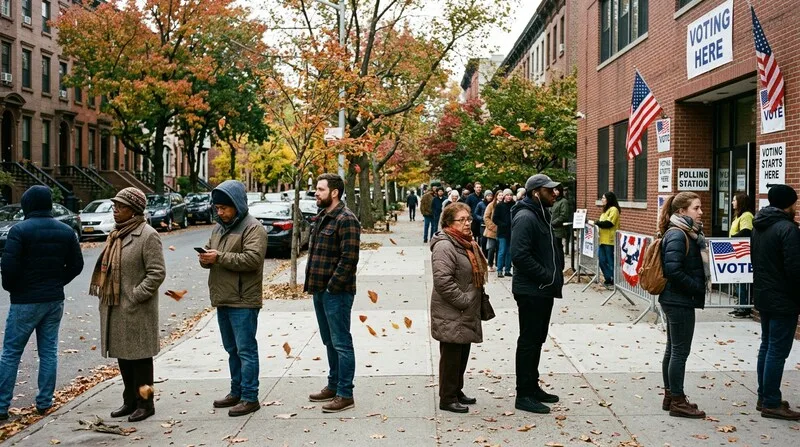
Primary elections suffer from consistently low voter turnout, which has profound consequences for who gets nominated — and who governs.
In a typical competitive House primary, voter turnout ranges from 10% to 20% of registered voters — sometimes lower. Presidential primary turnout in most states is higher but rarely exceeds 30-35% even in competitive cycles. General election turnout in presidential years reaches 55-65% and in midterms 40-50%.
The implications are significant: the voters who show up in primaries are disproportionately older, more ideologically committed, and more partisan than the general electorate. Republicans who vote in Republican primaries skew more conservative than Republican voters overall. Democrats who vote in Democratic primaries skew more progressive than Democratic voters overall.
This structural feature helps explain why Congress often seems out of step with public opinion. A candidate who wins a primary by appealing to the 15% most-engaged partisans then faces a general election against an equally partisan nominee — leaving the moderate majority of voters with a binary choice between two candidates they find extreme.
Reforms aimed at addressing this include ranked-choice voting (which allows voters to rank candidates by preference), open primaries (which admit independents), and top-two primaries (which force the two most popular candidates from all parties into a general election). Evidence on whether these reforms produce more moderate outcomes is mixed and contested.
2026: MAGA vs. Establishment Republican Primaries
The 2026 Republican primary landscape is defined by a recurring tension between Trump-aligned MAGA candidates and more traditional establishment Republicans. In competitive states and districts, this tension has direct electoral consequences.
In 2022, Republican primary voters in Georgia, Pennsylvania, Arizona, and Nevada nominated Trump-endorsed candidates for Senate — Herschel Walker, Mehmet Oz, Blake Masters, and Adam Laxalt — who underperformed in the general election. Georgia and Pennsylvania, both winnable states for Republicans, flipped Democratic in the Senate in part because general-election voters rejected candidates who had won primaries by appealing to the most committed Trump\'s approval.
Heading into 2026, Trump is actively recruiting and endorsing primary candidates in key Senate and House races. The structural question is whether the primary electorate — more MAGA-aligned than the general electorate — will again nominate candidates who are competitive in low-turnout primaries but struggle in higher-turnout general elections.
Democrats have occasionally tried to influence Republican primaries — encouraging Democratic-leaning voters in open primary states to vote for the most extreme Republican candidate in hopes of creating an easier general-election opponent. This strategy backfired in some 2022 cases when the "easy" Republican opponent still won. In 2026, Democrats are debating whether to repeat this tactic in swing House districts.
Frequently Asked Questions
What is a primary election?
A primary is a preliminary election where voters select a party's nominee for a general election. Before primaries, party bosses in closed conventions chose nominees. The direct primary was a Progressive Era reform, spreading after Wisconsin adopted the first statewide direct primary in 1903. Today all 50 states use primaries with varying rules for who can participate.
What is the difference between open and closed primaries?
In a closed primary, only registered party members vote in their party's primary — independents are excluded. In an open primary, any registered voter can choose which party's primary to participate in on election day. Semi-closed primaries let party members vote in their own primary and allow independents to choose either party. The type of primary significantly affects which candidates get nominated.
What is a jungle primary?
A jungle primary (top-two primary) puts all candidates from all parties on one ballot. All registered voters participate and the top two vote-getters advance to the general election — even if both are from the same party. California, Washington, and Louisiana use variations of this system. In California's 2016 Senate race, two Democrats — Kamala Harris and Loretta Sanchez — both advanced, creating a Democrat-vs-Democrat general election.
Why are MAGA vs. establishment Republican primaries important in 2026?
MAGA-aligned candidates who win low-turnout primaries by appealing to committed Trump supporters may be less competitive in higher-turnout general elections where independent and moderate voters decide the outcome. Republicans lost several winnable 2022 Senate seats this way. In 2026, with a challenging Senate map for Republicans, primary dynamics will affect whether Republicans can maintain or expand their majority.