
- Republicans control the trifecta — White House, Senate (53 seats), and House (222 seats) — but their 4-seat House margin is the thinnest for any first-term president in modern history.
- Trump's approval rating of 43% overall and 38% among independents places him below the 40% independent threshold historically associated with wave midterm losses for the governing party.
- The Generic Ballot shows a D+6 environment — Republicans must defend roughly 20 Toss-up or Lean R House districts where their 2024 margins were under 5 points.
- Republican gerrymanders in Texas, Florida and Ohio create a structural floor — but suburban drift in Pennsylvania, Michigan and Arizona continuously erodes margins in the exact districts Republicans need most to hold the majority.
Polling Snapshot — 2026
Party History
Origins and Lincoln (1854–1865): The Republican Party was founded in Ripon, Wisconsin, in 1854 as a direct response to the Kansas-Nebraska Act, which threatened to expand slavery into new western territories. It united anti-slavery Whigs, Free Soilers and Northern Democrats under a single coalition. In just six years, the new party captured the presidency: Abraham Lincoln's election in 1860 triggered Southern secession and four years of Civil War. Lincoln's administration abolished slavery through the 13th Amendment, preserved the Union by force and stamped the Republican Party as the party of federal authority, national unity and moral purpose.
Reconstruction and the Gilded Age (1865–1932): Republicans dominated federal politics for nearly seven decades after the Civil War, controlling the presidency for all but sixteen years between 1860 and 1932. The party oversaw Reconstruction, the industrialization of the American economy and the rise of the railroad trusts. Figures like Ulysses Grant, James Garfield and William McKinley shaped a party closely aligned with big business, high tariffs and industrial expansion. Theodore Roosevelt's progressive wing briefly challenged that orthodoxy with trust-busting and conservation policy, but the Taft-TR split in 1912 handed the presidency to Woodrow Wilson and revealed the tensions between reformers and the party's business establishment.
The Progressive Era and New Deal opposition (1932–1968): The Great Depression shattered Republican dominance. Herbert Hoover's response to the 1929 crash was widely seen as inadequate, and FDR's Democratic landslide of 1932 pushed Republicans into the minority for a generation. The party struggled to define itself against the Democrats' active-government New Deal coalition. Dwight Eisenhower won two terms (1953–1961) as a moderate who largely accepted the New Deal framework, built the interstate highway system and famously warned of the "military-industrial complex" in his farewell address. His administration represented a high-water mark for moderate Republicanism that would gradually erode in the decades that followed.
Nixon's Southern Strategy and the Reagan Revolution (1968–1992): Richard Nixon's "Southern Strategy" deliberately appealed to white Southern voters disaffected by the Civil Rights Act of 1964, beginning the geographic and ideological transformation of the party that would take 30 years to complete. Ronald Reagan's 1980 landslide defined the modern Republican consensus: supply-side tax cuts ("Reaganomics"), deregulation, a massive military buildup, social conservatism and fierce anti-communism. Reagan cut the top marginal tax rate from 70% to 28% and declared that "government is not the solution to our problem; government is the problem." This formula — low taxes, strong military, traditional values — became the party's operating system for the next four decades.
Bush, neoconservatism and the Tea Party (1989–2015): George H.W. Bush managed the Cold War's peaceful conclusion and assembled a coalition for Gulf War I. George W. Bush's presidency was defined by the September 11 response: the invasion of Afghanistan, the Iraq War, the Patriot Act and massive deficit spending that contradicted the party's fiscal rhetoric. The 2008 financial crisis and Obama's election triggered the Tea Party movement — a grassroots revolt against stimulus spending, the Affordable Care Act and what activists characterized as government overreach. The Tea Party elected dozens of hardline conservatives to Congress and established the template of populist anti-establishment conservatism that would mature into MAGA. Paul Ryan's influence during this era pushed the party toward structural entitlement reform and deficit reduction that would later be abandoned under Trump.
The Trump era and MAGA movement (2016–present): Donald Trump's 2016 primary victory stunned the Republican establishment and marked a decisive break from the party's previous consensus on trade, immigration and foreign policy. Trump imposed tariffs on China, launched mass immigration enforcement, withdrew from the Paris Climate Agreement and Trans-Pacific Partnership, and governed through a media-saturated, personality-driven style unlike any predecessor. After a 2020 loss that Trump contested through the courts and ultimately through the January 6 Capitol breach, he rebuilt his political base and won a decisive 2024 comeback — becoming only the second president in American history to win non-consecutive terms. His 2024 victory, sweeping all seven swing states, confirmed the Republican Party's transformation into a nationalist, populist movement organized around Trump's personal coalition rather than traditional conservative ideology.
Current Platform
Economy & Trade
Extending the 2017 Tax Cuts and Jobs Act (TCJA) as the top legislative priority, with additional cuts for domestic manufacturers. Broad tariffs — 10% universal baseline, 25% on Canada and Mexico, 145%+ on China — framed as both revenue tools and negotiating leverage. Deregulation across financial, environmental and labor sectors. Energy dominance as an inflation and growth strategy.
Immigration
Securing the southern border and ending illegal entry as the party's defining priority. Mass deportation program targeting undocumented residents, ending birthright citizenship for children of non-citizens, completing the border wall, eliminating asylum programs the administration considers abused, and reducing overall legal immigration quotas to prioritize American workers.
Healthcare
Repealing and replacing the Affordable Care Act with market-based alternatives, expanding health savings accounts, giving states greater flexibility in Medicaid administration, and opposing Medicare for All as government overreach. The party supports reducing prescription drug costs through deregulation and increased competition rather than government price negotiation.
Energy
"Drill, baby, drill" — maximizing domestic oil, natural gas and coal production on federal lands and offshore. Expanded LNG exports as both economic and geopolitical tools. Withdrawal from the Paris Climate Agreement, rolling back EPA regulations, repealing EV mandates and cutting IRA clean energy subsidies that the party views as market distortion.
National Security
Peace through strength — rebuilding military readiness, increasing defense spending and projecting deterrence against China, Iran and Russia. Demanding NATO allies meet or exceed the 2% GDP defense spending threshold. Transactional approach to Ukraine: seeking a negotiated end to the war rather than open-ended military support. Economic confrontation with China as the party's primary foreign policy focus.
Social Policy
Parental rights in education — school choice via education savings accounts, banning critical race theory in public schools, restricting gender-affirming care for minors. Opposing DEI mandates in federal agencies and universities. Defending Second Amendment gun rights against restrictions. Returning abortion regulation to states post-Dobbs. Traditional values framing across family, marriage and religious liberty policy.
2024 Election Results
The 2024 election was a comprehensive Republican victory. Trump defeated Kamala Harris with 312 electoral votes to Harris's 226, winning all seven swing states — Pennsylvania, Michigan, Wisconsin, Georgia, Arizona, Nevada and North Carolina. His popular vote share of approximately 49.8% represented the strongest Republican presidential performance since George H.W. Bush in 1988, and the first Republican popular vote majority since 2004.
Republicans simultaneously gained four Senate seats to reach a 53-47 majority and retained House control at 222-213. This unified Republican government — the presidency, Senate and House — enables the party to advance major legislation through budget reconciliation without a single Democratic vote. The Senate gain was particularly significant: Republicans flipped seats in Ohio (Bernie Moreno defeating Sherrod Brown), Montana (Tim Sheehy defeating Jon Tester), West Virginia (Jim Justice) and Maryland (Larry Hogan), the last of which was unexpected.
The coalition shift was structurally important. Trump made significant gains among working-class voters of all demographics, particularly Latino men in Texas and Florida, eroding what had been considered a reliable Democratic constituency. His margins improved in nearly every major urban county compared to 2020. Working-class voters without college degrees, Black men under 40 and Hispanic men under 50 all moved meaningfully toward Trump — suggesting a party realignment along class and cultural lines rather than the traditional racial and ethnic sorting that defined 20th-century coalitions.
Key Figures
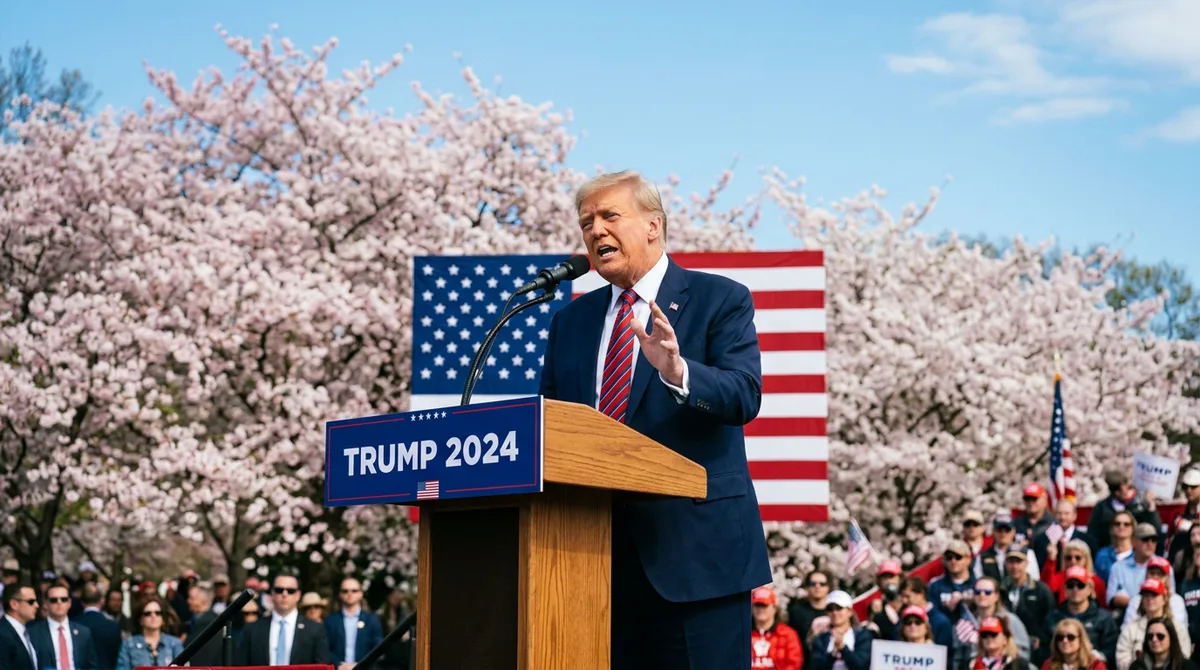
Donald Trump
The dominant force in the Republican Party since 2015. Former real estate developer and television personality, Trump won the presidency in 2016, lost in 2020 and returned in 2024 — only the second president in history to win non-consecutive terms. His second term is defined by aggressive executive action, sweeping tariffs, mass deportation operations and government restructuring through DOGE. He is simultaneously the party's greatest asset and its primary structural risk.
Mike Johnson
Louisiana congressman elevated to Speaker in October 2023 after the unprecedented removal of Kevin McCarthy. Johnson is a staunch evangelical Christian and constitutional lawyer who played a central role in efforts to challenge the 2020 election certification. He manages a narrow 222-213 House majority with significant internal tensions between MAGA hardliners who want more aggressive action and pragmatic members focused on governing and reelection in competitive suburban districts.
JD Vance
Ohio senator and author of the memoir "Hillbilly Elegy," Vance was Trump's chosen running mate for 2024. A Yale Law graduate who grew up in Appalachian poverty, his biography embodied the working-class economic nationalism at the core of MAGA's appeal. As Vice President he is widely regarded as Trump's chosen ideological successor — the figure most likely to carry the MAGA movement forward after Trump's second term concludes.



2026 Republican Strategy
Defending the Trump agenda: Republicans enter 2026 as the governing party with a unified record to defend — and sell. The party's central argument is that Trump's second term is delivering on its core promises: the border is being secured through historic deportation operations, energy production is rising, and the TCJA extension will lock in the 2017 tax cuts permanently. Congressional Republicans will spend much of 2025 and early 2026 passing the so-called "Big Beautiful Bill" through budget reconciliation — a sweeping package combining tax cuts, border wall funding and spending reductions. The party's 2026 message will center on "don't change horses midstream" as Trump's agenda reaches full implementation.
Immigration as a winning issue: Republican strategists view immigration as their strongest hand. The 2024 cycle demonstrated that border security concerns drove significant crossover votes from working-class and Latino communities. The party will continue emphasizing deportation operations, Title 8 enforcement and border security results throughout the 2026 cycle, framing any Democratic criticism as "open borders" advocacy. In competitive Senate races, immigration messaging will be tailored to local concerns — cartel activity in Arizona, labor market competition in Nevada and Georgia — while maintaining the national "secure the border" brand identity that proved decisive in 2024.
Economic messaging against Democratic alternatives: Republicans plan to contrast their economic record — lower regulatory burden, energy cost reduction, manufacturing reshoring via tariffs — against what they frame as Democrats' "tax and spend" agenda. The party will emphasize that Trump's tariffs are renegotiating trade deals that were costing American jobs, while simultaneously attacking Democratic proposals to roll them back as "surrendering to China." On kitchen-table economics, Republicans will point to falling energy prices (due to increased domestic production), wage gains in manufacturing sectors and job creation as evidence the agenda is working. The vulnerability is consumer price inflation from tariffs, which the party will attempt to neutralize by attributing it to Biden-era supply chain disruptions and residual pandemic effects. Full 2026 midterm tracker →
Key Issues for Republicans
2026 Midterm Strategy
Republicans face the structural disadvantage of being the governing party in midterms — the president's party has lost House seats in 37 of the past 40 midterm elections. Their Senate position is considerably stronger: 34 seats are up in 2026, and the vast majority are in states Trump carried in 2024. Republicans are targeting Georgia (Jon Ossoff), New Hampshire (where Jeanne Shaheen is retiring) and potentially Michigan as offensive opportunities that could expand their 53-seat Senate majority. A 55- or 56-seat Senate majority would effectively end the filibuster math as a Democratic tool.
In the House, the calculus is more precarious. Republicans hold 222 seats against a majority threshold of 218, a margin of just four. Democrats need to flip only five seats net to retake the gavel. Republicans must defend a disproportionate number of seats in competitive suburban districts in Pennsylvania, Michigan, Arizona and Georgia — areas where Trump's approval is structurally weaker than his rural and exurban base. The redistricting advantage Republicans hold in most states provides some insulation, but the party acknowledges that a significant economic downturn, driven by tariff-induced inflation or a recession, would accelerate Democratic recruitment and engagement.
The party's main strategic argument will be its governing record: TCJA extension, border security results, energy production increases and deregulation wins. However, Republican operatives privately identify three serious vulnerabilities — the economic impact of broad tariffs raising consumer prices on everyday goods, potential Medicaid cuts under budget reconciliation that could become politically toxic in states with high rural Medicaid enrollment, and the unpopularity of DOGE-driven federal employee reductions in suburban districts surrounding Washington, D.C. Trump's approval below 50% heading into the cycle is the single most important structural indicator, and the party's 2026 fate is tightly correlated with where that number sits in September and October 2026.
Frequently Asked Questions
What does the Republican Party stand for?
The modern Republican Party, reshaped by Donald Trump's MAGA movement, stands for strict immigration enforcement and border security, lower taxes and reduced federal spending, energy dominance (oil, gas, coal), deregulation across industries, opposition to abortion rights, gun rights under the Second Amendment, and an "America First" foreign policy skeptical of multilateral institutions. The party's economic wing advocates for free markets, trade protectionism and opposition to climate regulations that it views as job-killers. Social conservatives prioritize traditional values, religious freedom and opposition to LGBTQ+ policies in schools.
What is Trump's current approval rating?
Donald Trump's approval rating sits at approximately 43% as of May 2026, with disapproval around 52–54%. This puts him below the historical threshold that typically protects a governing party from significant midterm seat losses. His approval has been pressured by tariff-driven consumer price increases and polling showing public opposition to DOGE spending cuts. Track the live numbers on the Trump approval tracker and the Trump tracker page.
How many seats do Republicans need to keep the House in 2026?
The House majority threshold is 218 seats. Republicans currently hold 222 seats, a margin of just four. They can afford to lose no more than four net seats before losing the Speaker's gavel. Historical midterm patterns — the president's party loses seats in 37 of 40 midterms, with an average loss of around 28 seats — make this a genuine vulnerability. Democrats need only five net seat gains to retake the majority.
When was the Republican Party founded?
The Republican Party was founded in 1854 in Ripon, Wisconsin, as an anti-slavery coalition opposed to the expansion of slavery into western territories. It rose to national prominence almost immediately, electing Abraham Lincoln as president in 1860 — just six years after its founding. The GOP nickname (Grand Old Party) dates to 1875. For comparison, see the Democratic Party, founded in 1828.
Who are the leading Republican candidates for 2028?
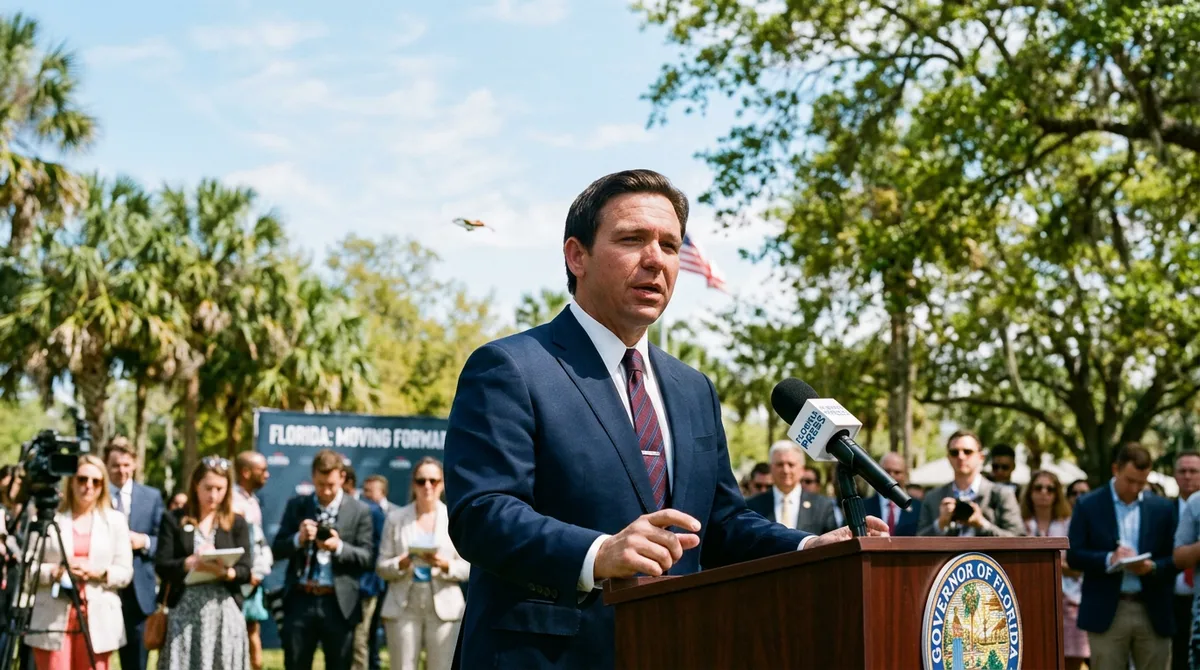
Frequently mentioned names include Vice President JD Vance, Secretary of State Marco Rubio, Florida Governor Ron DeSantis and Virginia Governor Glenn Youngkin. Vance is widely considered the frontrunner given his position as Trump's chosen running mate and alignment with MAGA ideology. Donald Trump has floated a third term, but the 22nd Amendment constitutionally bars it. The Republican field will crystallize after the 2026 midterms. Track GOP polling on the approval tracker.


