JD Vance Favorability Trend (2024–2026)
| Period | Favorable | Unfavorable | Net | Context |
|---|---|---|---|---|
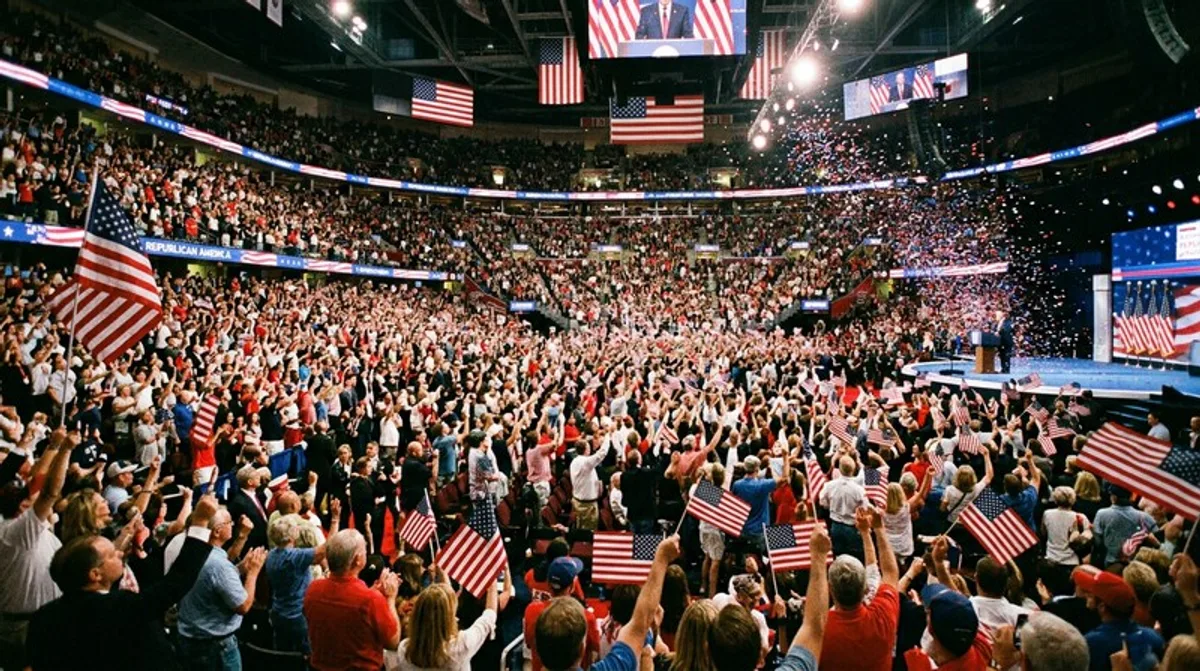
| RNC nomination (Jul 2024) | 41% | 42% | -1 | Post-VP announcement bounce |
| Election (Nov 2024) | 38% | 49% | -11 | VP-elect; early controversies visible |
| Inauguration (Jan 2025) | 40% | 48% | -8 | Initial VP in-office reading |
| Munich Security (Feb 2025) | 35% | 52% | -17 | NATO speech controversy |
| April 2026 | 37% | 51% | -14 | Current reading |
- JD Vance is the Vice President of the United States, inaugurated January 20, 2025 — elected alongside Donald Trump in 2024 after winning Ohio's Senate seat in 2022 by 6 points over Democrat Tim Ryan.
- He is the author of "Hillbilly Elegy" (2016) — a memoir about growing up in Appalachian Ohio that became a bestseller and made him a prominent voice on white working-class poverty, drug addiction, and cultural decline before his political career.
- Vance underwent a dramatic political evolution — from calling Trump "America's Hitler" in 2016 texts to becoming his most loyal Senate defender and ultimate running mate — a transformation critics attribute to political opportunism and Trump's dominance of the Republican Party.
- As Vice President, Vance has taken a notably public and ideological role — representing MAGA positions at international forums like the Munich Security Conference and Davos, signaling a more assertive VP posture than many predecessors.

Biography
James David Vance was born on August 2, 1984, in Middletown, Ohio — a small, post-industrial city in the Rust Belt that would become central to his political identity. His early life was marked by family instability, poverty and his mother’s addiction struggles. Raised largely by his grandmother (“Mamaw”), Vance graduated high school, served two years in the Marine Corps including a tour in Iraq as a public affairs officer, then attended Ohio State University and Yale Law School.
His 2016 memoir “Hillbilly Elegy: A Memoir of a Family and Culture in Crisis” became a surprise national bestseller, praised for illuminating the struggles of the Appalachian white working class that pollsters and commentators had largely ignored. The book was adapted into a Netflix film in 2020.
After Yale Law, Vance moved to San Francisco and worked in venture capital, becoming a principal at Revolution LLC and later at Peter Thiel’s investment firm. He publicly criticized Donald Trump during the 2016 campaign — calling him potentially “America’s Hitler” in a private message that later became public — a position he entirely reversed as he built his political career with Thiel’s financial backing.
Vance won the 2022 Ohio Republican Senate primary after receiving Trump’s endorsement, then won the general election against Democrat Tim Ryan. He served as Ohio’s junior senator from January 2023 until his resignation to become Vice President. Trump selected Vance as his running mate at the 2024 Republican National Convention, making him the youngest vice president in over a century at 40 years old.
Key Policy Positions
Foreign Policy Skepticism
Vance is the administration’s most prominent voice for restraint in foreign commitments. He has questioned NATO burden-sharing, argued for a negotiated end to the Ukraine war, and pushed back on interventionist foreign policy consensus. His Munich Security Conference speech in February 2025 triggered a major transatlantic rift.
Economic Nationalism
Vance supports industrial policy that protects American manufacturing through tariffs and subsidies, opposes free trade agreements he argues hollowed out working-class communities, and backs domestic investment in semiconductors, steel and critical supply chains.
Social Conservatism
Vance holds deeply conservative social positions including opposition to abortion rights (he has called for federal restrictions), traditional family values messaging, skepticism of LGBTQ+ expansions in law, and a critique of progressive cultural institutions including elite universities and mainstream media.
2028 Presidential Outlook
Vance is the universally recognized frontrunner for the 2028 Republican presidential nomination. No sitting vice president with his level of political alignment with the outgoing president has ever failed to win his party’s nomination when seeking it. His challenges are threefold: winning over Republicans skeptical of his foreign policy positions, building credibility with independent voters who currently view him unfavorably, and navigating the inevitable post-Trump party identity questions.
In current polling, Vance leads hypothetical 2028 Republican primary matchups against Ron DeSantis, Glenn Youngkin, and other potential challengers. In general election hypotheticals, he runs 8-12 points behind current leading Democratic names — a gap reflecting both his current net negative favorability and the early nature of such polling.
For 2026, Vance plays a dual role: as a defender of administration policy and as a politician building toward 2028. He has been notably active in the Senate’s legislative agenda, using the Vice President’s tie-breaking vote to advance Republican priorities in close votes. His international profile — particularly controversial in Europe — has become a defining part of his political brand. In July 2026, Vance became the first sitting vice president to appear on Real Time with Bill Maher, fielding unscripted questions on the Iran ceasefire, ICE tactics, and the 2020 election.
Role in 2026 Midterms
As Vice President, Vance is both an asset and a liability for Republican candidates in competitive districts. In Senate battlegrounds, his 74% approval among Republicans makes him a valued surrogate in Republican-leaning states. But his net -14 national favorability means Democratic strategists will tie him to incumbents in competitive House races. The Munich speech controversy and his positions on Ukraine have become standard Democratic attack material in suburban districts with European immigrant communities.
His foreign policy positions poll particularly poorly in swing states with large manufacturing communities where NATO and Ukraine are seen through the lens of national security employment. In Michigan, Ohio, and Pennsylvania — states critical to both Senate math and House competition — his favorability runs 5-8 points below national averages.
Frequently Asked Questions
What did JD Vance write about Trump?
In private messages from 2016 that were later made public, Vance wrote that Trump might be “America’s Hitler” and called himself “a never Trump guy.” He subsequently reversed this position entirely, became one of Trump’s most vocal supporters, received his endorsement for the Ohio Senate primary, and was selected as his running mate in 2024.
Why is Vance controversial in Europe?
Vance’s February 2025 speech at the Munich Security Conference was widely seen in Europe as an attack on democratic values and NATO solidarity. He accused European governments of censoring free speech and questioned whether they shared American values. European leaders reacted with sharp public criticism, and the episode became a flashpoint in US-EU relations.
What is Hillbilly Elegy about?
Hillbilly Elegy (2016) is Vance’s memoir about growing up in working-class Appalachian culture, specifically in Middletown, Ohio. It explores poverty, family dysfunction, addiction, and social mobility through his personal story. The book became a cultural reference point for understanding Trump-voting communities and was on the New York Times bestseller list for 75 weeks.