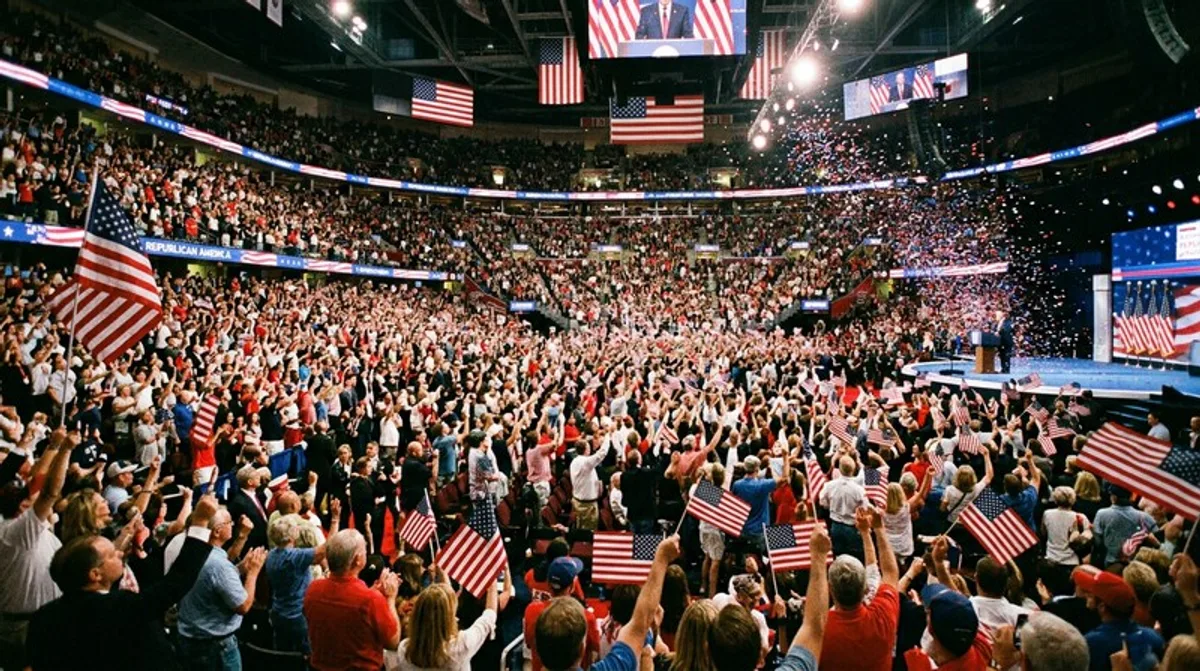
The Two-Party System
America's two-party system is not written into the Constitution — it emerged from the winner-takes-all structure of single-member district elections (known as first-past-the-post). Under this system, a candidate wins a seat simply by receiving more votes than anyone else, with no proportional representation. This structural feature systematically disadvantages third parties, as votes for them rarely translate into seats.
The result is a political landscape dominated by two broadly organized coalitions: the center-left Democratic Party and the center-right to right-wing Republican Party. Both parties contain significant internal factions — the Democrats range from moderate centrists to democratic socialists, while Republicans span establishment conservatives to the MAGA nationalist movement under Donald Trump.
The two parties control virtually all 535 seats in Congress, all 50 governorships combined, and the presidency. Independent Bernie Sanders caucuses with Democrats; Independent Angus King does the same in the Senate. No third-party candidate has won the presidency since the Republican Party itself was a new third party in 1860.
The Major Parties


Third Parties & Independents
Third parties face the structural barrier of winner-takes-all elections. They often influence outcomes as spoilers without winning seats. Here are the main forces outside the two-party duopoly.
Independents
Around 40–45% of Americans identify as independent — more than either party. Most lean toward one party when pressed. Senators Bernie Sanders (VT) and Angus King (ME) are the two independent senators, both caucusing with Democrats.
Libertarian Party
Founded in 1971, the Libertarian Party is the largest third party by registered members. It advocates for minimal government, free markets, civil liberties and non-interventionist foreign policy. Chase Oliver received 0.4% in the 2024 presidential race.
Green Party
The US Greens advocate for environmental policy, social justice and electoral reform including proportional representation. Jill Stein received 0.6% in 2024. The party plays a spoiler role in close states but has never won a federal seat.
Party Standing — 119th Congress
| Party | Senate Seats | House Seats | Governor | White House |
|---|---|---|---|---|
| Republicans | 53 | 222 | 27 | Yes (Trump) |
| Democrats | 47 | 213 | 23 | No |
| Independents | 2 (caucus D) | 0 | 0 | No |
Why Does the US Only Have Two Major Parties?
Duverger's Law — named after French political scientist Maurice Duverger — predicts that winner-takes-all plurality voting systems produce two-party systems. The reason is strategic: voters who prefer a third party candidate often vote for their "lesser evil" major-party choice rather than waste their vote on someone who cannot win.
Additional structural barriers reinforce this dynamic. The Electoral College requires an absolute majority of 270 electoral votes, which is nearly impossible for a third party to achieve. Primary elections force candidates to compete within party structures first. Ballot access laws in many states impose onerous signature requirements on parties that are not already established.
Reform advocates argue for ranked-choice voting (RCV) as a way to allow voters to support third parties without spoiler effects. Maine and Alaska have adopted RCV for federal elections. Several major cities use it for local races.