
What Is a Special Election — and Why Do Analysts Obsess Over Them?
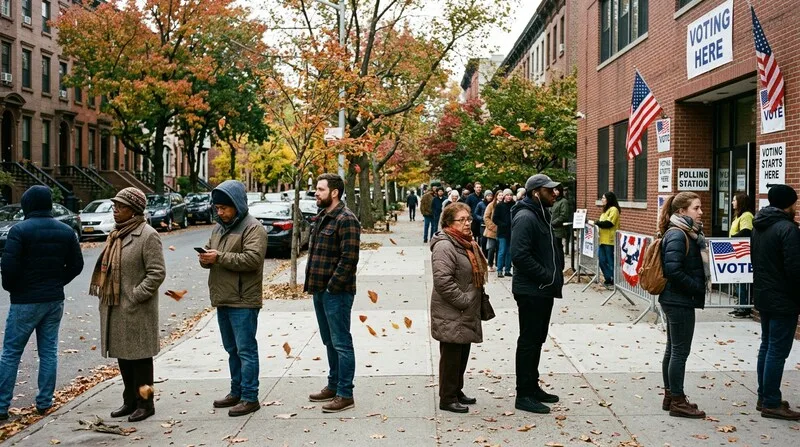
Special elections fill vacant seats between regular election cycles. With lower turnout and off-cycle timing, they often reveal which party's base is more :1rem;max-width:640px;margin:0 0 8px;"> Special elections fill vacant seats between regular election cycles. With lower turnout and off-cycle timing, they often reveal which party's base is more energized — making them early-warning signals for the next wave election.
- Special elections fill congressional and Senate vacancies between regular elections; the timing, rules, and eligible voters differ by state — some have primaries, others use conventions
- Special elections are often early indicators of political environment: unusually strong performance by one party in a special election has historically predicted that party's midterm performance
- Senate vacancies are temporarily filled by gubernatorial appointment in most states; the appointed senator serves until the next general election or special election is held
- When a House vacancy reduces a majority to a razor-thin margin (as in the 220-215 Republican majority), a single special election loss can flip effective control of key votes
How a Special Election Is Triggered
House vacancies: When a House seat becomes vacant (death, resignation, expulsion, or appointment to executive position), the governor of that state must call a special election. There is no time limit in the Constitution — some governors have delayed specials for months — but most are held within 90-180 days.
Senate vacancies: Senate vacancies are more complex. Most states allow governors to appoint temporary replacements. Some states require a special election relatively quickly; others allow the appointee to serve until the next regular election. 17 states require no special election at all — the governor's appointee serves the full remainder of the term.
The bellwether effect: Analysts compare the actual margin in a special election to the district's Cook PVI (Partisan Voting Index). If a Democrat wins a district rated R+8 — or even loses by only 3 points instead of the expected 8 — that "overperformance" suggests a Democratic-favorable national environment. The 2017-2018 special elections, where Democrats consistently outperformed their PVI, correctly predicted the 2018 "blue wave."
Notable Special Elections 2017-2025
| Year | Race | PVI | Result / Signal |
|---|---|---|---|
| 2017 | GA-06 (Ossoff vs. Handel) | R+8 | R won narrowly — D overperformed, predicted 2018 wave |
| 2017 | AL Senate (Jones vs. Moore) | R+28 | Jones (D) won — historic D overperformance |
| 2022 | NY-19 (special) | R+6 | D won — but 2022 midterms showed mixed results |
| 2025 | FL-01 (Gaetz vacancy) | R+33 | R held; D overperformed baseline by ~10pts |
| 2025 | Multiple state specials | Various | D consistently +5 to +15 vs. baseline across states |
What 2025 Specials Signal for 2026
In 2025 special elections, Democrats have consistently outperformed their Cook PVI baseline by significant margins. This pattern — seen across states with very different demographics — mirrors what happened in 2017, which preceded the 2018 wave election where Democrats gained 40 House seats.
Special elections attract motivated base voters — typically those most energized against the party in power. The same enthusiasm gap may not persist into November 2026, when turnout is higher and more casual voters participate. Historical overperformance has not always translated one-for-one into November results.
Several House members from both parties have been appointed to executive positions or announced retirements early in the 119th Congress, creating additional special election opportunities in 2025-26. Each becomes a test of the political environment and a potential pickup opportunity for either party.
Frequently Asked Questions
What is a special election?
A special election fills a vacant elected seat between regular election cycles. Vacancies are triggered by death, resignation, or expulsion. They typically draw lower turnout and are watched closely as indicators of the national political environment.
Why are special elections considered bellwethers?
Because low turnout amplifies motivated base voters, special election results often reflect which party is most energized. Analysts compare results to the district's historical partisan lean (PVI) — significant overperformance by the opposition party signals a wave election may be building.
Who sets the date for a special election?
For House vacancies, the governor of the affected state calls the special election. For Senate vacancies, rules vary by state — some require quick special elections, others allow gubernatorial appointees to serve until the next regular election cycle. 17 states have no special election requirement for Senate vacancies.



Polling Alerts
Get notified the moment new polling data drops — right in your browser, no spam.
