
What Is FOIA? The Freedom of Information Act, How to Use It, and Why It Matters
The Freedom of Information Act gives any person the right to request records from federal government agencies — and agencies must respond withnt-size:1rem;max-width:640px;margin:0;"> The Freedom of Information Act gives any person the right to request records from federal government agencies — and agencies must respond with either the records or a legal justification for withholding them. Enacted in 1966, FOIA has produced some of the most important investigative journalism of the past 60 years. But backlogs, exemptions, and slow compliance have undermined the law's intent.
- Any person — citizen or not — can request federal agency records under FOIA; agencies must respond within 20 business days with the records or a legal justification for withholding them
- FOIA covers executive branch agencies only — it does not apply to Congress, federal courts, the White House staff, or private companies
- In practice, complex requests to major agencies (DOJ, State, FBI) can take months to years due to massive backlogs; requesters can sue in federal court if agencies miss deadlines, but litigation adds further delays
- Nine exemptions allow withholding — Exemption 5 (deliberative process) is the most frequently abused, used broadly to shield internal agency communications that critics argue should be public
What FOIA Covers — and What It Does Not
FOIA applies to "records" held by executive branch agencies of the federal government. "Records" is broadly defined — documents, emails, photographs, videos, databases, and other materials in any format. Agencies must search for and provide all responsive records unless an exemption applies.
What FOIA does not cover:
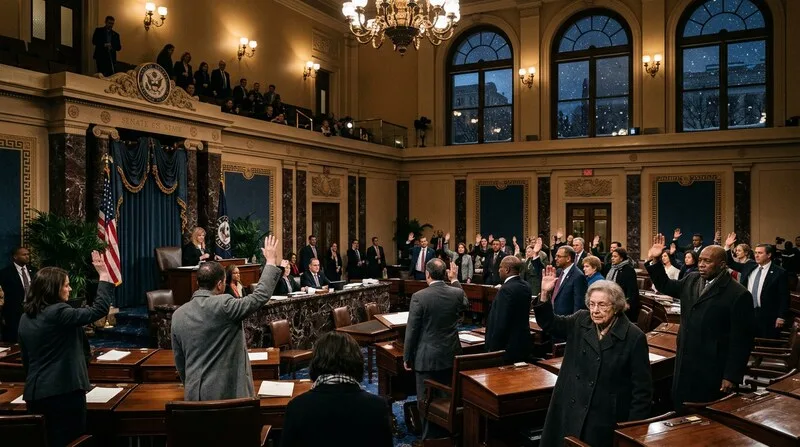
- Congress: The legislative branch is explicitly excluded from FOIA. Congressional records are governed by each chamber's own rules. House and Senate archives are sometimes made available, but there is no legal right of public access equivalent to FOIA.
- The courts: Federal court records are covered by the E-Government Act and court rules, not FOIA. Most federal court documents are publicly available through PACER (Public Access to Court Electronic Records).
- The White House: The Executive Office of the President and the president's immediate personal staff are not subject to FOIA. Presidential records are instead governed by the Presidential Records Act, which makes records available 5 years after the administration ends (12 years for some categories).
- Private companies: FOIA only covers government records. Trade secrets and business information submitted to federal agencies may be protected under Exemption 4.
- State and local governments: Each state has its own open records law. State FOIA equivalents vary enormously in scope, speed, and enforcement.
The Nine Exemptions: When Agencies Can Withhold Records
| Exemption | Category | Common Uses |
|---|---|---|
| 1 | Classified information | Military/intelligence records classified under executive order |
| 2 | Internal personnel rules | Internal agency rules and practices (narrowed by Supreme Court in 2011) |
| 3 | Exempted by statute | CIA operational files, federal tax returns, nuclear weapons data |
| 4 | Trade secrets / commercial info | Business records submitted to agencies (FDA drug applications, etc.) |
| 5 | Deliberative process privilege | Pre-decisional agency memos, draft rules, attorney-client communications |
| 6 | Personal privacy | Medical files, personnel files, anything that would constitute unwarranted privacy invasion |
| 7(A) | Law enforcement (ongoing) | Records that would interfere with active enforcement proceedings |
| 7(C)/(D) | Law enforcement privacy/sources | Identifying confidential informants; unwarranted privacy invasion |
| 8 | Financial institution supervision | Bank examination reports |
| 9 | Geological data | Oil well data (rarely invoked) |
Exemption 5 (deliberative process) is the most frequently abused, according to government transparency advocates. Agencies apply it broadly to withhold almost any internal communication. The 2016 FOIA Improvement Act required agencies to consider a "foreseeable harm" standard — they cannot withhold records under Exemption 5 unless disclosure would foreseeably harm an interest the exemption protects — but implementation has been uneven.
How to File a FOIA Request: A Practical Guide
Filing a FOIA request requires no special legal knowledge. The steps:
- Identify the right agency. FOIA requests go to the specific agency that would hold the records you want. A request to the FBI about a specific case goes to the FBI's FOIA office; a request about a federal contract goes to the contracting agency. FOIA.gov lists every federal agency's FOIA portal.
- Be specific. Describe the records you want as precisely as possible — dates, names, subject matter, document type. Vague requests produce vague responses or claims that no records were found. Narrow requests are processed faster.
- Submit online or by mail. Most agencies have online submission portals. Some still require mailed requests. Include your contact information.
- Request fee waivers if applicable. Agencies can charge search, duplication, and review fees. Journalists and non-profit organizations qualify for reduced fees. Members of the public can request the first 2 hours of search time and 100 pages free.
- Appeal if denied. If records are withheld under an exemption, you can administratively appeal to the agency's FOIA appeals office. If still denied, you can sue in federal district court.
Tools like MuckRock.com allow users to file and track FOIA requests to multiple agencies and share responses publicly. The Department of Justice's Office of Information Policy tracks government-wide FOIA compliance statistics.
Frequently Asked Questions
What records have been released through FOIA?
FOIA has produced some of the most consequential records in American political history. Key releases include: CIA MK-Ultra mind control program documents (1977); FBI files on civil rights leaders including Martin Luther King Jr.; Nixon-era documents on domestic surveillance programs; Guantanamo interrogation logs; police use-of-force data used to identify patterns of misconduct; and records underlying countless investigative journalism pieces. The FBI's "The Vault" releases historical FOIA records proactively. FOIA-released records have been central to major investigations by ProPublica, the New York Times, Washington Post, and hundreds of local outlets.
What is the difference between FOIA and state sunshine laws?
FOIA covers federal agencies. Every US state has its own public records law — often called a "sunshine law" or open records law — covering state and local government records. State laws vary enormously: some are broader than FOIA (covering legislative records, for example), others are narrower or have more exemptions. Response time requirements range from a few days to 30 days or more. Florida, Texas, and Virginia are generally considered to have strong open records laws; other states have drawn criticism for weak enforcement. State open meetings laws (requiring government bodies to conduct most business in public) are a separate but related category.
Can the Trump administration restrict FOIA access?
The Trump administration has taken actions that transparency advocates argue undermine FOIA in practice, including reducing FOIA staff, increasing use of Exemption 5 to withhold more deliberative documents, and removing some proactive disclosure requirements from agency websites. However, FOIA is a statute — the administration cannot repeal it by executive order. It requires an act of Congress to fundamentally change FOIA. Requesters retain the right to sue agencies that fail to respond or improperly withhold records. In 2025, several agencies significantly increased FOIA backlogs due to staffing reductions, drawing legal challenges from transparency organizations.




Polling Alerts
Get notified the moment new polling data drops — right in your browser, no spam.
