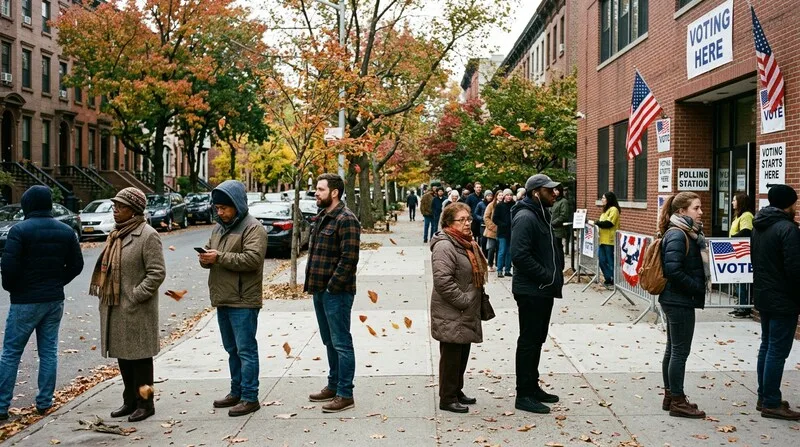
- Three-track strategy: healthcare/Medicaid attack on reconciliation cuts, Trump accountability through oversight, and 2018-coalition turnout mobilization (suburban women, minorities, young voters)
- ActBlue donations tripled post-Jan 2025 inauguration vs. 2023 baseline — DCCC raised $12M vs. NRCC $8M in Q1 2026; small-dollar infrastructure is the fuel
- Candidate recruitment targets three profiles: military veterans (neutralize R national-security attacks), healthcare workers (Medicaid credibility), suburban women — matching the 2018 class that flipped the House
- Medicaid template: every vulnerable R incumbent gets a district-specific research brief linking their vote record to local cut projections — same playbook that worked on pre-existing conditions in 2018
Track One: The Healthcare and Medicaid Attack
Democratic strategists have identified the Republican budget reconciliation process — specifically proposed Medicaid cuts and work requirements — as the single most potent policy attack available in 2026. Polling data across competitive states and districts consistently shows healthcare access as the highest-intensity issue for persuadable voters, particularly in suburban districts. The framing is designed to be concrete and personal: specific dollar amounts, specific numbers of people losing coverage, specific hospital closures in specific congressional districts.
The DCCC and DSCC have developed detailed research briefs connecting every vulnerable Republican incumbent's voting record on healthcare to Medicaid cut projections in their specific districts. The goal is to make every House Republican in a competitive seat answer for whether they supported cuts that will affect X number of their own constituents. This was the template that worked in 2018 on pre-existing conditions, and Democratic strategists believe the Medicaid version is even more powerful because the cuts are concrete rather than hypothetical. See Medicaid Cuts: What the Polling Shows.
Track Two: Trump Accountability and Oversight
The second strategic track involves using every available oversight mechanism — hearings requests, minority reports, information demands, public pressure campaigns — to keep Trump administration controversies in the public conversation. Democratic House minority members have been aggressive in requesting documents and testimony related to DOGE activities, tariff decision-making, and potential conflicts of interest. Senate Democrats have used floor procedures and procedural votes to force Republicans to go on the record on contentious issues.
The accountability track serves a secondary purpose: keeping Democratic base voters engaged between elections. The fundraising and volunteer infrastructure of a competitive party requires sustained attention and energy from supporters who are not natural political obsessives. Regular oversight events — a hearing request, a document release, a vote that puts Republicans on record — provide recurring news hooks that keep the party's donor and volunteer base activated. For broader analysis of the political environment, see Trump Approval Tracker Analysis.
Track Three: Candidate Recruitment and Turnout
The third track is operational: recruiting the right candidates and building the turnout infrastructure. Democrats learned from 2022 that candidate quality matters more than political environment in individual districts — strong candidates in favorable environments win; weak candidates in favorable environments lose. The 2026 recruitment focus is on three profiles: military veterans (who reduce Republican national-security messaging advantages), healthcare professionals (who carry personal credibility on the central attack line), and suburban women with business or civic leadership backgrounds (who speak directly to the target voter).

State-by-State Message Calibration
Democratic strategists are pursuing deliberately calibrated messaging by state context. In union-heavy industrial states — Wisconsin, Michigan, Pennsylvania — the primary message combines healthcare and tariff economic anxiety. In Rust Belt communities where Trump won on economic promise, the 2026 argument is that those promises are now being broken by a trade war that costs jobs and a Medicaid proposal that closes hospitals. In suburban states like Georgia, Maine, and North Carolina, the message is more oriented toward accountability and institutional norms — issues that resonate with persuadable college-educated voters who want professional governance rather than political combat.
2026 Democratic Strategic Priorities by Race Type
The Fundraising Engine: ActBlue and the Donor Surge
Democratic fundraising infrastructure entered 2026 in stronger shape than 2022. Following the January 2025 inauguration, ActBlue reported donation volume approximately triple the equivalent post-election period in 2023. The DSCC and DCCC both reported significant cash-on-hand advantages over their Republican counterparts. Key Senate candidates in competitive races — Jon Ossoff (Georgia), Elissa Slotkin (Michigan), and challengers in Maine, North Carolina, and Wisconsin — all reported strong Q1 2026 fundraising totals. The combination of institutional committee strength and candidate-level fundraising advantage gives Democrats the financial foundation for a credible 2026 offensive. For the detailed fundraising data, see Campaign Finance 2026: Who's Spending What.
Frequently Asked Questions
What is the Democratic Party strategy for winning the 2026 midterms?
Democrats are running a three-track strategy for 2026: a policy attack track centered on Medicaid cuts and healthcare access, a Trump accountability track using congressional oversight, and a turnout mobilization track focused on their 2018 coalition of college-educated suburban women, minorities, and young voters.
What type of candidates are Democrats recruiting for 2026?
Democratic recruitment focuses on three profiles: military veterans (who outperform in swing districts by reducing Republican national-security messaging advantages), healthcare workers and professionals (credible on the Medicaid attack), and suburban women with backgrounds in education, business, or local government. These profiles match the 2018 candidate class that flipped the House.
How has Democratic small-dollar fundraising changed after the 2025 inauguration?
Following the January 2025 inauguration, ActBlue reported a surge in new donor registrations and donation volume approximately triple the equivalent period in 2023. This mirrors the post-2016 ActBlue surge that fueled Democratic fundraising dominance in 2018. The donor base built in early 2025 is available for re-solicitation throughout the 2026 cycle.


