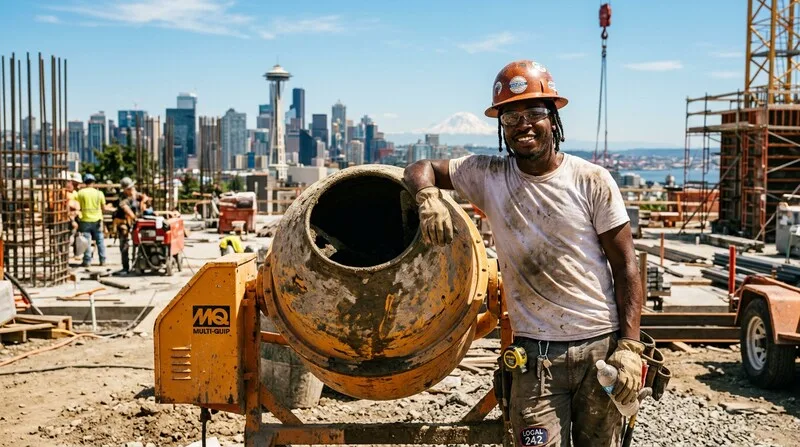
- 62% of Americans fear AI will eliminate more jobs than it creates — concern is highest among non-college workers in manufacturing, transportation, and administrative roles.
- 71% support some federal AI regulation, including 58% of Republicans — making this one of few issues with genuine bipartisan majority support.
- 76% want mandatory human review before AI makes employment decisions; 83% support disclosure requirements when AI affects people's outcomes.
- The voters most worried about AI — non-college Rust Belt workers — are the same demographic that drove the 2016 and 2024 Trump coalitions, creating complex dynamics for both parties.
The Scale of AI Disruption
Artificial intelligence moved from abstract future concern to present-tense reality faster than almost any technology in history. In 2022, most Americans had no direct experience with AI tools. By 2026, generative AI systems handle significant shares of customer service interactions, legal document drafting, marketing content, medical diagnosis assistance, code generation, and an expanding range of white-collar tasks that previously required years of specialized training. Goldman Sachs estimates 300 million jobs globally could be exposed to automation; McKinsey's 2025 analysis suggested 12 million Americans may need to change occupations by 2030 due to AI and automation combined. These projections have reached public consciousness and are shaping both voter anxiety and political positions.
The labor market impact so far is uneven. Manufacturing automation preceded the current AI wave — US factory employment peaked in 1979 at 19.4 million and has declined to approximately 12.9 million despite higher output. The current AI wave adds a new layer by threatening cognitive tasks that displaced manufacturing workers or their children moved into: data entry, claims processing, paralegal work, basic software development. The populations most at risk from the current AI wave overlap significantly with the voters who drove the 2016 and 2024 Trump coalitions — non-college workers in smaller metros — creating complex political dynamics that neither party has fully resolved.
Who Fears AI Most
| Group | Fear AI will eliminate jobs | Support AI regulation | Political lean |
|---|---|---|---|
| Non-college workers, manufacturing | 78% | 74% | R+15 to R+25 |
| Non-college workers, service/retail | 71% | 72% | R+8 to R+15 |
| College-educated, non-tech | 58% | 71% | D+5 to D+15 |
| College-educated, tech industry | 29% | 52% | D+20 to D+30 |
| Age 18-29 | 54% | 66% | D+10 to D+15 |
| Age 50-64 | 69% | 75% | R+5 to R+12 |
| Age 65+ | 63% | 78% | R+8 to R+15 |
The Political Divide on AI Policy
Democratic Position
Federal AI regulation to protect workers; mandatory human review in high-stakes AI decisions (employment, lending, criminal justice); AI liability framework; worker retraining investment; union right to negotiate on AI deployment; disclosure requirements. Some progressive members push for an AI pause or moratorium on automation in certain sectors.
Republican Position
Largely pro-AI innovation; oppose heavy federal regulation as harming US competitiveness vs. China; prefer industry self-regulation and voluntary standards; support AI in military and national security applications; skeptical of EU-style AI Act. Tension: some populist Republicans (Hawley, Rubio) are more supportive of AI worker protections given their blue-collar base.
Cross-Party Opportunity
Disclosure requirements and transparency measures (AI must identify itself) poll 80%+ across both parties. AI in national security with human oversight (82% support). Retraining funds for displaced workers (74% support). The political opportunity is in specific, limited measures rather than comprehensive regulation — both parties' bases support discrete guardrails even when opposing an "AI Act."
AI Anxiety in Battleground Districts
The districts most politically exposed to AI-driven job disruption are concentrated in the Rust Belt and manufacturing-heavy Midwest — exactly the battleground geography of the 2026 midterms. Michigan's 3rd (Grand Rapids, auto supply chain), Wisconsin's 3rd (western Wisconsin manufacturing), Ohio's 13th (Mahoning Valley steel legacy), and Illinois' 17th (Quad Cities manufacturing) all have significant shares of workers in AI-exposed occupations. For Democrats representing these districts, AI policy is not an abstract technology issue but a kitchen-table economy as an issue.
In Michigan, where the UAW represents tens of thousands of workers at facilities deploying increasing levels of automation, the union's 2026 endorsement decisions will partly hinge on which candidates have taken the strongest positions on worker rights during AI transitions. Gretchen Whitmer's administration has engaged directly with automakers on "AI transition agreements" that guarantee worker retraining packages — a policy that polls extremely well in UAW households. Candidates in swing districts from both parties are watching to see if AI worker protection can be a "hockey stick" issue that suddenly mobilizes previously disengaged voters, in the way that abortion mobilized unexpected suburban voters after Dobbs.