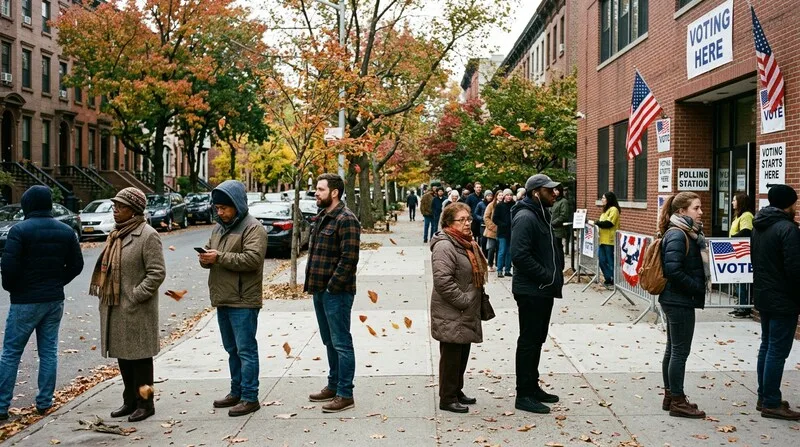
Democrats need a net gain of 6 seats to win the House. The generic ballot at D+6 provides a favorable environment, but execution depends on candidate quality, fundraising, and district-level specifics. Here are the top 20 competitive districts with current polling data and analysis.
- Current House split: 223 R-212 D — Democrats need net +6 for majority (218 seats); the generic ballot at D+6 historically translates to 15-25 Democratic seat gains, well above the threshold.
- Top 5 Republican targets: NY-17 (Lawler, Toss-Up), CA-13 (Duarte, Toss-Up), PA-7 (Mackenzie, Lean R), NJ-7 (Kean, Toss-Up), CO-8 (Evans, Lean R) — all won by R+5 or less in 2024 in D-leaning or EVEN districts.
- Open seat bonus: IN-5 (Spartz retiring) is rated Lean D — a Republican-held seat trending Democratic even without an incumbent drag, a preview of how open-seat retirements amplify Democratic opportunities.
- Districts most exposed to the key 2026 issues (tariff impact on agricultural exports, Medicaid enrollment above national average, large federal employee populations) are disproportionately represented among the 20 most competitive seats on this tracker.
Top 20 Competitive House Districts — April 2026
| District | Incumbent | Party | 2024 Margin | PVI | Current Rating |
|---|---|---|---|---|---|
| NY-17 | Lawler | R | R+2 | D+4 | Toss-Up |
| CA-13 | Duarte | R | R+3 | D+2 | Toss-Up |
| PA-7 | Mackenzie | R | R+4 | EVEN | Lean R |
| NJ-7 | Kean | R | R+2 | D+1 | Toss-Up |
| CO-8 | Evans | R | R+5 | R+2 | Lean R |
| IN-5 | Open (Spartz retiring) | R | R+8 | R+4 | Lean D (open) |
| KS-3 | Davids | D | D+4 | R+3 | Lean D |
| IA-1 | Bohannan | D | D+0.01 | R+4 | Toss-Up |
| ME-2 | Golden | D | D+7 | R+6 | Lean D |
| NE-2 | Open | D lean | D+2 | D+1 | Lean D |
| NY-4 | D’Esposito | R | R+1 | D+5 | Toss-Up |
| AZ-6 | Ciscomani | R | R+3 | R+2 | Lean R |
| VA-10 | Subramanyam | D | D+5 | D+3 | Likely D |
| MI-10 | James | R | R+4 | R+2 | Lean R |
| WA-3 | Perez | D | D+3 | R+1 | Toss-Up |
| TX-34 | Gonzalez | D | D+5 | R+4 | Lean D |
| NC-6 | Manning | D | D+3 | D+1 | Lean D |
| OH-9 | Kaptur | D | D+2 | R+3 | Toss-Up |
| IL-17 | Sorensen | D | D+2 | R+2 | Toss-Up |
| OR-5 | Chavez-DeRemer | R | R+4 | EVEN | Lean R |
PVI = Cook Partisan Voting Index. Ratings reflect Transnational Desk analysis based on polling, historical patterns, and environment. Most races lack public polling as of April 2026; ratings are based on structural factors.

The Democratic Path to Majority
Democrats’ most plausible path to a House majority runs through suburban voters that have trended toward them over multiple cycles. New York’s Hudson Valley and Long Island suburban districts (NY-17, NY-4) are among the most vulnerable Republican seats. New Jersey’s Morris County and western suburbs (NJ-7) have continued the suburban shift that began in 2018. California’s Central Valley (CA-13) is more difficult but reachable in a strong environment.
Key Variables for House Control
Generic Ballot Trajectory
D+6 today but the election is 19 months away. Historical patterns show generic ballot tends to tighten 1-3 points as election day approaches as Republican voters consolidate. A D+3 environment at election day would likely produce a narrow D majority or near-majority. A D+8 would almost certainly flip the House.
Candidate Recruitment
Democrats are recruiting aggressively in suburban districts, with several military veterans, local officials, and business figures entering primaries in competitive seats. The quality of candidates in individual districts can swing a race 3-5 points independently of the national environment — making recruitment a critical variable.
Open Seat Opportunities
Several retirements in competitive districts — including IN-5 (Spartz) and others — remove the incumbency advantage and create genuine pick-up opportunities. Open seats in D-environment cycles historically flip at higher rates than incumbent-defended seats, making retirement tracking a key bellwether.