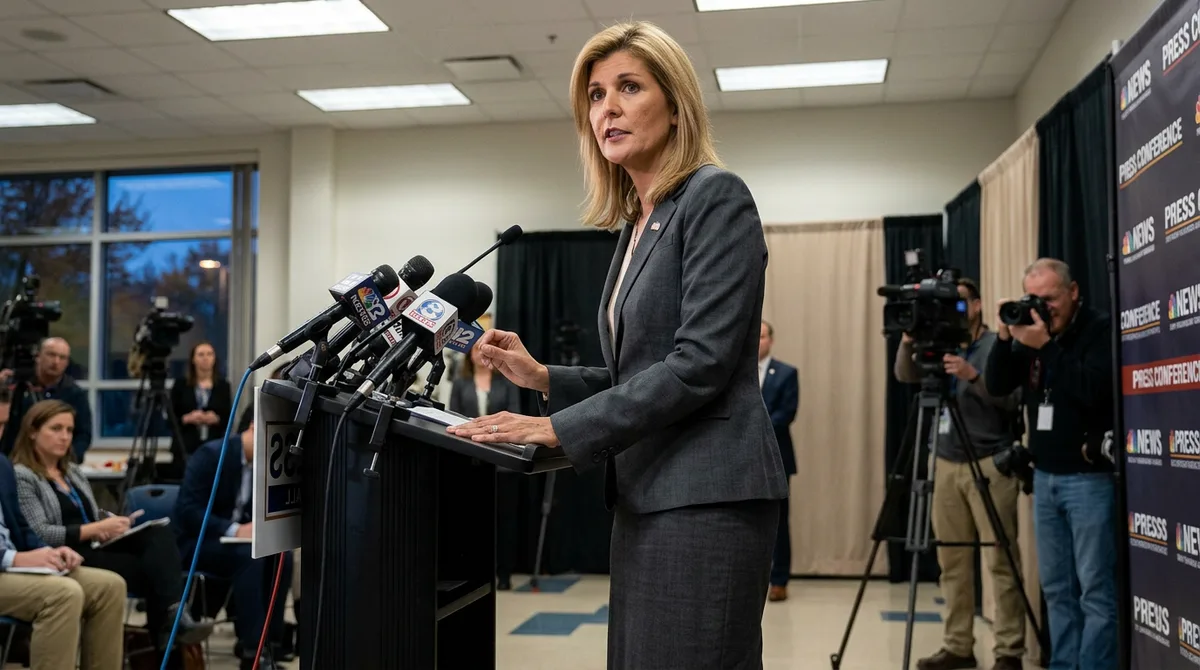
- Haley received 38% of the Republican primary vote in 2024 against a president-equivalent — signaling a substantial anti-Trump wing within the party even after Trump absorbed nearly all institutional endorsements and media infrastructure.
- Her voters were disproportionately college-educated, suburban, over 65, and prioritizing electability — exactly the demographic that has been shifting toward Democrats in general elections, making her the only 2028 Republican with a data-backed electability argument.
- The 2028 strategic challenge: maintain visibility without alienating the MAGA base she'll need to win a primary, while keeping enough contrast to run a "Republicans need to win again" argument if the party suffers significant 2026 losses.
- No candidate in modern Republican history has successfully run "post-MAGA" in the sense of explicitly critiquing Trump's record — 2028 will test whether electoral losses in 2026 create enough party-internal pressure to make that argument viable.
- If Republicans lose the House in 2026, Haley's 2024 primary showing becomes her primary proof of concept: she can attract the suburban college-educated voters that Trump loses, the same voters who swing competitive general elections.
The 2024 Primary: What 38% Means
In modern Republican primary history, receiving 38% of votes against an incumbent president-equivalent is either embarrassing (given how close it is to half the party rejecting the frontrunner) or impressive (given how completely Trump had absorbed the party's institutional infrastructure, media ecosystem, and endorsement network). Political analysts are split on the interpretation, but the practical political significance is clear: there is a substantial wing of the Republican Party that wanted an alternative to Trump and voted for Haley even knowing she had no realistic path to the nomination.
The geographic and demographic composition of Haley's voters matters as much as the number. She overperformed in college-educated suburban areas, among voters over 65, and among those who said electability was their top concern. These are the same voters who have been moving toward Democrats in general elections — which gives Haley a potential electability argument in 2028 that no MAGA-aligned Republican can make. If the Republican Party loses badly in 2026 and 2028 in part because of its Trump-era suburban losses, Haley's 2024 showing becomes her proof of concept.
Post-Primary Navigation: Threading the Needle
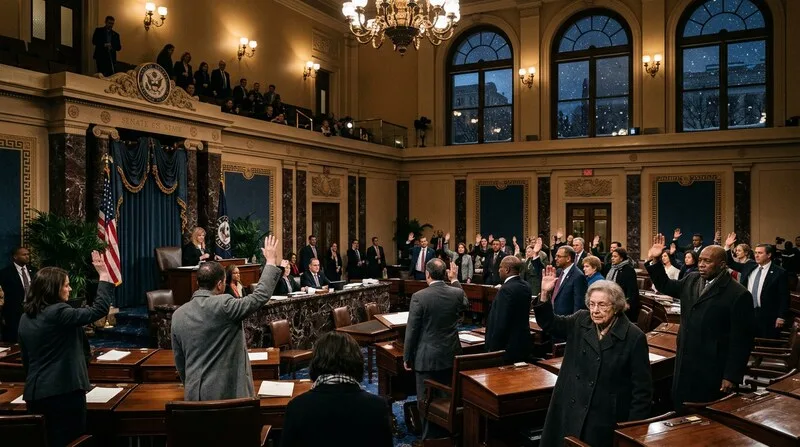
Haley's post-suspension behavior has been a careful navigation between maintaining credibility with the Trump base (which she needs to survive a 2028 Republican primary) and maintaining distance from Trump's most damaging elements (which she needs to appeal to the general election voters her primary coalition represents). After suspending her campaign in March 2024, she notably did not immediately endorse Trump — a pause that drew both criticism from Trump\'s approval and appreciation from her own supporters. She eventually endorsed him, but the gap created a political signal.
Since Trump's second term began, Haley has maintained this balance. She has not become a prominent critic of the administration — which would draw Trump's ire and potentially destroy her within the Republican Party — but she has also not become a prominent administration surrogate or ally. She is keeping distance, staying relevant through speeches and media appearances, and waiting for the political landscape to clarify.
2028 Republican Field Scenarios
| Scenario | 2026 Midterm Result | Trump Role in 2028 | Haley Position |
|---|---|---|---|
| Strong D wave 2026 | D wins House + Senate | Diminished GOP influence | Strengthened — "told you so" electability case |
| Modest D gains 2026 | D wins House narrowly | Moderate influence | Competitive with other 2028 candidates |
| R holds 2026 | R holds both chambers | Strong lame-duck influence | Disadvantaged; MAGA lane stays dominant |
| Trump endorses successor | Any | Kingmaker for chosen successor | Major obstacle if excluded; breakout if endorsed |
Analysis
The Electability Argument
Haley's entire 2028 argument rests on electability: that she can win suburban voters and swing states that Trump-aligned Republicans cannot. If Republicans lose 2026 badly, this argument gains force. If they hold, it loses credibility.
The MAGA Problem
To win a Republican presidential primary, Haley needs MAGA voters — the same voters who backed Trump over her in 2024. Without softening her distance from Trump or building grassroots conservative credibility, she could again win educated suburbs while losing the primary elsewhere.
Historical Parallel
The closest historical parallel is George H.W. Bush after Reagan beat him in 1980 — Bush became VP and then president. But that required a direct political alliance with the winner. Haley's relationship with Trump lacks that level of integration, making the parallel imperfect.