- Stacey Abrams lost the 2018 Georgia governor's race by 1.4 points (54,000 votes) — but the near-miss, combined with voter suppression controversies, launched Fair Fight Action and catalyzed Black voter registration infrastructure across Georgia.
- The voter registration and mobilization infrastructure Abrams built between 2018 and 2020 is credited as a primary factor in Georgia flipping for Biden in 2020 and electing two Democratic senators in January 2021 runoffs.
- Her 2022 gubernatorial rematch against Kemp ended in a larger loss (8 points) — revealing the limits of turnout infrastructure against an incumbent with a strong record and a less favorable national environment.
- Fair Fight Action continues operating in 2026, focusing on voter registration maintenance, poll worker recruitment, and election protection in Georgia — directly relevant to the Ossoff Senate race.
- The Abrams model — building durable voter infrastructure rather than relying on candidate-cycle fundraising — has been replicated by Democratic organizations in Arizona, Nevada, and Wisconsin ahead of 2026.
The 2018 Race: Narrow Loss, Enormous Impact
Stacey Abrams's 2018 Georgia governor's race against Brian Kemp was the closest Georgia gubernatorial race in decades and one of the most politically consequential near-misses in recent American political history. Kemp won by approximately 54,000 votes out of nearly 4 million cast — a margin of 1.4 percentage points. The race was surrounded by significant controversy about voter suppression: Kemp was simultaneously serving as Georgia's Secretary of State while running for governor, overseeing the election in which he was a candidate. Under his watch, hundreds of thousands of voters had been purged from registration rolls in the years leading up to 2018, and polling places in Democratic-leaning areas experienced long lines and equipment failures on election day.
Abrams declined to concede in the traditional sense, acknowledging Kemp's win while stating that democracy had "failed" in Georgia due to voter suppression. This framing — which generated significant controversy and media attention — also became the founding rationale for Fair Fight Action, the voting rights organization she launched immediately after the race. The combination of a near-win, a voter suppression narrative, and immediate organizational follow-through gave Abrams a national platform that a conventional concession would have foreclosed.
Georgia’s Transformation: Abrams’s Lasting Infrastructure
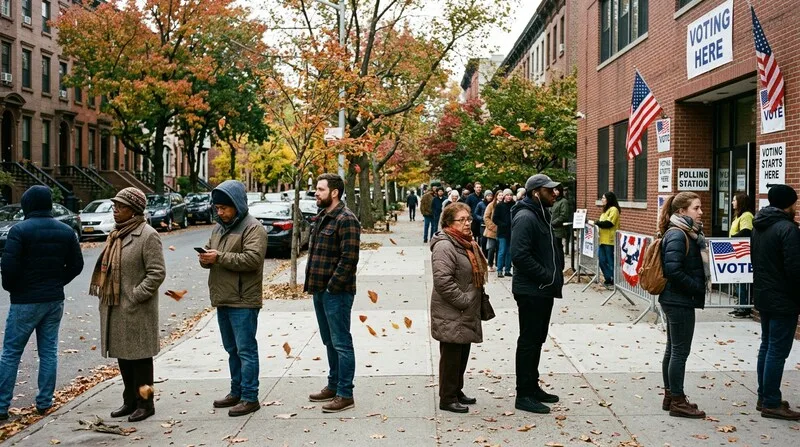
The most significant measure of Abrams's political legacy is not her own electoral record but what happened to Georgia's voter rolls and electoral outcomes in the years following her first run. Between 2018 and 2020, Georgia registered approximately 800,000 new voters, dramatically changing the electorate. In November 2020, Biden won Georgia by 11,779 votes — 0.23% — becoming the first Democrat to win the state's presidential electoral votes since 1992. In January 2021, Raphael Warnock and Jon Ossoff won runoff races for both Georgia Senate seats, giving Democrats the trifecta majority that enabled the Inflation Reduction Act, the Bipartisan Infrastructure Law, and other Biden-era legislation.
The direct causal relationship between Abrams's organizing work and these outcomes is debated among political scientists, but the correlation is striking. Georgia's Democratic margins in Atlanta's suburbs — particularly Gwinnett, Cobb, and DeKalb counties — shifted substantially, driven by both demographic change and increased turnout among registered but infrequent voters. Abrams's organizations targeted exactly these populations.
Georgia’s Democratic Transformation: The Numbers Behind the Shift
| Metric | 2014 (pre-Abrams org.) | 2018 (first Abrams race) | 2020–21 peak | 2022 |
|---|---|---|---|---|
| Registered voters (GA) | ~5.3M | ~6.9M | ~7.6M | ~8.0M |
| Governor D margin | Carter D 45.5% (lost) | Abrams D 48.8% (lost R+1.4) | — | Abrams D 45.9% (lost R+7.5) |
| Presidential D% | Obama 45.5% (2012, lost) | — | Biden 49.5% (won D+0.2) | — |
| US Senate D wins | 0 of 2 seats | 0 | 2 of 2 (Jan 2021 runoffs) | 1 (Warnock held Dec 2022) |
| Atlanta suburb shift | Gwinnett/Cobb: R+8–15 | Gwinnett/Cobb: R+2–5 | Gwinnett/Cobb: D+5–10 | Gwinnett/Cobb: D+5–8 |
| Fair Fight fundraised | — | Founded 2018 post-loss | $100M+ raised | Active in 5+ states |
2022 and After: What the Loss Revealed
The 2022 rematch against Kemp — 8 points, not close — revealed both the limits of Abrams's approach and the strength of a popular Republican incumbent. Kemp had deliberately distanced himself from Trump after the 2020 election, refusing to help overturn Georgia's results. This centrist positioning made him difficult to defeat in a state that still leans slightly Republican in governor's races even as it has become competitive at the presidential and Senate levels. Abrams ran an energetic campaign but could not overcome the environment, the incumbency advantage, or the Kemp-as-reasonable-Republican framing that made him hard to disqualify.
After the loss, Abrams stepped back from electoral politics. She has been writing, speaking, and continuing Fair Fight's work, but has not announced any 2026 electoral plans. Political observers generally expect her to run for office again — the question is when and for what. A Georgia Senate run, a third governor bid in 2030, or a vice-presidential consideration in 2028 are all discussed.
Fair Fight in 2026: What the Organization is Doing Now
Fair Fight Action has expanded beyond Georgia since 2018. In 2026, the organization is operating voter protection programs in Pennsylvania, Wisconsin, Nevada, Arizona, and Georgia — all states central to the Senate majority fight. Its litigation arm has challenged voter roll purges in multiple states, winning several court decisions that restored hundreds of thousands of registrations. Its training program for election protection volunteers is running in parallel with major Democratic turnout operations.
The organization's focus on Black voter turnout in specific metro areas — Atlanta, Detroit, Philadelphia, Milwaukee — targets exactly the voters whose participation determines competitive state margins. If generic ballot polling translates into seat gains, it will partly be because organizations like Fair Fight have maintained registration and turnout infrastructure between elections rather than rebuilding from scratch each cycle. That institutional continuity is Abrams’s most durable contribution to Democratic electoral strategy.
Analysis: The Abrams Model and Its Limits
The Organizing Legacy
Abrams demonstrated that sustained voter registration and mobilization can shift a state's political balance. The "Abrams model" — long-term base-building combined with political candidacy — is now studied by Democrats in other purple and red states.
The Candidate Limitations
Abrams as a candidate underperformed Georgia's Democratic ceiling in both races. The 2022 loss — 8 points vs. Ossoff's competitive Senate race on the same ballot — suggested her polarizing profile made her a weaker candidate in Georgia than in a national primary context.
National vs. State
Abrams polls better nationally than in Georgia. In surveys of Democratic primary voters for 2028 presidential or VP considerations, she consistently places near the top among recognized names. Her future may be national rather than returning to Georgia statewide races.