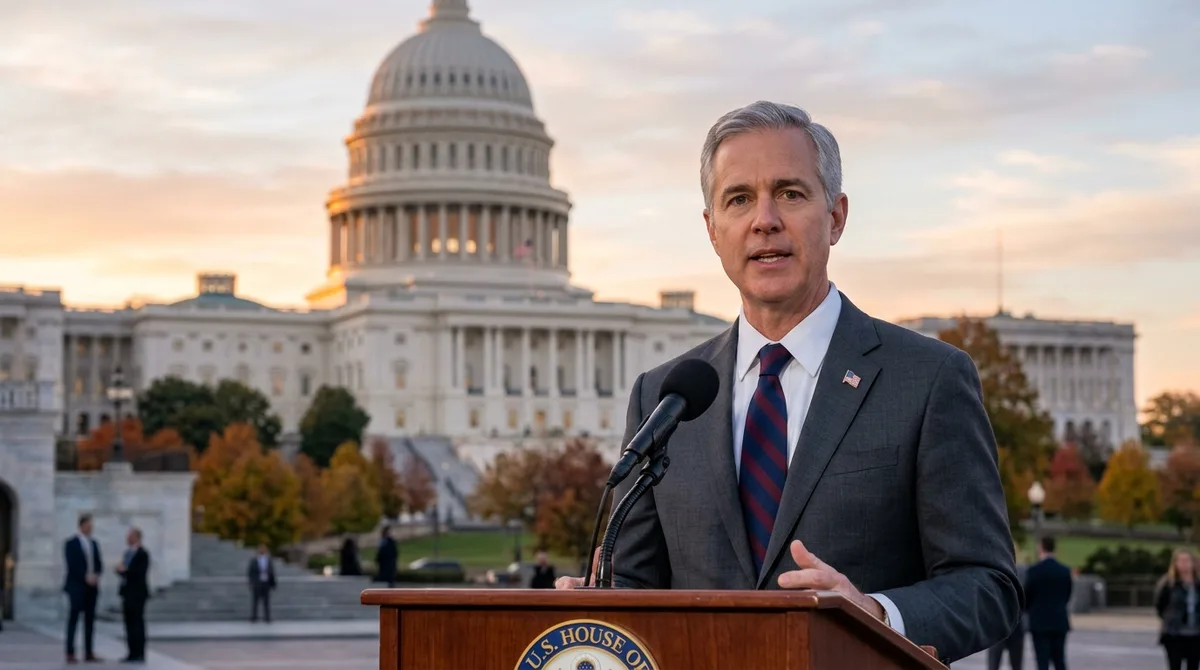
- Mark Warner (D-VA) is a three-term senator from Virginia, re-elected in 2020 by 12 points, and serves as Vice Chair of the Senate Intelligence Committee.
- Virginia has shifted from reliably Republican to solidly Democratic at the statewide level — Warner has been part of that transformation since his 2008 election.
- Warner led the Senate Intelligence Committee's bipartisan investigation into Russian interference in the 2016 election, producing a five-volume, 1,000+ page bipartisan report.
- He is a tech entrepreneur and venture capitalist who built a telecom fortune before entering politics — his background shapes his pragmatic, business-friendly approach to tech regulation and economic policy.
Career Timeline
| Year | Event |
|---|---|
| 1954 | Born Indianapolis, Indiana; raised in Connecticut |
| 1977 | BA George Washington University (political science); Harvard Law School (JD 1980) |
| 1980s | Builds wireless/cellular telephone companies in Southeast US; accumulates significant wealth |
| 1996 | Loses Virginia Senate race to incumbent John Warner (R) by 4.6 points |
| 2001 | Elected Governor of Virginia; defeats Mark Earley (R) by 5 points |
| 2002-2006 | Governs VA; closes major budget deficit through bipartisan tax deal; leaves with 70%+ approval |
| 2008 | Wins Virginia Senate seat (open — John Warner retiring) by 31 points over Jim Gilmore |
| 2011 | Key player in "Gang of Six" bipartisan deficit reduction negotiations |
| 2014 | Narrowly re-elected over Ed Gillespie (R) by 0.8 points — career closest race |
| 2017-2020 | Leads bipartisan Senate Intelligence Committee Russia investigation; produces 5-volume report |
| 2020 | Re-elected by 12 points; becomes Senate Intelligence Committee Chair in 2021 |
| 2026 | Up for fourth Senate term; favored in D+5 Virginia |
Policy Positions
| Issue | Position | Key Action |
|---|---|---|
| Intelligence | Oversight leader | Led bipartisan Russia investigation (5-vol report); Intelligence Committee Ranking Member |
| Technology | Regulation pioneer | RESTRICT Act (TikTok/national security); data privacy legislation; AI governance |
| Fiscal policy | Centrist dealmaker | Gang of Six deficit negotiations 2011; supports balanced revenue+spending approach |
| National security | Russia/China hawk | Consistent Russia sanctions advocate; focused on Chinese intelligence operations vs. US tech |
| Economic growth | Innovation focus | Venture capital background; supports CHIPS Act, semiconductor investment, R&D funding |
| Virginia priorities | Defense/federal workforce | Northern VA defense contractors; federal employee benefits; Arlington/Pentagon corridor |
Tech Entrepreneur to Governor to Senator
Warner's career path is unique: he made his fortune in the 1980s and early 1990s helping build the cellular telephone industry in Virginia and the Southeast, accumulating enough wealth to fund his own political campaigns. His 2001 gubernatorial victory — inherited a large budget deficit, closed it with bipartisan tax increases — left him with some of the highest exit approval ratings of any Virginia governor. His 31-point Senate win in 2008 set a modern record for Virginia Democratic margins.
Russia Investigation: Senate's Definitive Account
The Senate Intelligence Committee's five-volume report on Russian interference in the 2016 election is the most comprehensive public accounting of Russian operations ever produced by a U.S. government body. Warner, as Vice Chairman, maintained bipartisanship with Republican Chairman Richard Burr through enormous political pressure — including Burr's own investigation and resignation. The final report confirmed and expanded Mueller's findings: Russian interference was real, substantial, and the Trump campaign shared internal polling data with a Russian intelligence asset.
On the 2026 Ballot — Favored but Watch 2014 Precedent
Warner IS on the 2026 Senate ballot as a Class 3 senator. Virginia now leans approximately D+5 after a decade of demographic transformation in Northern Virginia suburbs. Warner is expected to be a strong favorite — track the generic ballot for national environment signals. However, his 2014 near-miss against Ed Gillespie — a D+0.8 squeaker in a Republican wave year — serves as a reminder that his seat is not completely safe in adverse national conditions. With the Trump administration's aggressive cuts to the federal workforce (heavily concentrated in Northern Virginia), Warner's race has unusual local dimensions. Monitor Trump approval ratings for how these cuts play politically. See also fellow competitive Democrat Tim Kaine, Virginia's other senator.
Electoral History
| Year | Race | Result | Margin |
|---|---|---|---|
| 2026 | VA Senate re-election (Class 3) | Up for re-election — favored (D+5 VA lean) | Expected D hold |
| 2020 | VA Senate re-election (Class 3) | Warner 56.0% — Daniel Gade (R) 44.0% | D +12 |
| 2014 | VA Senate re-election (Class 3) | Warner 49.1% — Ed Gillespie (R) 48.3% | D +0.8 |
| 2008 | VA Senate (open — John Warner retiring) | Warner 65.1% — Jim Gilmore (R) 34.0% | D +31.1 |
| 2001 | VA Governor | Warner 52.0% — Mark Earley (R) 47.0% | D +5 |
| 1996 | VA Senate (lost to incumbent) | Warner 47.7% — John Warner (R, inc.) 52.3% | R +4.6 |