- Three different vote thresholds govern the Senate: 51 votes for nominations and reconciliation, 60 to end a filibuster, 67 to ratify treaties or convict an impeached official
- Republicans hold 53 seats — enough to confirm nominees and pass reconciliation, but not enough to break a Democratic filibuster on regular legislation without 7 Democratic votes
- The "nuclear option" (2013 for judicial nominees, 2017 for Supreme Court) lowered confirmation thresholds from 60 to 51 — permanently changing the balance of power in appointments
- A 51-vote majority is powerful but constrained: the filibuster effectively requires 60 votes for most legislation, making bipartisan cooperation or reconciliation the only paths for major bills
Vote Thresholds by Action
| Action | Votes Required | Authority |
|---|---|---|
| Pass a reconciliation bill | 51 | Budget Act 1974 |
| Confirm a nomination (executive/judicial) | 51 | Senate Rules (post-nuclear option) |
| Pass regular legislation (final vote) | 51 | Constitution Art. I — but requires cloture first |
| Invoke cloture (end filibuster) | 60 | Senate Rule XXII |
| Override a presidential veto | 67 (2/3) | Constitution Art. I §7 |
| Ratify a treaty | 67 (2/3) | Constitution Art. II §2 |
| Convict an impeached official | 67 (2/3) | Constitution Art. I §3 |
| Propose a constitutional amendment | 67 (2/3) | Constitution Art. V |
| Expel a senator | 67 (2/3) | Constitution Art. I §5 |
What the 53-47 Split Means in 2026
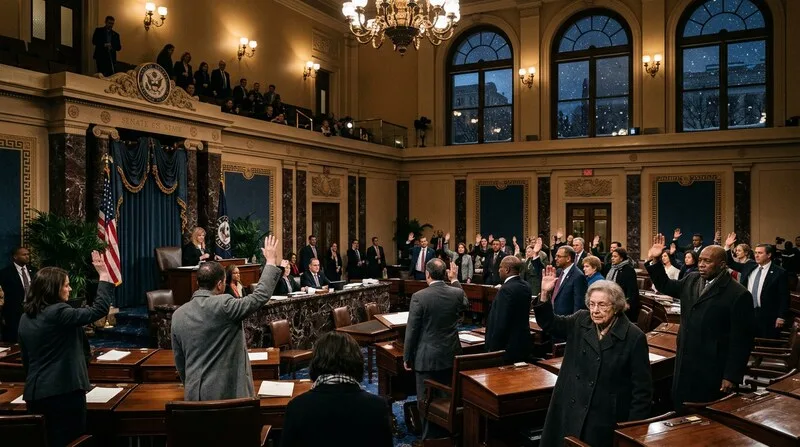
With 53 seats, Republicans can confirm any executive nomination or judicial appointment — including Supreme Court justices — without a single Democratic vote. All nominations now require only 51 votes (simple majority) following the 2013 and 2017 nuclear option changes.
With 47 seats, Democrats can sustain a 41-vote filibuster bloc on most legislation. Republicans cannot reach 60 votes without Democratic cooperation. This forces major non-budget legislation through reconciliation — or not at all.
The "big beautiful bill" — Republicans' 2025-26 domestic agenda including tax cuts and spending changes — is being pushed through budget reconciliation, which needs only 51 votes. Reconciliation is limited to budgetary items under the Byrd Rule, but Republicans have stretched its definition as far as possible.
Frequently Asked Questions
How many votes does the Senate need to pass a bill?
Final passage requires 51 votes, but getting there requires 60 votes to invoke cloture and end debate. For budget reconciliation bills, which bypass cloture, only 51 votes are needed throughout.
What requires a two-thirds vote in the Senate?
Treaty ratification, veto overrides, impeachment conviction, constitutional amendment proposals, and senator expulsion all require 67 votes (two-thirds of 100).
What can a Senate majority leader do unilaterally?
The Majority Leader controls the floor schedule — which bills come up and when. They can block bills by not scheduling them, or file cloture to push toward a vote. But actually passing legislation still requires 60 votes to overcome a filibuster.