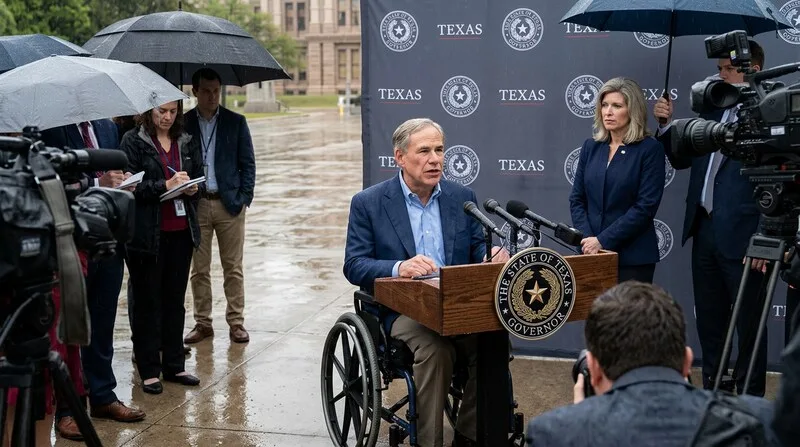
- Kevin Stitt (R) is term-limited — Oklahoma's open governor race will be decided in a state Trump won by 33 points in 2024.
- Oklahoma is rated Safe Republican — no Democrat has won an Oklahoma governor's race since Brad Henry in 2006.
- Oklahoma's Native American population (17.4% of residents) — the largest proportion of any state — creates unique tribal sovereignty governance issues that the governor's office manages through state-tribal compacts.
- Oklahoma's oil and gas industry dominates the economy and the political class — energy policy (severance taxes, drilling regulations, pipeline rights) is the central issue in every Oklahoma governor's race.
Oklahoma is rated Safe Republican. Stitt won re-election in 2022 by 14.5 points even against a well-funded opponent who had switched parties to run against him. Trump won the state by 33 points in 2024. Oklahoma has not elected a Democratic governor since 2006 and there is no realistic path for Democrats in 2026. Full governor overview →
2022 Result — Stitt vs. Hofmeister
2022 Oklahoma governor result. Stitt defeated Joy Hofmeister by 14.5 points. Hofmeister, who had served as Republican state schools superintendent before switching parties to run against Stitt, was considered the best-positioned Democratic candidate in years. The still-decisive result confirmed Oklahoma's deep-red status.

Key Facts — Oklahoma Governor 2026
Race Analysis
Oklahoma's Deep-Red Status
Oklahoma has undergone one of the most dramatic political transformations of any state. The state had a tradition of voting Democratic in presidential elections through the 1960s and electing Democratic governors into the 2000s. But Oklahoma is now one of the most reliably Republican states in the country, with Trump winning by 33 points in 2024 — among his largest state margins outside Wyoming and West Virginia. The transformation reflects rural realignment, the decline of the coal and gas union tradition that supported Democrats, and cultural shifts that have moved white working-class voters decisively into the Republican column. Democrats can still occasionally win local and district races in Oklahoma City and Tulsa, but statewide offices are out of reach.
McGirt and Tribal Sovereignty
The McGirt v. Oklahoma Supreme Court decision (2020) and its extensions to the other Four Civilized Tribes represent the most significant governance transformation in Oklahoma in generations. Roughly half of eastern Oklahoma — including most of Tulsa, the state's second-largest city — is now tribal land for criminal jurisdiction purposes. The decision affects approximately 1.8 million people in 43 counties. Criminal cases involving Native Americans must be prosecuted in federal or tribal courts. Regulatory jurisdiction, environmental rules, and taxing authority are being contested. Stitt has been in sustained conflict with tribal nations over renegotiating gaming compacts and resisting expanded tribal authority. The next governor will navigate these sovereignty conflicts, which have enormous economic implications for eastern Oklahoma's gaming-dependent tribal economies and for state tax revenues.
Energy Economy and Education
Oklahoma's economy is heavily dependent on oil and gas production, making it sensitive to energy price cycles. The state has also become a major wind energy producer — the wind-swept plains of western Oklahoma host some of the country's largest wind farms — creating an energy economy that is simultaneously fossil-fuel dependent and renewable-energy significant. Education funding has been a persistent issue: Oklahoma's teacher pay crisis came to a head in 2018 when teachers staged a nine-day walkout over pay and funding levels, an extraordinary event in a deeply red state. The next governor will manage education funding in a state that ranks near the bottom nationally on per-pupil spending despite genuine public support for improving teacher compensation.
Key Issues
McGirt and its extensions have reshaped criminal jurisdiction, gaming, and regulatory authority over half of Oklahoma. The governor's relationship with tribal nations will define eastern Oklahoma's governance.
Oklahoma's budget and employment are closely tied to oil and gas production. Energy price volatility directly impacts state revenues and the governor's fiscal options.
Oklahoma ranks near the bottom in per-pupil education spending. The 2018 teacher walkout highlighted structural underfunding that has not been fully resolved despite subsequent pay raises.
Oklahoma is a major wind energy producer. Managing the coexistence of fossil fuel and renewable energy industries — and the grid infrastructure to support wind integration — is a growing policy priority.
Tribal gaming compacts represent significant state revenue and tribal economic activity. Stitt's conflict with tribes over compact renegotiation has created legal uncertainty that the next governor must resolve.
Oklahoma has some of the country's worst health outcomes and rural hospital access problems. Medicaid expansion (passed via 2020 voter initiative) has increased coverage but access and provider shortages persist.
Historical Governor Results — Oklahoma
Frequently Asked Questions
Is Kevin Stitt running for governor of Oklahoma in 2026?
Stitt is eligible for a third consecutive term and is expected to run. He won re-election in 2022 by 14.5 points against Joy Hofmeister, who had switched from Republican to Democratic to run against him. The race is rated Safe Republican. Oklahoma has not elected a Democratic governor since 2006 and Trump won the state by 33 points in 2024.
What is the McGirt decision and why does it matter for Oklahoma politics?
The 2020 Supreme Court McGirt decision held that the Muscogee Nation's reservation was never disestablished, making roughly half of eastern Oklahoma (including most of Tulsa) tribal land for criminal jurisdiction. Subsequent decisions extended this to four other tribal nations. The ruling affects criminal prosecution, gaming compacts, environmental regulation, and taxing authority — creating ongoing conflict between the state and tribal governments that defines Oklahoma governance.
What is Kevin Stitt's record as Oklahoma governor?
Stitt enacted significant income tax reductions, signed a near-total abortion polling after Dobbs, and pushed government efficiency reforms. He has been in sustained conflict with Oklahoma's Five Civilized Tribes over the McGirt sovereignty implications, particularly gaming compact renegotiation. His tenure has been marked by conservative social legislation and the ongoing tribal sovereignty legal battles that have no clear resolution.