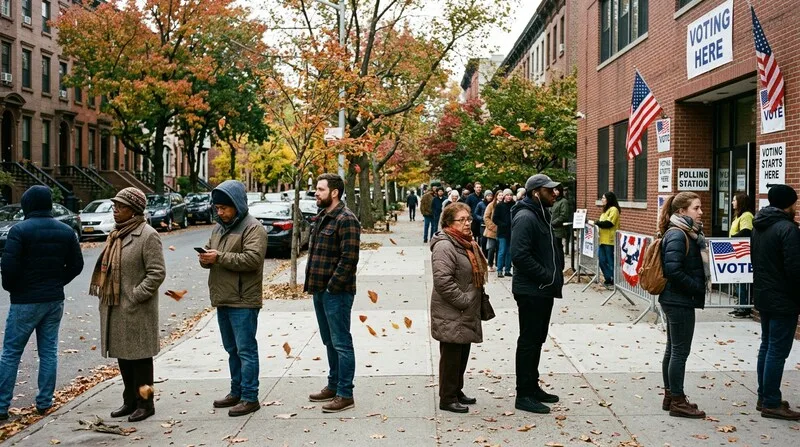
- 28 states passed voting restrictions since 2020; 7 added new photo ID requirements since 2022 — Georgia, Florida, Texas, and Wisconsin enacted the most comprehensive packages
- Strict voter ID laws reduce turnout by average 2-3 percentage points; effect is 3-5 points for Black, Hispanic, and low-income voters who are less likely to possess qualifying ID
- Up to 2M voters in competitive states (WI, GA, AZ, NC) could be affected — in states where 2024 margins were 1-6 points, this impact can determine outcomes
- Courts still deciding multiple pending challenges; polling place closures in affected jurisdictions have been disproportionately in urban areas serving minority communities
State-by-State: Key Restrictions & Legal Status
The eight states most relevant to the 2026 competitive landscape, their key restrictions since 2020, and current legal status. All eight voted for Trump in 2024 by margins of 11 points or less.
| State | Key Restrictions (since 2020) | 2024 Margin | Legal Status | Est. Impact |
|---|---|---|---|---|
| Georgia | Drop box limits, Sunday voting limits, expanded voter challenges, photo ID for mail ballots | Trump +2.2 | Partially upheld; federal court monitor active | ~120,000 voters |
| Wisconsin | Absentee ID tightened, student ID rules changed, polling place reductions | Trump +1.0 | WI Supreme Court (liberal majority) reviewing; some reversed | ~80,000 voters |
| North Carolina | Strict photo ID requirement (new), redistricting redrawn R+ | Trump +3.2 | ID law upheld 4th Cir.; redistricting under review | ~90,000 voters |
| Arizona | Proof of citizenship for federal races (SCOTUS contested), early voting list purge rules | Trump +5.5 | Active SCOTUS/federal litigation; injunctions in place | ~150,000 voters |
| Texas | Photo ID (strict), limited poll hours in large counties, new restrictions on mobile voting | Trump +14.1 | Multiple VRA Section 2 suits ongoing | ~300,000 voters |
| Florida | Third-party reg. restrictions, reduced unsolicited mail ballots, drop box rules | Trump +13.3 | Mostly upheld by 11th Cir.; some provisions blocked | ~200,000 voters |
| Ohio | Reduced early voting, stricter ID, voter roll purges | Trump +11.3 | State courts largely upheld; ACLU suits ongoing | ~100,000 voters |
| Pennsylvania | Date requirement for mail ballots (litigation ongoing), county-level variation | Trump +2.1 | PA Supreme Court split rulings; active litigation | ~60,000 voters |
Impact estimates are approximate and reflect potentially affected voters based on academic turnout studies applied to registration data. Actual effects depend on voter mobilization, legal outcomes, and election-specific factors. Sources: Brennan Center for Justice, National Conference of State Legislatures, state election board data.

What's Being Challenged in Courts
VRA Section 2 Cases
Active Section 2 Voting Rights Act cases in federal courts as of April 2026. Post-Shelby County, Section 2 is the primary federal voting rights enforcement tool, requiring proof of discriminatory effect rather than intent.
Redistricting Challenges
Active redistricting litigation in competitive states. NC, WI, AL, and LA have ongoing map challenges that could affect which party holds competitive seats going into 2026 and beyond.
Citizen ID Laws
Arizona leads six states attempting to require proof of US citizenship to register for federal elections — going beyond the standard attestation. SCOTUS has not definitively resolved this question.
Impact on Competitive Districts: The 2026 Math
The interaction between voting restrictions and swing districts margins creates a potential electoral effect that is small in aggregate but decisive in specific races. Consider the arithmetic:
| District / Race | 2024 Margin | Turnout Effect (est.) | Key Restriction Active? |
|---|---|---|---|
| PA-07 (Wild/Mackenzie area) | R +1.4% | ~8,000 votes | Mail ballot date rule — active litigation |
| WI-03 (Van Orden held) | R +3.2% | ~12,000 votes | Absentee ID — WI Supreme Ct. review |
| NC-06 (competitive open seat) | R +2.1% | ~9,000 votes | Photo ID — active |
| GA-06 (contested) | R +4.8% | ~15,000 votes | Drop box limits + mail ID — upheld |
| AZ-01 (Schweikert) | R +1.7% | ~6,000 votes | Voter roll purge + mail rules |
| OH-09 (Marcy Kaptur area) | R +3.1% | ~11,000 votes | Reduced early voting + ID |
Turnout effect estimates apply academic consensus (2-3pp average suppression) to district registered voter totals. Democratic-leaning voter groups (lower-income, younger, minority) tend to be more affected. These are estimates, not predictions — court rulings, mobilization, and candidate effects all modulate the final result.
Early Voting & Mail Voting Trends
The pandemic normalized mass mail and early voting in 2020. Subsequent Republican-led restrictions have partially reversed this, with significant variation by state. The trend has implications for both turnout modeling and campaign strategy.
Mail Voting Share by Cycle
Source: MIT Election Data Lab. 2020 pandemic spike partially reversed; new restrictions explain some post-2020 drop.
States Restricting Mail Voting (post-2020)
- Georgia: Photo ID now required for absentee ballot request; drop boxes limited to election offices only in most counties
- Florida: Must re-request mail ballot each election cycle; no unsolicited ballot mailings
- Texas: Signature verification tightened; more mail ballots rejected in 2022 (23,000 in Harris County alone)
- Pennsylvania: "Undated" mail ballots at center of litigation — courts split on whether date errors invalidate ballots
- Wisconsin: Clerk drop-off assistance rules changed; some absentee ID procedures tightened