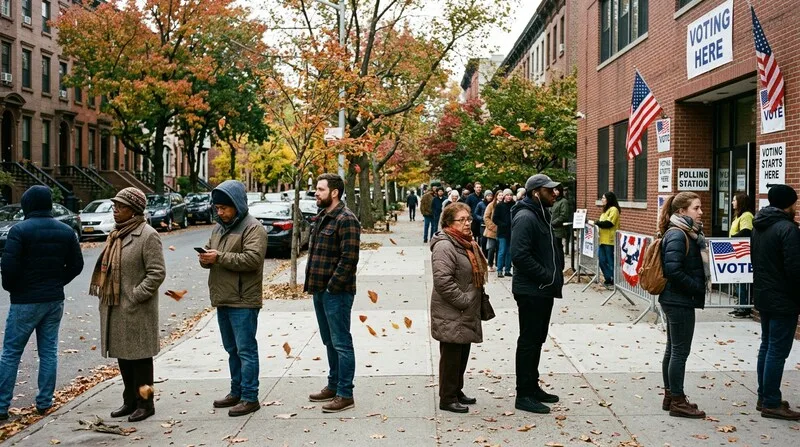
- Black voters delivered 88% Democratic support in 2024 — still dominant, but down from 90–92% in 2020 and 2016, driven primarily by a 10–15 point rightward shift among Black men.
- Black women remain at 94% Democratic support — the most consistently reliable Democratic demographic in the country by any measure.
- A 2-point turnout drop among Black voters in Wayne County (Detroit) alone reduced Harris's Michigan margin by roughly 0.5 points — consequential in a state decided by under 1 point.
- Year-round community organizing is significantly more effective at maintaining Black voter turnout than election-season GOTV sprints — transactional politics without ongoing investment depresses participation.
The Structural Importance of Black Voter Margins
Black voters are not just one demographic in the Democratic coalition — they are the foundational bloc around which the coalition is structured in battleground states. In Georgia, Black voters make up approximately 30% of the electorate; in Michigan, 14%; in Pennsylvania, 11%; in Wisconsin, 5%. Because Black voters in these states vote at 88-94% Democratic margins, even small changes in their turnout rate or their margin produce outsized effects on statewide results. A 2-point drop in Black voters turnout in Wayne County (Detroit) reduced Harris's Michigan margin by roughly 0.5 points — consequential in a state decided by under 1 point in 2024.
Black Voter Turnout: Key Metro Comparisons 2020 vs. 2024
Black Men's Rightward Shift: What the Data Shows
The most widely discussed shift in Black voters behavior in 2024 was among Black men under 50, who showed approximately 10-15 point movement toward Trump compared to 2020 exit polls. This shift is contested — some researchers argue exit polls overstated the swing and VoteCast data shows a more modest 5-7 point movement — but the directional trend is consistent across data sources. The issues driving this shift, according to focus groups and surveys, include economy as an issue about cost of living, skepticism about the Democratic Party's responsiveness to working-class Black male concerns, influence of Black conservative media figures, and Trump's specific outreach messaging on the "plantation politics" narrative.
GOTV Infrastructure: Year-Round vs. Election-Year Organizing
Community organizers consistently distinguish between two models of Black voter engagement: transactional (activating voters only during election seasons with campaign infrastructure) and relational (building year-round trust through policy advocacy, community services, and consistent presence). Georgia's New Georgia Project is the most cited example of successful relational organizing — it registered hundreds of thousands of voters between 2014 and 2020 through consistent community presence rather than election-year surges. The NAACP's battleground state programs have similarly shifted toward year-round models. The question for 2026 is whether the organizations that built 2020's extraordinary turnout have maintained their capacity and relationships through a non-presidential cycle.
Generational Differences and the HBCU Vote
Young Black voters at HBCUs (Historically Black Colleges and Universities) have emerged as a specific organizing target because of their concentration, civic engagement culture, and enthusiasm potential. North Carolina alone has 11 HBCUs, including NC A&T, NCCU, and Shaw — their combined enrollment of 30,000+ students in swing districts represents a meaningful electoral force. However, young Black voters nationally show lower turnout rates than older cohorts and more ideological heterogeneity — some leaning progressive further left than the Democratic Party, others expressing political disengagement. The party's ability to mobilize this cohort with specifically relevant messaging on housing, student debt, and economic opportunity is a critical variable for 2026.
Frequently Asked Questions
Is the Black vote genuinely shifting toward Republicans or is this a one-cycle phenomenon?
Political scientists are divided. Some argue the 2024 shift is consistent with a broader realignment of working-class non-college voters across all racial groups toward Republicans — a trend that has been building since 2012. Others argue the shift was Trump-specific and will partially reverse in a midterm cycle without Trump on the ballot. The evidence from 2022 midterms (which showed minimal Black voter Republican movement) and historical patterns of presidential-to-midterm Democratic recovery suggests the midterm cycle may dampen the shift. However, if Democrats fail to address the material concerns that drove the 2024 movement, the shift could be sustained or deepen in 2028.
What role does church network organizing play in Black voter turnout?
Black churches remain one of the most powerful civic institutions in Black community life, particularly in the South. Churches have historically served as organizing hubs for voter registration, early vote drives, and election day transportation. The "Souls to the Polls" program — organizing church buses to take congregants to early voting after Sunday services — has been a standard feature of Georgia, Florida, and North Carolina Democratic GOTV operations for decades. The decline of church attendance among younger Black Americans means this infrastructure is less effective with under-35 voters, requiring supplementary digital and peer-to-peer organizing strategies.
How does the Georgia Senate race depend on Black voter performance?
Jon Ossoff's path to re-election in Georgia runs almost entirely through Black voter mobilization. Georgia's Black electorate (approximately 30% of voters) voting at 88-92% Democratic at 2020 turnout levels generates a margin that can offset Republican advantages in suburban and rural Georgia. If Black turnout drops 3-4 points below 2020 levels or the margin slips to 85%, Ossoff's deficit in a state Trump won by 12 points becomes nearly insurmountable. Ossoff's campaign is expected to invest more heavily in direct community organizing in Black neighborhoods than any Senate campaign in Georgia history outside of the 2020-2021 runoff cycle.


