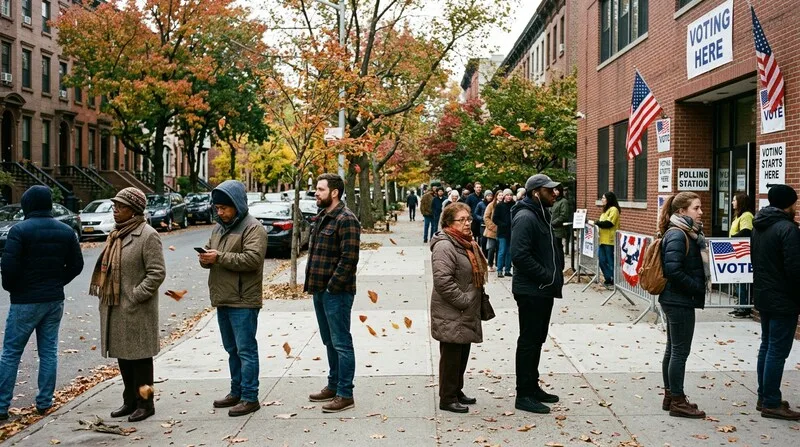
- New voter registration is running +18% ahead of the 2022 midterm pace — a significant indicator of elevated first-time voter engagement.
- Gen Z voters lean Democratic by +28 points in aggregate, one of the most partisan generational alignments in modern American history.
- The intra-generational gender gap is unprecedented: Gen Z women lean D+42 while Gen Z men lean only D+14 — the widest split ever recorded within a single age cohort.
- 2018 youth turnout hit 36% — the highest since 1986 and a key driver of the +41 House seat Democratic wave — making it the benchmark for 2026 projections.
Youth Voter Turnout: Midterm vs. Presidential History
The Gen Z Gender Gap
The most striking development within young voters politics is the extraordinary gender gap. Gen Z women vote D+42 — more Democratic than any other demographic subgroup of comparable size. Gen Z men, by contrast, have narrowed to D+14 and are trending further Republican, driven by cultural backlash on gender issues, online media radicalization pathways, and an economic messaging gap where Republicans have effectively targeted young men with anti-globalist and anti-DEI framing.
The D+28 young voters aggregate is thus a product of two distinct groups moving in opposite directions. For 2026, the turnout composition matters: if young women turn out at higher relative rates — consistent with post-Dobbs abortion motivation — the Democratic margin from Gen Z could exceed expectations. If young men who drifted Republican in 2024 turn out in higher numbers, the aggregate could narrow further. Both dynamics are active simultaneously, making Gen Z one of the most analytically complex groups to model heading into November 2026.

Frequently Asked Questions
How are first-time voter registration numbers tracking compared to 2022?
New voter registration through March 2026 is running approximately 18% ahead of the comparable 2022 midterm pace in early-registration states including Florida, Georgia, and Michigan. This suggests elevated civic engagement but does not automatically translate to turnout — first-time voter midterm dropoff has historically been 35-40%.
How do Gen Z voters 18-27 lean politically?
Gen Z voters lean D+28 in aggregate, but this masks a historic gender gap: Gen Z women are D+42 while Gen Z men have narrowed to D+14. Young men's drift toward Republicans on cultural issues represents the widest intra-generational gender gap in modern polling history, making Gen Z one of the most analytically complex groups to forecast.
What would high first-time voter turnout mean for the House map?
If first-time and young voters approach 2018 midterm levels — when youth turnout hit 36%, its highest since 1986 — the effect on college-heavy competitive districts like NC-13, VA-10, and several California seats would be substantial. Young voter overperformance was a significant factor in the 2018 41-seat Democratic wave, and analysts are watching early voting data for comparable 2026 indicators.