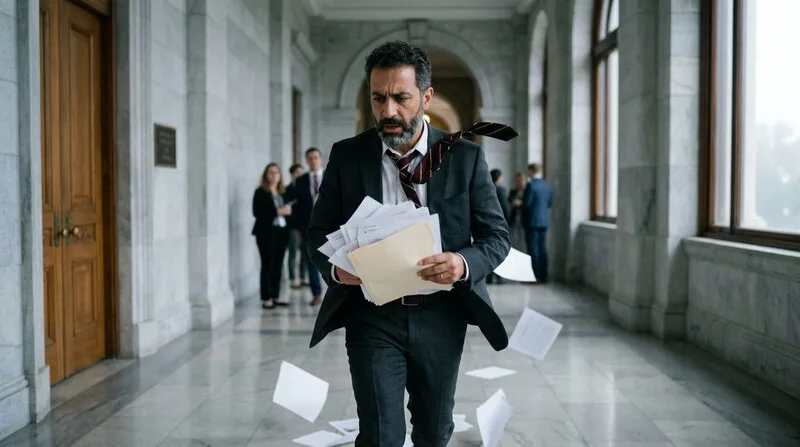
- Media trust has fallen 20+ points since 2003 — the steepest credibility decline of any major U.S. institution in the modern polling era, exceeding Congress, the Supreme Court, and organized religion.
- The decline is asymmetric: Republican trust in mainstream media fell far faster than Democratic trust, creating a partisan bifurcation where the two sides operate from different factual premises on empirical questions.
- The "fake news" frame accelerated a pre-existing trend: Republican trust in legacy media essentially collapsed between 2016 and 2026, dropping to near-zero among the most engaged partisan voters.
- The systemic consequence is epistemic fragmentation: different voter groups now hold genuinely different beliefs about basic empirical facts — not just policy preferences — which makes cross-partisan policy persuasion structurally harder.
Media Trust by Source Type: 2003 vs. 2016 vs. 2026
| Media Source | Trust 2003 | Trust 2016 | Trust 2026 | Change 2003-2026 |
|---|---|---|---|---|
| Newspapers | 51% | 41% | 32% | -19pts |
| TV news broadcasts | 46% | 40% | 27% | -19pts |
| Online news sites | N/A | 26% | 28% | +2pts |
| Local TV news | 55% | 44% | 35% | -20pts |
| Local newspapers | 56% | 48% | 38% | -18pts |
| Social media news | N/A | 18% | 14% | -4pts |
| Podcasts/audio news | N/A | N/A | 22% | New category |
The Trust Collapse: What Drove a 20-Point Decline in Media Credibility
The decline of public media trust polling is one of the most consequential shifts in American political culture over the past two decades. Trust in newspapers has fallen from 51% in 2003 to 32% in 2026, and TV news trust has collapsed from 46% to 27% over the same period. The decline is not uniform: local media generally retains higher trust than national outlets, and specific outlets retain strong trust among their partisan audiences. But the aggregate trend represents a fundamental transformation in how Americans relate to the institutions that have historically served as shared arbiters of political reality. Several forces drove the decline. First, the rise of partisan media ecosystems — Fox News, MSNBC, and eventually hundreds of partisan digital outlets — conditioned audiences to expect media to confirm their worldview, and mainstream outlets that attempted balance were increasingly perceived as biased by whichever side felt their perspective was underrepresented. Second, Republican elite messaging, particularly Trump’s “fake news” framing beginning in 2016, effectively inoculated the Republican base against accepting negative coverage as credible. Third, genuine journalistic failures — the Iraq WMD coverage, the handling of the 2016 email controversies, periodic corrections of major stories — gave all audiences reasons for skepticism. The practical political consequence is that candidates and parties who dominate trusted information channels within their respective partisan ecosystems have significant advantages, while the traditional media referee role that could enforce factual accountability has substantially diminished.
The Partisan Information Ecosystem: Living in Different Factual Realities
The 41-point partisan gap in trust of mainstream media has produced what pollsters describe as a bifurcated information environment in which Democrats and Republicans are not merely reaching different political conclusions from the same facts, but are frequently operating from entirely different factual premises. Polling that asked respondents basic factual questions about recent news events — economic indicators, specific policy provisions, government actions — found significant divergence in stated factual beliefs that correlated strongly with media consumption patterns. Republicans who primarily consumed Fox News and conservative digital media held systematically different beliefs about factual matters than Republicans who consumed a mix of sources. The 61% of Americans who say media has too much political bias is itself a politically charged finding: when the question is unpacked, about 75% of Republicans say media is biased against conservatives, while about 55% of Democrats say media provides too much false balance to conservative positions. These two critiques of media are essentially opposite, and both have some empirical foundation. Local newspapers and local TV news retain meaningfully higher trust across party lines, suggesting that geographic proximity and specific community relevance serve as partial trust anchors even in a polarized environment. The rise of podcast and audio news consumption — now at 22% trust, a new category that barely existed as a political information source before 2015 — reflects audiences seeking sources that feel more authentic and less institutional than traditional broadcast and print outlets.
What This Means for 2026
Media trust dynamics in 2026 mean that political attacks, fact-checks, and negative coverage have sharply diminished effectiveness with partisan audiences who distrust the outlets delivering that coverage. Campaigns that can reach voters through trusted channels within partisan ecosystems — evangelical media for Republicans, progressive podcasts for Democrats — will outperform those relying on traditional earned media. Local press retains more trust than national and should be a priority for earned media strategies.