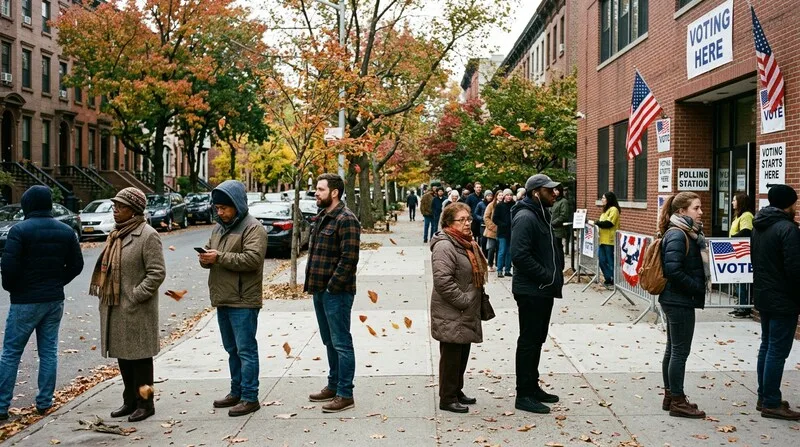
- Native American voters are not a national bloc but a hyper-localized one: in Arizona (330K eligible), Montana (70K+ in an 800K-person state), and New Mexico (200K+, ~10% of electorate), they have materially affected recent statewide races.
- The 2020 Arizona presidential result (Biden +10,457 votes in a state with 330,000 eligible Native voters) and the 2022 Arizona Senate race were both materially shaped by Navajo Nation and Tohono O'odham mobilization.
- Voter registration barriers unique to tribal communities — P.O.-box-only addresses rejected by state systems, 40+ mile distances to registration offices, lack of standard street addresses — depress turnout far below self-reported intent levels.
- Native voters overwhelmingly support Democratic candidates (D+50 to D+70 in most tribal areas), making the variable not persuasion but mobilization — turnout runs 15–25 points below state averages without targeted GOTV investment.
- 2026 organizing by NCAI, Four Directions, and tribal governments is specifically targeting Arizona, Montana, Nevada, and Alaska — four states with competitive Senate or governor races where the Native vote can swing the margin.
The Geographic Concentration: Where Native Votes Matter Most
Unlike most minority voter groups, Native American voters are geographically concentrated in ways that give them outsized impact in specific states. Arizona has roughly 330,000 eligible Native voters spread across the Navajo Nation, the largest reservation in the US, as well as the Hopi, Tohono O'odham, and dozens of other nations. In recent Arizona statewide races decided by margins under 20,000 votes — both the 2020 presidential and 2022 Senate majority math — Native American turnout was a material variable.
New Mexico is the state with the highest proportional Native population, with 200,000+ eligible voters representing roughly 10% of the total electorate. In Montana, 70,000+ eligible Native voters in a state of just 800,000 people have swung Senate majority math in past cycles. Alaska is unique: Alaska Natives represent more than 15% of the total population, and the state's ranked-choice voting system — adopted in 2020 — has changed the strategic calculus around mobilizing every vote in a community.
Native American Voter Registration and Turnout by State
| State | Eligible Voters (est.) | % of State Electorate | 2022 Turnout Rate (est.) | D Lean | Strategic Importance |
|---|---|---|---|---|---|
| Arizona | ~330,000 | ~6% | ~45% | D+38 | Critical — Senate, Governor |
| New Mexico | ~210,000 | ~10% | ~48% | D+42 | High — both Senate seats competitive |
| Montana | ~72,000 | ~8% | ~42% | D+35 | Critical — Senate race |
| Alaska | ~85,000 | ~15% | ~50% | D+28 | High — ranked-choice dynamics |
| Oklahoma | ~220,000 | ~6% | ~38% | D+20 | Moderate — deep-red state |
| North Dakota | ~40,000 | ~6% | ~40% | D+35 | High in Senate races |
Sources: Census Bureau, NCAI (National Congress of American Indians), state election offices. Turnout estimates based on precinct-level analysis and tribal voter files.
The Turnout Barrier Problem: Distance, Address, and ID
Native American voter turnout is structurally suppressed by a cluster of barriers that do not affect other communities in the same way. The most immediate is distance: many reservation residents must drive 50 to 100 miles to reach the nearest polling location. Absentee and mail voting, which would seem to solve this problem, is complicated by the fact that many reservation homes do not have standard residential street addresses — they use PO boxes or route descriptions that many voter registration systems do not accept.
Voter ID laws create additional friction. Some states have accepted tribal ID cards for voting purposes; others have not, or have inconsistently applied acceptance at the polling place level. The 2013 Shelby County v. Holder Supreme Court decision eliminated preclearance requirements for states with histories of voting rights violations, removing a significant legal protection that had applied to states including Arizona and North Dakota. Subsequent litigation has partially restored some protections, but the legal landscape remains contested.
2026 Issues: Land, Water, Sovereignty, and Federal Funding
The Bureau of Indian Affairs and Indian Health Service are subject to DOGE-driven cuts. Tribal governments depend heavily on federal funding for healthcare, education, and infrastructure. Proposed reductions generate direct political mobilization in tribal communities.
Water rights are existential for Southwestern tribes. The Colorado River Compact renegotiations and drought-driven scarcity create acute political stakes for Arizona and New Mexico tribal voters who see federal water management as a survival issue, not an abstraction.
Trump administration rollbacks of National Environmental Policy Act protections and accelerated mineral extraction permitting on and near tribal lands affect sovereignty directly. Some tribes benefit economically from energy development; others oppose it as environmental and cultural destruction.
2026 Organizing Efforts: NCAI, Four Directions, and Tribal GOTV
The National Congress of American Indians, Four Directions (the largest Native-specific voter registration organization), and dozens of tribal nation-specific GOTV programs have significantly professionalized Native voter mobilization over the past decade. The 2020 and 2022 cycles saw record Native American voter registration in Arizona and Montana — registration drives that translated directly into margins in both states' Senate majority math.
For 2026, tribal organizing infrastructure faces a specific challenge: the Navajo Nation and several other major reservations have experienced economic setbacks that affect discretionary organizing budgets, and the federal funding uncertainty created by DOGE is straining tribal government capacity. On the other side, the threat of federal cuts to Indian Health Service and BIA programs creates a concrete, immediate motivation that organizers can communicate directly to community members. The contest between resource constraints and issue urgency will determine whether 2022 turnout levels can be maintained or improved.
Bottom Line: Small Community, Large Leverage in Four States
At 1.4% of the national electorate, Native American voters do not move national polling averages. But in Arizona, Montana, New Mexico, and Alaska — states where Senate and gubernatorial races are frequently decided by margins of tens of thousands of votes — 3.5 million eligible voters concentrated in those states represent genuine leverage. The challenge is converting D+40 partisan preference into votes despite significant structural barriers. Campaigns and outside organizations that invest seriously in reservation-level organizing have demonstrated in multiple recent cycles that the returns are real. In 2026, with Montana's Senate seat potentially competitive and Arizona's political landscape remaining contested, Native American turnout is not a secondary consideration — it is a primary strategic variable.


