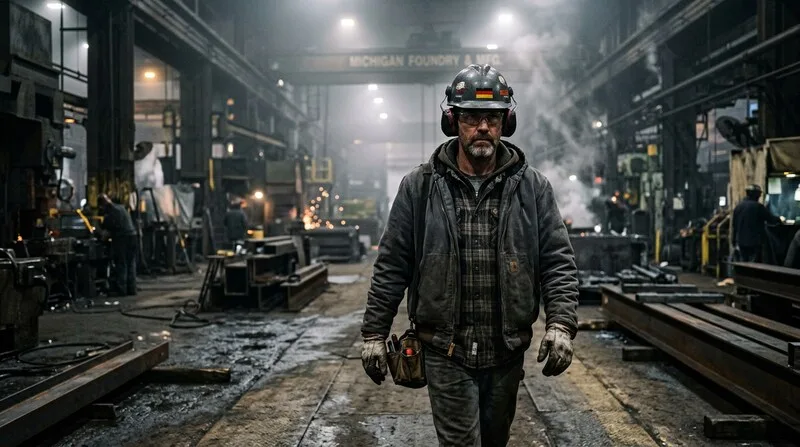
- 70% of IRA clean energy manufacturing jobs are located in Republican congressional districts — making full IRA repeal politically self-destructive for vulnerable Republican incumbents
- US is the world's #1 LNG exporter since 2023; Trump lifted Biden's LNG pause and fast-tracked Gulf Coast terminal permits as energy diplomacy
- $370B in IRA clean energy incentives are under reconciliation threat — but manufacturing credits are being preserved due to direct Republican district exposure in GA, SC, MI, OH
- ANWR: Trump re-issued drilling rights in 2025; no active operations — production estimated 10-15 years away even if legal challenges from Native Alaskan groups resolve
- 67% of Americans favor expanding renewable energy (Pew 2026) — the "drill baby drill" agenda runs against majority public opinion across party lines
Trump Energy Actions: Status Tracker (April 2026)
| Policy Action | Status | Industry Impact | Political Friction |
|---|---|---|---|
| LNG Export Approvals | Active — multiple terminals approved | U.S. = global #1 LNG exporter | Raises domestic gas prices |
| ANWR Leasing | Leases issued — legal challenges ongoing | No production; 10-15yr timeline | Alaska Native opposition |
| IRA EV Consumer Credits | Targeted for elimination in reconciliation | EV sales slowdown projected | Auto-state R opposition |
| IRA Manufacturing Credits | Likely preserved in final bill | Battery/solar factories in R districts | 70% R district jobs = protected |
| Clean Power Plan Rules | Withdrawn/reversed by EPA | Coal plants may extend operations | State AG lawsuits filed |
| Paris Agreement | Withdrawn (Day 1 executive order) | U.S. excluded from COP processes | Allied nation concern |
| Methane Emission Rules | Reversed — oil/gas industry beneficiary | Reduced compliance costs for producers | Environmental group lawsuits |
| Offshore Wind | New permits halted via executive order | $35B+ in planned projects paused | New England coastal state opposition |

The IRA Contradiction: Why Full Repeal Is Politically Impossible
When the Inflation Reduction Act passed in August 2022 with zero Republican votes, the expectation was that a future Republican majority would repeal it outright. The political reality proved more complicated. The law's $370 billion in clean energy incentives triggered an investment wave: battery gigafactories in Georgia and South Carolina, solar panel plants in Ohio, wind component manufacturers in Texas and Iowa, EV assembly facilities across the Southeast.
By early 2026, E2 tracked 334 clean energy manufacturing facilities announced or opened since the IRA's passage, with combined investment exceeding $265 billion. Approximately 70% sit in Republican-held congressional districts. GOP members from these districts — Georgia's Austin Scott, South Carolina's Ralph Norman, and others — have explicitly told leadership they cannot support provisions eliminating the manufacturing tax credits their local economies depend on.
The result: the House reconciliation bill preserves most manufacturing credits while targeting EV consumer credits and clean electricity incentives. This selective approach has angered both environmental groups (who see a gutted IRA) and fiscal hawks (who wanted full repeal). The political math of 70% district concentration has effectively insulated the most economically significant part of the law.
IRA Clean Energy Investment by State (Top Republican-District Exposure)
| State | IRA Investment (est.) | Key Projects | R-District Share | Republican Holdouts |
|---|---|---|---|---|
| Georgia | $18.5B | Hyundai EV plant, Qcells solar, SK Battery | ~65% | Austin Scott, Drew Ferguson |
| South Carolina | $12.8B | BMW EV expansion, Redwood Materials battery | ~80% | Ralph Norman, Jeff Duncan |
| Michigan | $21.0B | GM Ultium battery, Ford EV retooling | ~40% | Tom Barrett, Tim Walberg |
| Ohio | $11.2B | Intel chip fab (IRA adjacent), solar manufacturing | ~55% | Brad Wenstrup, Mike Carey |
| Texas | $28.4B | Wind farms, Tesla Gigafactory expansion | ~75% | Michael McCaul, Pete Sessions |
| Kentucky | $6.9B | Ford BlueOval battery plant | ~90% | Andy Barr, Hal Rogers |
| Tennessee | $9.3B | Volkswagen EV plant, Nucor steel expansion | ~85% | John Rose, Scott DesJarlais |
Source: E2 Clean Jobs America 2026, BLS, state economic development agencies. Investment figures include announced and under-construction facilities.
Pew Research (Feb 2026): 67% of Americans favor expanding renewable energy, including 45% of Republicans. 54% support offshore wind development. Only 38% say expanding fossil fuel production should be the primary energy strategy. Among independents, 71% support renewable expansion — the largest gap between public opinion and current policy direction.
Despite "drill baby drill" rhetoric, average U.S. gasoline prices remain above $3/gallon nationally as of April 2026. Trump promised sub-$2 gas, which requires crude oil around $40/barrel — a level dependent on global demand collapse, not domestic policy. OPEC+ production decisions and global refining capacity matter far more than U.S. permitting pace. The administration has quietly shifted messaging to future price declines.
LNG export expansion is the most tangible Trump energy policy change — but it raises domestic natural gas prices. Approved Gulf Coast terminals add significant export capacity by 2028-2030. Industrial users, utilities, and low-income consumer advocates have flagged the cost pressure. The administration frames it as energy diplomacy reducing Europe's Russian gas dependence, a compelling argument that polls well among foreign policy hawks.
Fossil Fuel Expansion: Rhetoric vs. Geological Reality
On fossil fuel production, the Trump administration's actions are significant but structurally less transformative than the "drill baby drill" framing suggests. U.S. oil production was already at record highs in late 2024 — driven by technological advances in fracking and horizontal drilling rather than regulatory changes. The administration has issued more federal drilling permits but faces the same geological and market constraints limiting production growth: the most productive shale basins are mature, and economics at current prices restrict additional investment.
ANWR remains largely symbolic. Despite re-issued leases, it faces a minimum 10-15 year timeline before any production could begin, requires crude prices above $80/barrel to be economically viable, and faces ongoing litigation from Alaska Native organizations and environmental groups. The Coastal Plain's oil is real but marginal in a world already awash in supply. Even oil industry executives privately acknowledge ANWR is a political trophy more than an economic opportunity at current prices.
The offshore wind halt is more consequential in the near term — $35 billion in planned projects along the East Coast are in legal limbo. States from Massachusetts to New Jersey had built procurement frameworks around federal permits that are now paused or revoked. This will slow renewable capacity addition and likely extend natural gas dependence in the Northeast, the opposite of reducing consumer energy costs.
For voters tracking this issue through the lens of economic impact or the Trump approval rating, the gap between promised outcomes and policy reality is notable. The administration bet that "energy dominance" messaging would outrun energy economics — so far, gasoline prices have not cooperated.
Where This Lands Politically for 2026
Energy policy rarely decides elections on its own, but it intersects with economic anxiety in ways that matter. Voters in tariff-exposed manufacturing districts care deeply about the IRA manufacturing credits. Voters in coastal states with offshore wind jobs oppose the permit halt. Independent voters in the generic ballot lean renewable — meaning Republican candidates defending IRA job sites have a more nuanced message than their national leadership.
The clearest 2026 political impact: Democrats have a specific attack on offshore wind (paused projects, lost jobs, higher Northeast electricity prices) and a defense of IRA manufacturing (Republican members protecting credits in their own districts). Republicans can credibly tout LNG geopolitics and EPA deregulation freeing producers from compliance costs. Neither side has a clean story — which is why energy policy in 2026 will be fought at the district level, not as a national referendum.
See also: how climate polling has shifted in 2026 and energy independence polling for the full public opinion picture.