
Biography
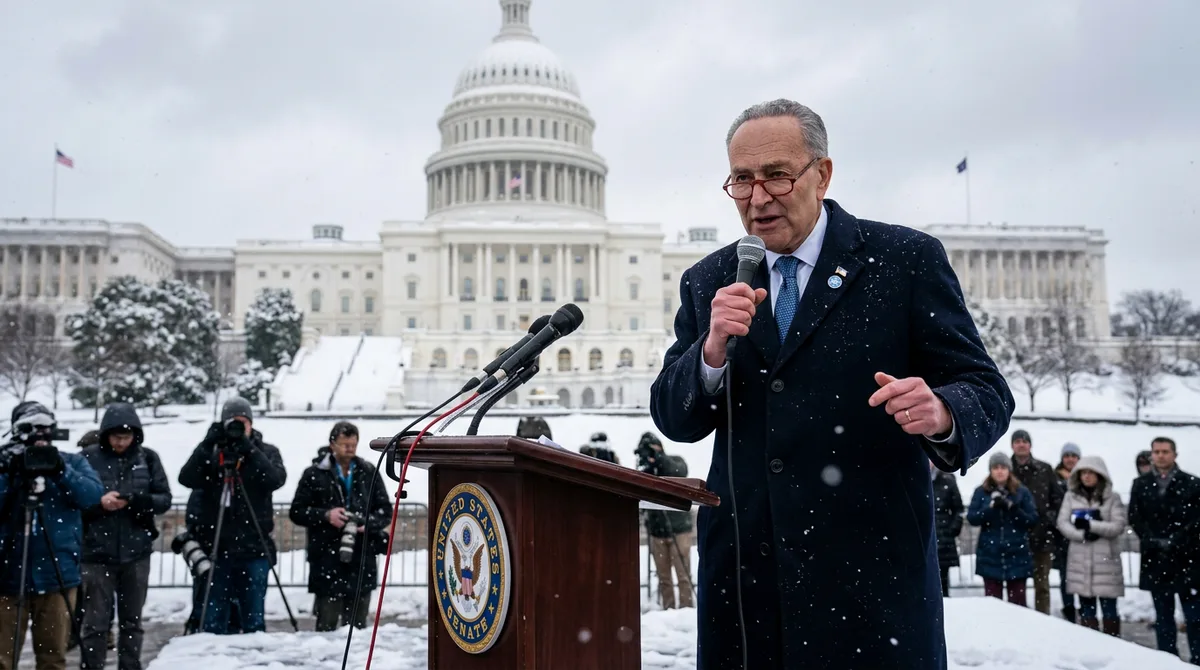
Charles Ellis Schumer was born on November 23, 1950, in Brooklyn, New York, the son of a fumigation business owner. He attended James Madison High School in Brooklyn and graduated valedictorian before attending Harvard College and Harvard Law School, graduating from law school in 1974. He was elected to the New York State Assembly at age 23 and served there until 1980.
Schumer was first elected to the US House of Representatives in 1980, representing a Brooklyn district, and served 18 years in the House before winning the 1998 New York Senate majority, defeating incumbent Republican Al D'Amato in one of that year's highest-profile Senate elections. He has won every subsequent re-election by wide margins and is the longest-serving senator from New York in history.
In the Senate, Schumer built a reputation as a tenacious legislative tactician and prolific media presence. He served on the Senate Banking Committee and Judiciary Committee, and was elected chair of the Senate Democratic Policy Committee in 2005. He led the Democratic Senatorial Campaign Committee from 2005 to 2009, engineering the 2006 Democratic Senate wave that gave the party its first majority since 1994.
Schumer became Senate majority Leader in January 2017, succeeding Harry Reid. He led Senate Democrats through four years of opposition to the Trump first term, holding the caucus together on procedural votes to slow the Republican legislative agenda. After the 2020 elections — including two Georgia runoffs that Democrats won in January 2021 — Schumer became Senate Majority Leader with a 50–50 majority relying on Vice President Harris's tie-breaking vote.
His majority leadership period produced landmark legislation: the American Rescue Plan ($1.9 trillion COVID relief), the Bipartisan Infrastructure Law ($1.2 trillion), the CHIPS and Science Act ($280 billion for domestic semiconductor manufacturing), and the Inflation Reduction Act — the largest climate investment in American history, which also allowed Medicare to negotiate drug prices and extended ACA subsidies. The 2022 Bipartisan Safer Communities Act was the first federal gun polling legislation in nearly three decades. After losing the Senate majority in 2024, Schumer returned to Minority Leader, now leading 47 Democratic senators against a 53-seat Republican majority.
Schumer's Major Legislative Achievements as Majority Leader (2021–2025)
The 117th and 118th Congresses produced an unusual burst of major legislation for a Senate with a razor-thin 50-50 majority. Understanding what passed — and how — reveals Schumer's tactical approach to wielding a nominal majority with maximum effect.
| Legislation | Year | Vote | Key Provisions | Political Significance |
|---|---|---|---|---|
| American Rescue Plan | 2021 | 50–49 (reconciliation) | $1.9T COVID relief; $1,400 checks; state/local aid; expanded child tax credit | Passed with zero R votes; delivered fast economic relief |
| Bipartisan Infrastructure Law | 2021 | 69–30 (bipartisan) | $1.2T; roads, bridges, broadband, rail, water, EV charging | 19 R senators voted yes; Schumer's proof of bipartisan capability |
| CHIPS and Science Act | 2022 | 64–33 (bipartisan) | $280B; domestic semiconductor manufacturing subsidies; R&D investment | Framed as anti-China industrial policy; 17 R senators voted yes |
| Inflation Reduction Act | 2022 | 51–50 (reconciliation) | Largest-ever US climate investment; Medicare drug price negotiation; ACA subsidy extension | All-Democratic; VP Harris cast tie-breaking vote; signature IRA brand |
| Bipartisan Safer Communities Act | 2022 | 65–33 (bipartisan) | Enhanced background checks under-21; mental health funds; NICS improvements | First federal gun legislation since 1994; 15 R senators voted yes |
- Chuck Schumer (D-NY) has served as Senate Minority Leader since January 2025, after serving as Majority Leader from 2021-2025 — the longest-serving Senate Democratic leader in history and the first Jewish Senate leader.
- He managed the Senate passage of the Inflation Reduction Act, the CHIPS and Science Act, and the Bipartisan Infrastructure Law — three landmark pieces of legislation passed in the 117th Congress with a 50-50 Senate.
- New York is D+25 — Schumer has won every Senate election since 1998 by double-digit margins and faces no serious re-election threat, allowing him to focus on national Democratic strategy rather than home-state politics.
- Before the Senate, Schumer served in the House for 18 years (1981-1999) representing Brooklyn — building the political machine and fundraising network that would make him a dominant force in Senate Democratic politics for two decades.
Key Policy Positions
Economic Investment
Schumer championed industrial policy as Majority Leader — particularly the CHIPS Act to rebuild domestic semiconductor manufacturing and reduce dependence on China. He argues that strategic federal investment in critical industries is essential for national security and economic competitiveness.
Climate & Healthcare
The Inflation Reduction Act is Schumer's signature legislative achievement, combining the largest-ever US climate investment with drug price negotiation authority for Medicare and extended Affordable Care Act subsidies. He now focuses on defending IRA provisions against Republican repeal efforts.
Judiciary & Democracy
Schumer has been a fierce critic of Republican judicial appointments, particularly the 2016 blockade of Merrick Garland's Supreme Court nomination. As Minority Leader, he focuses on using procedural tools to slow Republican-aligned judicial confirmations and spotlight administration legal controversies.
2026 Midterm Relevance
The 2026 Senate map is challenging for Democrats. They must defend more seats than Republicans, including several in states Trump carried in 2024. Schumer's primary focus is holding the 47-seat caucus together for maximum obstruction of Republican priorities while defending vulnerable incumbents in Georgia, Arizona, Nevada and Michigan.
Schumer has limited offensive options — Republican-held Senate seats in play are scarce, and the party's energy is directed at the House rather than a Senate majority. His leadership is focused on process: keeping caucus unity on filibuster votes, forcing Republicans to own difficult budget votes, and amplifying the economic case against tariffs and Medicaid cuts.
Schumer faces occasional pressure from progressive members to take more aggressive procedural steps, and from moderates who want to work across the aisle. His ability to manage these tensions while maintaining Democratic cohesion will define his second stint as Minority Leader.
Frequently Asked Questions
Who is Chuck Schumer?
Charles Ellis Schumer is the senior senator from New York and the Senate Minority Leader. He served as Senate Majority Leader from 2021 to 2025 and has represented New York in the Senate since 1999, making him the longest-serving New York senator in history.
What major legislation did Schumer pass?
As Majority Leader, Schumer's major achievements include the Inflation Reduction Act, the CHIPS and Science Act, the Bipartisan Infrastructure Law, the American Rescue Plan, and the Bipartisan Safer Communities Act — the first federal gun polling legislation in nearly 30 years.
How long has Schumer been a senator?
Schumer has served in the US Senate since January 1999, having defeated Republican Al D'Amato in 1998. Before that he served 18 years in the US House. He is the longest-serving senator from New York in the state's history.
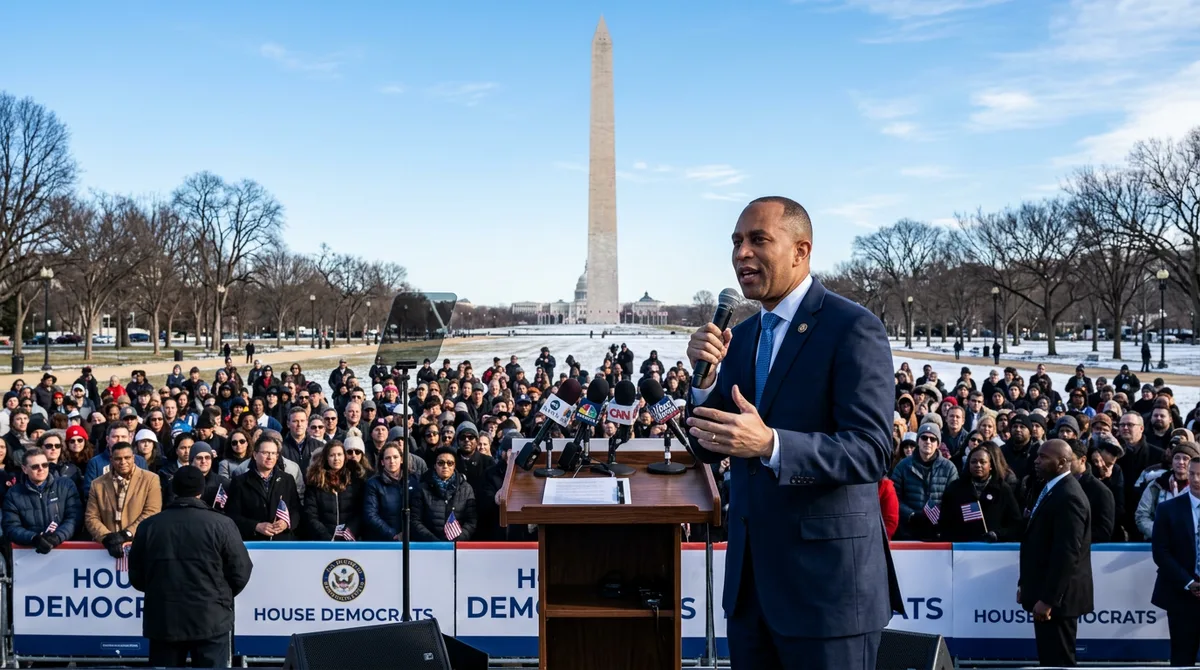


Watch: Leader Schumer Major Senate Address on Pathway to Peace and Two-State Solution
External resources: Chuck Schumer on Ballotpedia — Chuck Schumer on Wikipedia
