- Belgium's 'Arizona' coalition formed in late 2024 — MR, N-VA, CD&V, Les Engagés, and Open VLD govern together in a center-right configuration.
- Belgium is the host of EU and NATO headquarters — making Brussels the de facto capital of European integration and transatlantic security.
- Belgium's unique linguistic federalism — with Flemish, Walloon, and Brussels communities governing separately — makes it a permanently complex political system.
- The N-VA (Flemish nationalist, center-right) is Belgium's largest party — with an independence from Belgium agenda that makes every federal government formation exceptionally complex.
Belgium: The EU's Capital Can Barely Govern Itself
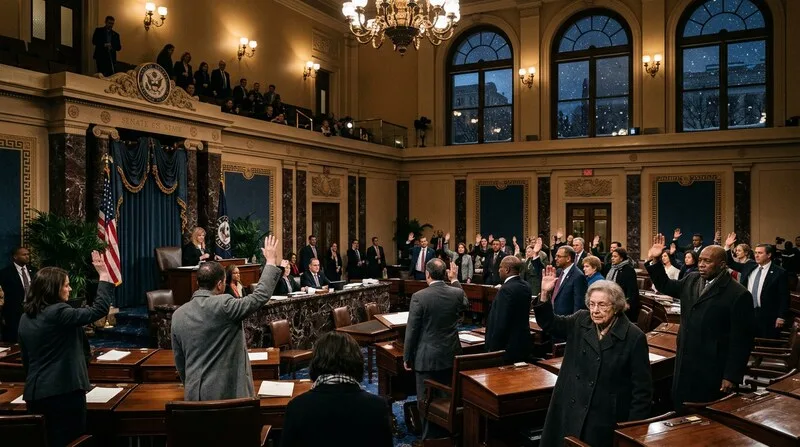
Brussels hosts NATO, the EU Commission, and the EU Parliament. After 18 months of crisis, De Wever's 7-party "Arizona" coalition finally governs. The Flemish/Walloon divide never stops.
Key Parties — Chamber of Representatives (150 Seats)
| Party | Language | Vote Share (2024) | Seats | Position |
|---|---|---|---|---|
| Vlaams Belang (VB) | Flemish | 13.7% | 20 | Far-right nationalist, opposition (cordon) |
| N-VA | Flemish | 13.0% | 20 | Conservative Flemish nationalist, leads government |
| PS | Walloon | 9.3% | 14 | Socialist, opposition |
| MR | Walloon | 10.0% | 15 | Liberal, Arizona coalition |
| CD&V | Flemish | 8.4% | 11 | Christian Democrat, Arizona coalition |
| Les Engagés | Walloon | 8.1% | 12 | Humanist-centrist, Arizona coalition |
| Open Vld | Flemish | 6.5% | 7 | Liberal, Arizona coalition |
June 2024 federal election. Belgium uses proportional representation. Arizona coalition holds a working majority. Next federal elections: June 2029.
Political Analysis
Arizona: 18-Month Crisis Finally Ends
After the June 2024 elections, De Wever spent 18 months negotiating a 7-party coalition — dubbed "Arizona" — including N-VA, MR, CD&V, Les Engagés, Open Vld and two others. The government formed in January 2025 focuses on fiscal consolidation, pension reform, and tax reform. Vlaams Belang, despite being the largest single party in Flanders, was excluded by the cordon sanitaire.
Debt, Pensions & the Flemish/Walloon Gap
Belgium's public debt at ~105% of GDP is among the highest in the EU core. The Arizona government's primary agenda is fiscal consolidation and pension reform — deeply contested between Flemish conservatives (spending cuts) and Walloon parties (social spending protection). The structural economic gap between richer Flanders and poorer Wallonia underpins every major political conflict.
EU Capital, Founding Member, Pro-Integration
Belgium is an EU founding member (1957) and hosts the European Commission, European Council, and one of the two European Parliament seats (Strasbourg is the other). Belgium is consistently pro-EU integration. The paradox — that the most ungovernable EU member hosts EU headquarters — is central to understanding Brussels as a political city within a dysfunctional state.
Current Political Situation
Belgium's political system is defined by its almost ungovernable linguistic divide. The country is split between Dutch-speaking Flanders in the north (roughly 60% of the population, consistently the economically stronger region), French-speaking Wallonia in the south (historically industrial, now poorer and more socialist-leaning), and bilingual Brussels — the national capital, de facto EU capital, and a majority-French city surrounded by Flemish municipalities. Federal coalition governments must include parties representing both language communities with roughly equal weight. This means any majority government typically requires at least six or seven parties, often from ideologically opposing wings. The result is that coalition formation in Belgium is an extended, grinding process that routinely tests international patience and occasionally breaks world records.
The June 2024 federal elections produced a further complication: Vlaams Belang (VB), the far-right Flemish nationalist party led by Tom Van Grieken, emerged as the largest single party in Flanders. VB campaigns on Flemish independence, strict immigration policy, and conservative social values. However, all other major parties maintain a "cordon sanitaire" — a longstanding agreement not to govern with VB — dating to the late 1980s. This cordon held in 2024. Instead, Bart De Wever of N-VA (New Flemish Alliance, conservative Flemish nationalist) was tasked as formateur to build a center-right federal government. After approximately 18 months of talks, the "Arizona" coalition finally formed in January 2025 with De Wever as Prime Minister — Belgium's first ever N-VA head of government. This is a significant political milestone: the party once seen as too separatist for federal government now leads it.
Belgium's situation is a peculiar case study for European politics: the country that hosts the EU's headquarters and NATO's headquarters can barely manage to govern itself. The irony has not been lost on critics: the EU has built its institutions in a country whose federal model appears permanently dysfunctional. Belgium has operated under caretaker governments for cumulative years of its post-war history, and this has paradoxically become normalized — society continues to function during government vacuums because so much policy is devolved to regional governments in Flanders, Wallonia, and Brussels, each with its own parliament and executive.
Key Figures
Alexander De Wever
N-VA leader and mayor of Antwerp. Belgium's first N-VA Prime Minister. Spent 18 months building the Arizona coalition after the 2024 elections. Supports greater Flemish autonomy within Belgium and a fiscal conservative agenda.
Tom Van Grieken
VB leader since 2014. Led the party to its 2024 breakthrough as largest in Flanders. Despite cordon sanitaire exclusion, VB's continued growth makes its long-term isolation increasingly difficult to sustain politically.
Paul Magnette
Leader of the Parti Socialiste (PS), the dominant party in Wallonia. PS is in opposition to the Arizona coalition. Magnette is Wallonia's most prominent political figure and a vocal critic of De Wever's austerity agenda.
Frequently Asked Questions
Why is Belgium so hard to govern?
Belgium's linguistic split between Dutch-speaking Flanders and French-speaking Wallonia means any federal coalition must include parties from both communities with broadly equal weight — typically 6–7 parties with conflicting priorities. Belgium held the world record for longest government-free period (541 days, 2010–2011). After the 2024 elections, formation took 18 months.
What is the Arizona coalition?
The Arizona coalition is the 7-party federal government formed in January 2025 after 18 months of negotiations following the June 2024 elections. Led by Alexander De Wever (N-VA), it includes Flemish conservatives, Walloon liberals and Christian democrats. Its main agenda is fiscal consolidation and pension reform. Vlaams Belang was excluded by the cordon sanitaire.
Is Belgium's government stable?
By historical standards, no — but the Arizona coalition's final formation in January 2025 provides the strongest government in years. Belgium has an extremely high debt/GDP ratio (~105%) and deep Flemish/Walloon disagreements over fiscal reform. Whether the 7-party coalition can hold together on controversial pension and tax reforms remains the central question.
More to Explore
European Union
EP groups, key leaders & 2029 elections.
Netherlands
Wilders wins — Belgium's neighbor navigates far-right surge.
France
Macron, hung parliament & the 2027 race next door.
Germany
Merz, the new GroKo & EU leadership role.
Austria
Kickl's far-right government in EU core.
