- 64% of Americans support first-trimester abortion access (Gallup 2025-2026); 53% support second-trimester access — clear majorities at each stage that Republican restriction strategies must navigate
- 21 states now have abortion restrictions; 7 states have enshrined constitutional protections via ballot measure — Dobbs created a split-nation legal landscape where a woman's rights depend on her zip code
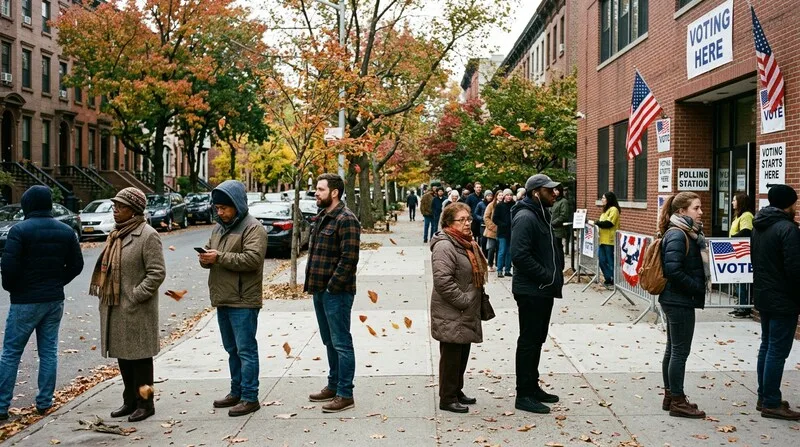
- Ballot measures have boosted Democratic turnout in every state where they appeared — low-frequency voters (younger women, suburban independents) turn out specifically for abortion measures but not always for partisan candidates alone
- 7 states with constitutional abortion protections were all won at the ballot — these protections cannot be easily reversed by legislative majorities, creating durable legal floors even if political winds shift
The Post-Dobbs Landscape
The Supreme Court's June 2022 ruling in Dobbs v. Jackson Women's Health Organization overturned nearly 50 years of federal abortion precedent and sent policy back to the states. In the four years since, the United States has developed an extraordinarily fragmented abortion landscape — one where a woman's reproductive rights depend more on her zip code than any national standard.
As of early 2026, 21 states have enacted abortion restrictions of varying severity. These range from total or near-total bans (Texas, Alabama, Arkansas, Mississippi, Oklahoma, and several others) to six-week gestational limits that functionally prohibit most abortions before many women know they are pregnant (Florida, Georgia). Seven states have moved in the opposite direction, adding explicit abortion polling to their state constitutions via ballot measure: California, Vermont, and Michigan (2022); Ohio (2023); and Arizona, Missouri, and Maryland (2024). These measures locked in protections that legislative majorities cannot easily repeal. The remaining states operate in a middle zone: some under pre-Dobbs laws that courts have interpreted inconsistently, others under temporary stays of restrictive statutes while litigation continues.

The Ballot Measure Pattern: Kansas Through 2024
In every post-Dobbs abortion ballot contest, voters have sided with abortion access by margins wider than any Democratic statewide candidate received in the same cycle. The gap between abortion ballot measure performance and partisan voting averages 8-15 points — a structural asymmetry Democrats are deliberately engineering into 2026.
Kansas (August 2022): The first post-Dobbs test came in deep-red Kansas, where a constitutional amendment to remove abortion protections was defeated by 59% to 41%. Republicans had scheduled the vote in August's low-turnout primary, expecting reduced liberal participation. Instead, Democratic-affiliated and independent turnout surged dramatically, with overall primary turnout exceeding previous midterm primaries by hundreds of thousands of votes. The Kansas result sent the clearest early signal that abortion ballot measures mobilize low-frequency voters at rates that standard turnout modeling could not have predicted.
Ohio (November 2023): In an off-year election, Ohio voters approved Issue 1, enshrining abortion polling in the state constitution, 57% to 43%. Ohio Republicans had tried to raise the threshold for passing ballot initiatives from 50% to 60% just months earlier — a transparent attempt to make the abortion measure harder to pass that was itself defeated. The double Democratic win in a state Trump carried by 8 points in 2020 demonstrated that the abortion issue crosses partisan lines in ways that standard polling underestimated.
2024 (Florida, Missouri, Arizona): The 2024 cycle produced mixed results. Florida's Amendment 4, which would have overturned the state's six-week ban, received 57% support — but fell short of the 60% supermajority required for Florida constitutional amendments. Missouri's Amendment 3 passed 52% to 48%, overturning the state's near-total ban in a state Trump won by 19 points. Arizona's Proposition 139 passed 61% to 39%, protecting abortion polling in the state constitution. Maryland voters simultaneously ratified existing legislative protections constitutionally.
2026 Targets: Where Ballot Measures May Appear
| State | Current Law | Measure Status | Likelihood | Notes |
|---|---|---|---|---|
| Florida | 6-week ban | Signature drive underway | High | 2024 failed at 57% (needed 60%); new effort targets 2026 |
| North Carolina | 12-week ban | Exploratory coalitions forming | Medium | No citizen initiative process; requires legislative referral |
| Georgia | 6-week ban | Advocacy groups mobilizing | Medium | Legislature controls ballot access; Republican majority unlikely to refer |
| Texas | Near-total ban | No active initiative effort | Low | No citizen initiative process; extremely difficult political environment |
| South Dakota | Near-total ban | Citizen petition drive | Medium | Has citizen initiative process; 2022 effort fell short of signatures |
| Nebraska | 12-week ban | Possible citizen initiative | Medium | Legislature added strict petition requirements post-2024 |
Status as of April 2026. NC, GA, TX lack citizen initiative processes; abortion measures in those states require legislative referral, which Republican-controlled legislatures are unlikely to provide.
National Polling on Abortion Access
National polling on abortion polling has remained remarkably stable since Dobbs, defying some expectations that salience would fade. Gallup's annual Values and Beliefs survey (2025) finds 64% of Americans believe abortion should be legal in the first trimester, 53% in the second trimester, and 28% in the third trimester. These numbers represent a modest increase in first-trimester support from the pre-Dobbs era — suggesting the ruling may have crystallized support rather than shifting opinion.
The partisan polarization is significant but does not follow a simple binary. Among Democrats, 89% support first-trimester access. Among Republicans, 40% support first-trimester access — a number that consistently surprises observers who assume the issue is monolithic within the GOP. Among independents, 67% support first-trimester access. This cross-partisan support structure explains why abortion ballot measures consistently outperform Democratic partisan candidates: they attract Republican and independent women who will vote yes on abortion polling while voting Republican or splitting their ticket otherwise.
| Position | All Adults | Democrats | Independents | Republicans |
|---|---|---|---|---|
| Legal in 1st trimester | 64% | 89% | 67% | 40% |
| Legal in 2nd trimester | 53% | 74% | 54% | 28% |
| Legal in 3rd trimester | 28% | 40% | 27% | 14% |
| Legal in all circumstances | 35% | 58% | 34% | 10% |
| Illegal in all circumstances | 13% | 4% | 10% | 26% |
| Dobbs decision: approve | 38% | 10% | 34% | 72% |
Source: Gallup Values and Beliefs Survey, May 2025. Numbers do not always sum to 100% due to rounding and "no opinion" responses.
The Turnout Asymmetry
The most politically significant finding from post-Dobbs ballot contests is what researchers call the "turnout asymmetry": abortion ballot measures mobilize voters who do not reliably turn out for partisan contests alone. Analysis of Ohio's 2023 special elections and November vote found that thousands of voters who had not participated in any election since 2020 — or had participated only sporadically — returned specifically for the abortion initiative. These low-frequency voters are disproportionately younger women and suburban independents.
This asymmetry creates a compounding effect. Abortion ballot measures on the 2026 ballot would increase overall turnout in those states, and the additional voters would be skewed toward Democratic-affiliated demographics. The net effect goes beyond the initiative itself — increased turnout from abortion-motivated voters also lifts Democratic candidates in down-ballot House and Senate races. Democratic strategists in states like Florida are explicitly calculating that a successful abortion initiative on the 2026 ballot could boost turnout enough to make otherwise uncompetitive congressional districts genuinely contested.
Republicans face a structural dilemma: opposing abortion measures fires up Democratic turnout, but supporting them alienates core evangelical and conservative Catholic voters who are among the party's most reliable primary participants. Several Republican candidates in abortion-measure states have adopted a "let the voters decide" posture that avoids explicit opposition — a position that satisfies neither side while attempting to minimize blowback.
Frequently Asked Questions
What is the current legal landscape for abortion after Dobbs?
Following the Supreme Court's 2022 Dobbs decision, 21 states have enacted abortion restrictions and 7 states have added constitutional protections via ballot measure. The remaining states operate under a patchwork of laws, court stays, and legislative compromises. No federal standard exists.
What does polling show about abortion access?
64% of Americans support legal abortion in the first trimester, 53% in the second, and 28% in the third (Gallup, 2025). Support crosses party lines: 40% of Republicans support first-trimester access, explaining why abortion ballot measures consistently outperform Democratic partisan candidates.
How do abortion ballot measures affect midterm turnout?
Abortion ballot measures mobilize low-frequency voters — particularly younger women and suburban independents — who turn out specifically for these initiatives but may not vote in standard off-year elections. This turnout asymmetry has lifted Democratic-affiliated candidates in every post-Dobbs contest.