- $4.5B projected 2026 total campaign spend — up from $3.9B in 2022, driven by competitive Senate races each expecting $150–250M in PA, GA, and WI
- Digital advertising has grown from 25% of spend (2018) to ~45% (2026) but TV still dominates by total dollars; CTV/streaming is the fastest-growing ad channel
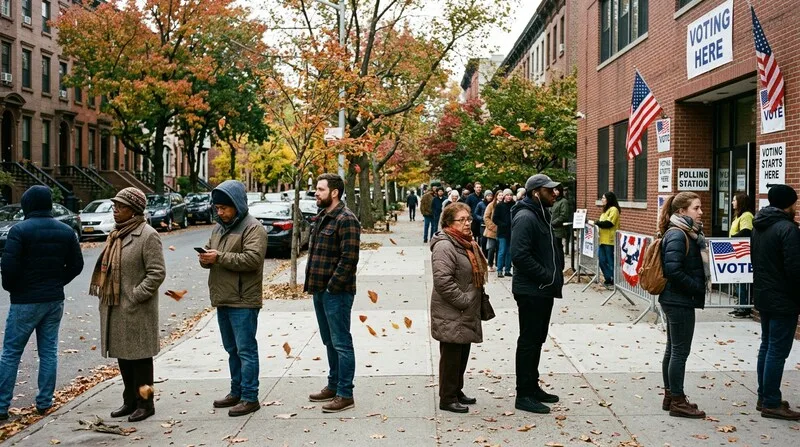
- Door-knocking generates +1–3 pts turnout lift per contacted voter — the highest ROI of any standard campaign tactic and the core of both parties' ground game strategies
- Philadelphia is the most expensive battleground media market; Senate campaigns there will each spend $20–40M in broadcast television alone in the final 8 weeks
Where the Money Goes: Media Markets and Ad Wars
The 2026 campaign spending landscape is concentrated in a handful of media markets where competitive Senate and House races overlap. Philadelphia (PA Senate), Milwaukee and Madison (WI Senate), Atlanta (GA Senate, GA governor), Phoenix (AZ-1 House, potentially AZ-6), and Detroit (MI-8 House, potentially MI-7) are the major battleground media markets where television and digital advertising will be most intense in September-October 2026.
Philadelphia's media market is the most expensive battleground market in the country, extending into the suburban Pennsylvania counties (Montgomery, Chester, Bucks, Delaware) that are the decisive swing geography for Pennsylvania statewide races. A 30-second general election ad buy in Philadelphia's broadcast market costs roughly $3,000-5,000 per point of audience rating (a standard measure of media efficiency). Campaigns in the Pennsylvania Senate race will each spend $20-40 million in Philadelphia-market television alone.
The shift toward connected television (CTV) and streaming has complicated media buying. Viewers who have cut cable subscriptions are unreachable through traditional broadcast TV buys; campaigns are shifting budgets to Hulu, Paramount+, and streaming services where political ads increasingly run. The targeting precision of streaming and digital platforms also allows campaigns to reach specific voter segments (age, geography, past voting behavior) that broadcast TV can't match.

The Ground Game: Door-Knocking’s Revival
Field programs — the door-knocking, phone-banking, and voter contact operations that campaigns run through paid and volunteer staff — were severely disrupted during the 2020 COVID election cycle. Many Democratic campaigns, particularly in presidential battlegrounds, largely stopped in-person voter contact in March 2020. Republican campaigns, backed by the Trump campaign's "Covid doesn't stop us" approach, continued field operations and may have gained a mobilization advantage in some areas, particularly in rural communities where in-person contact historically matters most.
By 2022, field programs had partially recovered. In 2026, both parties have invested significantly in rebuilding and expanding their ground game infrastructure. Democratic field operations in the 2026 cycle are projected to make over 50 million voter contacts by election day through volunteers and paid staff across swing districts. The intensity of these field programs reflects decades of research showing that in-person voter contact is substantially more effective per dollar than media advertising for increasing turnout among already-registered voters.
Battleground Campaign Snapshot
| Race | Type | Projected Total Spend | Key Media Market | Field Program Intensity |
|---|---|---|---|---|
| PA Senate | Senate | $200-250M | Philadelphia, Pittsburgh | Highest nationally |
| GA Senate | Senate | $175-225M | Atlanta | Very high; runoff risk |
| WI Senate | Senate | $150-200M | Milwaukee, Madison, Green Bay | High |
| OH Senate | Senate | $150-180M | Columbus, Cleveland, Cincinnati | High |
| AZ-1 House | House | $15-20M | Phoenix (Scottsdale) | Medium-high |
| MI-8 House | House | $8-12M | Detroit (Oakland/Macomb) | Medium |
Analysis: What Moves Votes in 2026
Ad Saturation Problem
In major battleground markets, voters will see hundreds of political ads in the final weeks. Research shows diminishing returns: the 1,000th ad contact moves fewer voters than the first. Well-funded campaigns must diversify to field and digital to reach voters who have tuned out broadcast TV ads.
Outside Money Dynamic
Super PACs and 501(c)(4) dark money organizations account for roughly 40% of total campaign spending in competitive Senate races. These outside groups often run harder-hitting negative ads than campaigns themselves, and their disclosure requirements vary. The outside money advantage in Senate races has favored Republicans historically but Democrats have closed the gap.
Earned Media Still Matters
In an environment where Trump dominates cable news coverage, Democrats must manufacture earned media moments — debate performances, policy announcements, viral moments — to cut through the paid advertising noise. The candidate who gets covered for free reaches voters that $50 million in ads might miss.