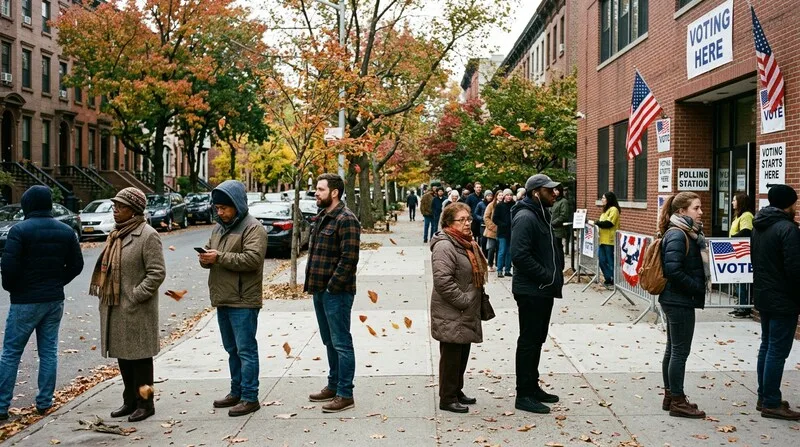
- 72% say democracy is threatened in April 2026 — but the diagnosis is radically split: 49% say Trump specifically threatens democracy, 39% say Democrats/the left do, with independents at 52%/35% respectively.
- Among Democrats, 89% name Trump as the threat; among Republicans, 78% name Democrats/the left — the widest partisan divergence on threat identification ever recorded in Pew Research tracking.
- Democracy is cited as a top voting issue by 34% of Americans in 2026 — higher than any previous midterm — and among those who cite it, 63% lean Democratic, making it structurally more valuable as a Democratic mobilization frame than a bipartisan persuasion message.
- The shared concern with zero shared diagnosis produces a paradox: democracy anxiety simultaneously motivates both parties' bases to turnout while preventing any cross-partisan coalition for institutional reform.
Who Is the Threat? Partisan Breakdown (April 2026)
When asked "who is the greatest threat to American democracy?" respondents give radically different answers depending on party affiliation. Source: Pew Research Center, April 2026.
| Group | Trump / R threatens democracy | D / Left threatens democracy | Both equally | Neither / Unsure |
|---|---|---|---|---|
| Democrats | 89% | 8% | 2% | 1% |
| Independents | 52% | 35% | 9% | 4% |
| Republicans | 12% | 78% | 6% | 4% |
| All Americans | 49% | 39% | 7% | 5% |

Specific Democratic Concerns vs. Republican Concerns
- Executive order overreach and expansion of presidential power (61% of D's cite)
- Undermining of DOJ and FBI independence (54%)
- Threats to free press access and media freedom (49%)
- Use of federal power against political opponents (48%)
- January 6 accountability and norm erosion (44%)
- Social media censorship of conservative speech (67% of R's cite)
- "Woke" ideology imposed in schools and institutions (58%)
- Open borders undermining national sovereignty (55%)
- Mainstream media bias against Republicans (54%)
- 2020 election integrity concerns (still 41% in 2026)
Democracy as an Electoral Issue: Who Benefits?
Democracy concerns are more electorally valuable to Democrats in 2026 for structural reasons:
- Among voters who say democracy is their top issue, 63% lean Democratic vs. 31% lean Republican
- Democracy concern correlates most strongly with college-educated suburban voters — the exact swing voter profile in competitive districts
- Young voters who cite democracy concerns (38% of under-30s) are motivated to turn out in midterms — usually a challenge for Democrats
- The concern is fresh: second-term executive actions including DOGE, deportation operations, and judicial challenges are recent news, not abstract
In 2022, the "democracy on the ballot" message directly correlated with Democratic overperformance in suburbs. The question in 2026 is whether economic concerns (tariffs, healthcare costs) or democracy concerns dominate the national message — or whether they reinforce each other in competitive swing districts.
Democracy Concern in 2026 vs. 2022: What Changed
In 2022, democracy concern was driven primarily by January 6 and election integrity fears — the threat was specific and recent. In 2026, the concern has broadened and in some respects deepened. January 6 has receded as a motivating event for many voters who are two election cycles removed from it. But new concerns have replaced it: DOGE's rapid dismantling of federal agencies, aggressive use of executive orders to circumvent Congressional action, deportation operations affecting documented residents, and unprecedented political pressure on the judiciary have collectively sustained and elevated the sense of institutional vulnerability.
The key electoral comparison: in 2022, Democrats who made democracy the central message won in suburban districts by larger-than-expected margins. In NY-17, swing suburban districts in PA and NJ, and competitive Senate races, the democracy issue amplified the generic anti-party-in-power dynamic. In 2026, Democrats face the same structural opportunity but with economy/tariff concerns now competing for primacy. Internal Democratic polling (per Politico reporting) suggests that combining economic and democracy messages — "he's hurting your wallet AND undermining checks and balances" — outperforms either alone in focus groups with suburban independents.