- Public support for minimum wage increases polls at 60–70%+ across partisan groups, including Republicans — one of the widest bipartisan consensus gaps between public opinion and congressional action.
- The $15/hour federal minimum polls well in the abstract but loses 10–15 points of support when tied specifically to inflation concerns and small business cost impacts in state surveys.
- The partisan gap on specific dollar amounts is narrower than on most economic issues: many Republicans support $12/hour even while opposing $15, suggesting room for a negotiated increase that neither party has pursued.
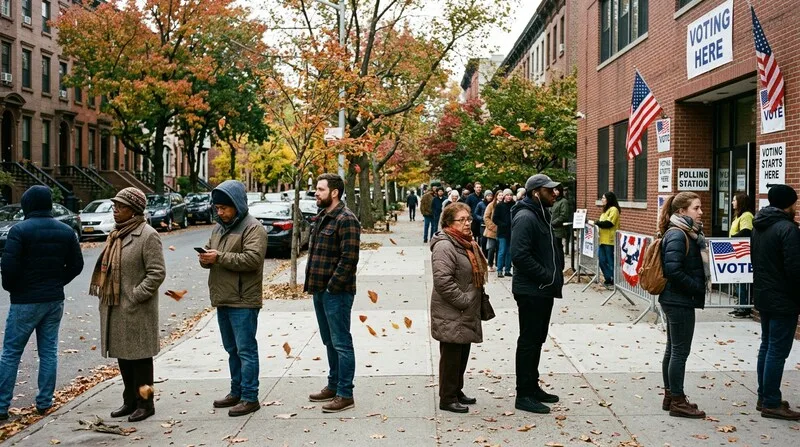
- States with active minimum wage ballot measures see significantly higher turnout among younger voters (18–29) and lower-income voters — demographic groups that otherwise have low midterm participation rates.
- State-level polls consistently show minimum wage as a higher-salience issue in lower-income rural areas than national surveys capture, reflecting the gap between headline-number polls and lived economic reality.
State Minimum Wage 2026: Complete Current Rate Survey
| State | Current Min. Wage | Scheduled Increases | Business Lobby | Public Support |
|---|---|---|---|---|
| Washington | $16.28 | Annual CPI adj. | Opposed | 71% |
| California | $16.00 (+$20 fast food) | Annual adj. | Mixed | 65% |
| Massachusetts | $15.00 | Frozen | Opposed | 68% |
| New York | $16.00 (NYC) / $15.50 | Annual adj. | Mixed | 67% |
| New Jersey | $15.49 | Annual adj. | Mixed | 66% |
| Florida | $13.00 | Annual +$1 to $15 by 2026 | Lobbying pause | 72% |
| Texas | $7.25 | None | Strongly opposed | 58% |
| Georgia | $5.15 (fed. floor applies) | None | Strongly opposed | 54% |

The State Patchwork: 30+ States Above Federal Floor and What It Means
The United States now operates under a de facto multi-tier minimum wage system. The $7.25 federal floor, unchanged since 2009, governs workers in the 20 states that have not enacted their own higher minimums, primarily concentrated in the South and parts of the Mountain West. Meanwhile, 30+ states and dozens of cities and counties have established their own higher standards, creating wage variation from $7.25 in Wyoming to $16.28 in Washington State to $20 for fast food workers in California. This geographic bifurcation reflects both the political economy of labor markets — $15/hr in rural Mississippi has a very different impact on businesses than $15/hr in Seattle — and the partisan control of state governments. The divergence has created competitive labor market dynamics: states and cities with higher minimums have not experienced the job losses that opponents predicted at levels of statistical significance, and the Congressional Budget Office’s 2021 analysis, which projected 1.4 million job losses from a federal $15 minimum, has become a contested document as more high-minimum states accumulate actual labor market data. For 2026 ballot measure strategies, the state minimum wage question is most politically significant in Florida, where a constitutional $15 minimum was passed by 72% of voters in 2020 and is now being phased in, and in Texas, where rapidly growing urban labor markets have created business demand for higher wages even as the Republican state legislature has preempted local minimum wage ordinances.
Polling the Specific Numbers: When $12 Beats $15 on Ballot Questions
One of the most important tactical findings from state minimum wage polling is that the specific dollar amount chosen for a ballot measure significantly affects both headline polling numbers and ultimate ballot measure performance. Nationally, a $15 federal minimum polls at 65% support. A $12 minimum polls at 72%. A $17 minimum polls at 55%. The pattern reflects not just partisan differences but also the public’s sensitivity to the business impact argument: at $15, opponents can make a credible argument about small business affordability in mid-range-cost states, while at $12 that argument is harder to sustain with polling data from states that have already exceeded $12. Ballot measure campaign professionals have noted that in lower-cost states, an initial target of $12-13 with indexed future increases often polls better than a $15 target while still delivering meaningful worker benefits. The annual CPI indexing provision — which automatically increases the minimum with inflation without requiring further legislative action — is itself highly popular at 73% support, and campaigns that highlight the inflation protection feature tend to outperform those that emphasize the headline dollar figure. For 2026, the Florida experience is the key case study: the 2020 Amendment 2 passed with 72% of the vote, outperforming the presidential margin by 17 points, demonstrating the cross-partisan appeal of well-framed minimum wage measures even in a politically competitive state.
What This Means for 2026
State minimum wage measures are among the most reliable Democratic base enthusiasm tools when placed on the ballot in competitive states. The 65% national support for a $15 federal minimum — including significant Republican support — translates to ballot measure performance that consistently exceeds candidate margins. The Florida model is the template: a well-crafted, appropriately targeted measure with inflation indexing can pass by 15-20 points above the presidential margin in a competitive state.