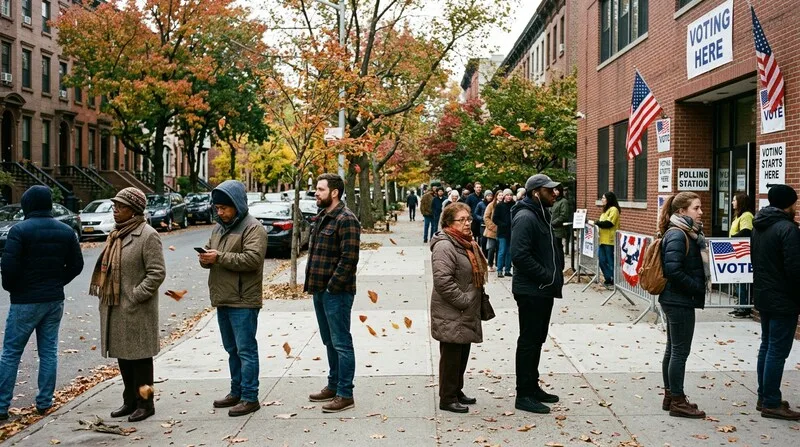
- Trump won non-college white voters by R+35 and non-college Hispanic voters by R+20 in 2024; non-college voters make up 45% of the electorate — the single largest demographic group by educational attainment.
- Democrats improving from D+2 to D+8 among all non-college voters in spring 2026 generic ballot polling, driven by tariff-driven price increases and Medicaid cut exposure — issues that directly hit working-class households hardest.
- The Republican coalition paradox: working-class voters disproportionately support Republicans, but rely on Medicaid at higher rates than college-educated voters — making the $880B proposed Medicaid cut a structural vulnerability in the party’s own base.
- The Democratic dilemma: winning back non-college voters may require cultural and economic messaging that alienates college-educated suburban voters — the primary Democratic gains of the 2016-2022 cycle. Both halves of the coalition can’t be fully satisfied simultaneously.
The Educational Realignment
American politics has been restructured along educational lines more than any other axis. Fifty years ago, the Democratic coalition was built on working-class voters — union members, factory workers, rural communities — while Republicans dominated suburban professionals and business owners. That alignment has inverted. College-educated voters, particularly in suburbs, now trend Democratic. Non-college voters, across racial and geographic lines, trend Republican. The 2024 election accelerated this pattern to historic levels: Trump won non-college white voters by approximately 35 points (wider than any previous margin), made double-digit gains with non-college Hispanic men, and ran meaningfully better with non-college Black men than any Republican in a generation.
The educational polarization creates a paradox for both parties. Republicans now hold a diverse working-class coalition that includes voters from multiple racial backgrounds united by economic populism and cultural grievance against professional-class elites — but the party's economic agenda (tax cuts weighted toward the wealthy, Medicaid reductions, deregulation) is poorly matched to that coalition's material interests. Democrats retain a coalition of college-educated professionals and minority voters but have lost their traditional working-class identity — and their policy agenda increasingly reflects the priorities of credentialed professionals rather than hourly workers.
Working-Class Voter Breakdown by Demographics
| Group | 2016 D Margin | 2020 D Margin | 2024 D Margin | 2026 Generic Ballot |
|---|---|---|---|---|
| White non-college men | R+45 | R+42 | R+48 | R+38 |
| White non-college women | R+25 | R+22 | R+28 | R+18 |
| Hispanic non-college men | D+32 | D+20 | D+5 | D+12 |
| Hispanic non-college women | D+48 | D+40 | D+22 | D+30 |
| Black non-college men | D+62 | D+55 | D+48 | D+52 |
| Black non-college women | D+80 | D+78 | D+72 | D+74 |
| All non-college voters | D+5 | D+4 | D+2 | D+8 |
Sources: AP VoteCast, exit polls 2016-2024; generic ballot polling averages spring 2026. Note: 2026 generic ballot improvement for Democrats reflects tariff-driven economic anxiety, not structural partisan shift.
The Medicaid Trap
The Republican reconciliation bill's Medicaid provisions create a specific political vulnerability with working-class voters that Democratic campaigns are already targeting. Non-college voters enroll in Medicaid at significantly higher rates than college-educated voters: approximately 28% of non-college adults are covered by Medicaid, compared to 8% of college-educated adults. The rural areas and small cities that have driven the Republican working-class surge — counties in the Rio Grande Valley, Appalachian Pennsylvania, rural Wisconsin — have Medicaid enrollment rates of 30-40% or higher.
Polling shows this contradiction clearly. Working-class voters who support Republicans on cultural and general economic grounds nevertheless oppose Medicaid cuts by wide margins when the specific impacts are described: "remove 10 million people from Medicaid coverage" polls at -59 net nationally and likely worse among working-class voters who have direct personal experience with Medicaid. Democratic campaign strategists in Ohio, Pennsylvania, Wisconsin, and Arizona are building their 2026 messaging around this gap — the argument that Republican politicians who won on working-class populism are now cutting the healthcare safety net that working-class communities depend on. Whether this attack line moves votes will be the central empirical question of the 2026 cycle.
Key Battlegrounds for Working-Class Voters
Rust Belt: OH, PA, WI, MI
White non-college working class in steel, auto, and manufacturing communities. Tariffs generate conflicting signals: steel workers may benefit, but consumer price increases and retaliatory tariffs on agricultural exports hurt the broader economy. Senate races in OH (Moreno defense), WI (Johnson defense), and PA (McCormick defense) all turn partly on how these communities respond to 2 years of Republican governance.
Rio Grande Valley: TX-28, TX-34
Hispanic working-class communities in Laredo, McAllen, and Brownsville. Trump's 2024 gains here were driven by non-college Hispanic men responding to economic populism and border-area concerns about illegal immigration. The 2026 test: can Democrats mobilize Hispanic women and youth to offset those gains, or will Republicans consolidate what may be a durable realignment in these districts?
Nevada: Culinary Union Communities
Hotel and casino workers in Las Vegas represent a unique working-class Hispanic Democratic base, organized by the Culinary Union. Tariff-driven price increases hit service industry consumers; DOGE cuts affect federal programs these workers rely on. Nevada's working-class demographics make it one of the states most sensitive to working-class political movement in 2026 Senate and House races.
Democrats' Coalition Dilemma
The Democrats' strategic problem heading into 2026 has no clean solution. Their college-educated suburban base — the voters who powered their 2018 and 2020 gains — is motivated primarily by concerns about democracy, reproductive rights, and professional-class social values. Their potential working-class recovery voters are motivated primarily by economic concerns: prices, wages, healthcare costs, and industrial policy. These audiences require different messages, and in some cases, messages that antagonize one group resonate poorly with the other.
Democratic candidates in competitive districts are attempting to thread this needle by emphasizing economic populism (attacking Medicaid cuts, pharmaceutical prices, corporate profits) while avoiding the cultural positioning that alienated working-class voters. The early 2026 polling showing a D+8 generic ballot advantage among non-college voters (up from D+2 in 2024) suggests this approach may be gaining traction, but the recovery is from a historically weak floor. The 2026 results across working-class communities in Pennsylvania, Ohio, Wisconsin, Texas, and Nevada will offer the most comprehensive data yet on whether the Democratic working-class realignment is cyclical — driven by specific economic conditions — or structural, representing a durable political identity shift that no single cycle's messaging can overcome.