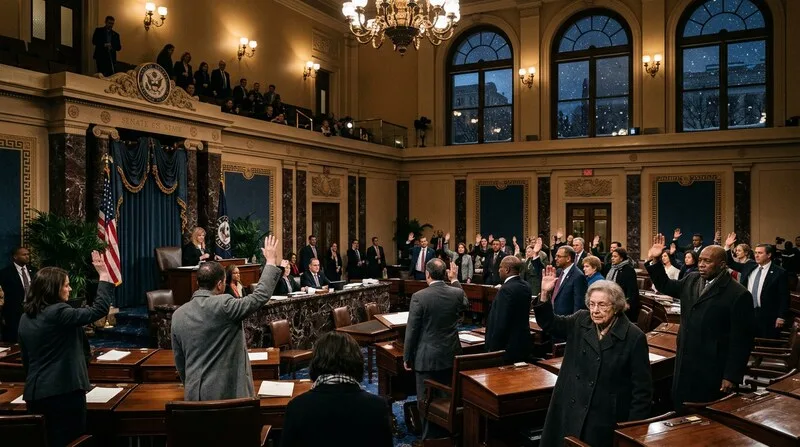
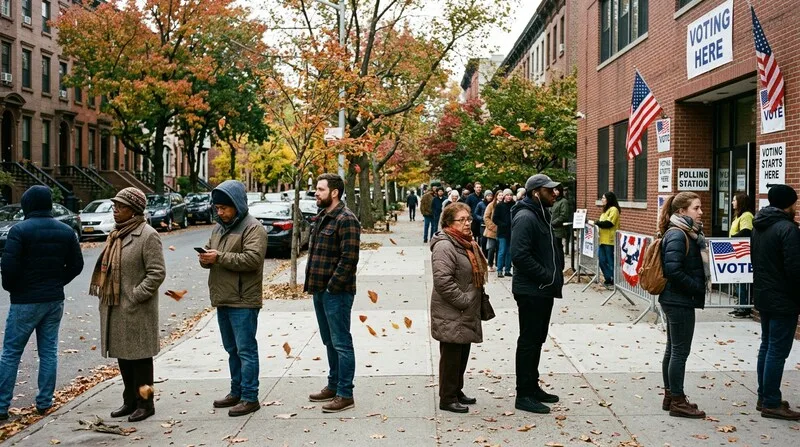
- The One Big Beautiful Bill Act, signed July 4, 2025, cuts $186 billion from SNAP over ten years — the largest single reduction in the program's 60-year history, and already 4 million fewer recipients as of May 2026.
- Work requirements now cover adults 55–64 without dependents and parents of children older than 14 — groups previously exempt. The 80 hours/month threshold applies starting from enactment; ABAWDs who failed to meet requirements lost benefits from May 1, 2026.
- State cost-sharing begins FY2027: states' administrative cost share rises from 50% to 75%. From FY2028, states with high payment error rates must also cover a share of benefit costs — the first time benefit costs shift to states since 1974.
- SNAP cuts poll negatively even among Republican voters when framed around impacts on children and elderly recipients — 58% of Americans oppose cuts, including 34% of Republicans (Pew, March 2026).
- CBO projects 2.4 million people cut off SNAP per typical month over the next decade; 72% of those affected are working households who fail to meet documentation requirements, not unemployed recipients.
SNAP Program Data: Key Metrics
| Metric | Current (2026) | Proposed Change | Impact |
|---|---|---|---|
| Total Recipients | ~43 million (May 2026) | Tighter eligibility, work req. | -4M since law passed; CBO: -2.4M/month ongoing |
| 10-Year Cost Reduction | ~$110B/yr baseline | $186B cut over 10 years (CBO) | -20% over decade |
| Average Monthly Benefit | $196/person | No direct change to benefit level | Eligibility loss is primary driver of reduction |
| State Admin Cost Share | 50% (states) | Rises to 75% from FY2027 | ~$15B additional annual state cost fully phased in |
| Work Requirements | 18–49, no dependents (ABAWDs) | Expanded: 55–64 + parents of children 14+ | Effective July 2025; enforcement from Feb 2026 |
| Farm Bill Connection | 70% SNAP = food purchases | Coalition strain | Farm-state R opposition: 6-8 senators signaled concern |

The State Co-Pay Problem
The 25% state cost-sharing requirement is the provision drawing the most bipartisan concern. Currently, SNAP is 100% federally funded — a design choice that allowed the program to expand automatically during recessions without requiring state budget action. Shifting 25% of costs to states would force every state legislature to either cut caseloads, raise state revenue, or reduce benefits to stay within budget constraints.
Red states with large low-income populations — Mississippi, Arkansas, Alabama, West Virginia — would face the largest proportional burdens relative to their tax bases. Republican governors in several of these states have already raised concerns with congressional leadership. The structural shift would effectively convert SNAP from an entitlement to a quasi-block-grant, similar to TANF, which has seen real-dollar value decline 40% since 1997 and leaves large gaps in safety net coverage across states.
Farm-State Republican Opposition
The farm bill coalition has held for decades: urban Democrats support crop insurance and commodity subsidies; rural Republicans support nutrition programs including SNAP. Roughly 70 cents of every SNAP dollar is spent on food that directly supports domestic agricultural demand. The National Farmers Union and American Farm Bureau have both flagged concern that deep SNAP cuts would reduce domestic food consumption and harm farm income.
At least 6-8 Republican senators from agricultural states — including Iowa, Kansas, Nebraska, North Dakota, and South Dakota — have signaled they cannot support SNAP cuts at the proposed scale without significant modifications. With a narrow Senate majority, that bloc has effective veto power. Speaker Johnson has acknowledged the farm-state problem and indicated the SNAP provisions may be scaled back in conference.
Polling from Pew Research (March 2026) shows 58% of Americans oppose reducing SNAP benefits, including 34% of Republicans. Among voters who personally know someone receiving SNAP, opposition rises to 67%. The program retains broad public support despite its frequent political target status.
House Democrats have unified against the SNAP provisions and plan to run campaign ads in competitive districts linking Republican incumbents to food stamp cuts. The DCCC has already identified 28 vulnerable Republican members in districts with SNAP recipient rates above the national average as primary targets.
The reconciliation bill requires only 51 Senate votes, but with farm-state Republican opposition and the procedural constraints of the Byrd Rule, the SNAP provisions face significant hurdles. Most analysts expect the final package to include reduced cuts of $80-120B and modifications to the state cost-share provision before passage.