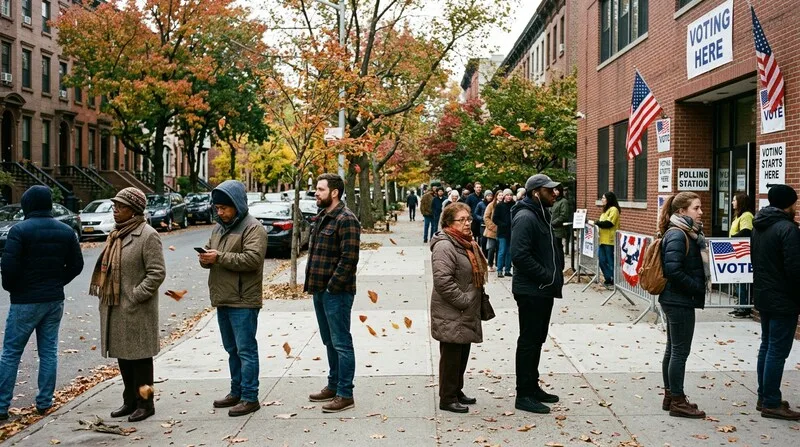
- D enthusiasm advantage: 71% "very motivated" vs. 54% R — mirrors early 2018 structure, when Democrats ultimately won the House popular vote by 8.6 points
- High-turnout model (51%+ VEP): Generic D+7 to D+11 → D gains 35-45 House seats (2006 / 2018 historical analog)
- Low-turnout model (36% or less VEP): Generic R+5+ → R gains 15-25 seats (2010 / 2014 analog) — the range between scenarios is enormous
- Biggest swing variable: if under-35 turnout reaches 35% vs. 28%, Democrats gain an additional 3-4 competitive House seats — youth mobilization is the true lever
Turnout Scenarios: House Seat Projections
| Scenario | VEP Turnout | Generic Ballot | D House Seats Net | Senate Net | Historical Analog |
|---|---|---|---|---|---|
| High D Wave | 51%+ | D+9 to D+11 | +35 to +45 | D+3 to +5 | 2006 (D+8, +31 House) |
| Moderate D Wave | 47–50% | D+5 to D+8 | +20 to +30 | D+1 to +2 | 2018 (D+8.6, +41 House) |
| Neutral/Wash | 43–46% | D+2 to D+4 | +5 to +12 | Even | 2022 (D+2.8, +9 House Dem) |
| Low R Turnout Adv. | 38–42% | R+1 to R+3 | -3 to -10 | R+1 to +3 | 2014 (R+5.7, R+13 House) |
| Low R Wave | 36% or less | R+5+ | -15 to -25 | R+4+ | 2010 (R+6.8, R+63 House) |
Current leading indicators (enthusiasm gap, generic ballot, presidential approval) place 2026 most likely in the Moderate D Wave to Neutral range. The high D wave scenario is possible but requires enthusiasm to materialize as actual votes.

The 2018 Comparison: Enthusiasm Is Necessary but Not Sufficient
The parallels between early 2026 and early 2018 are striking. In both cycles: the president's party faces a Democratic generic ballot advantage in the 5-8 point range; Democratic enthusiasm outpaces Republican base enthusiasm by 15+ points; judicial issues (Kavanaugh in 2018, second-term court actions in 2026) are animating the Democratic base; and suburban college-educated voters, particularly women, are polling toward Democrats by larger-than-normal margins. In 2018, these indicators correctly predicted a Democratic House wave of +41 seats.
But forecasters also remember 2022. The same structural indicators — Democratic enthusiasm advantage, anti-incumbent energy — pointed toward a wave that never materialized at the expected scale. Democrats gained a Senate seat but lost the House, albeit narrowly. The 2022 underperformance relative to early indicators is a persistent calibration warning: enthusiasm gaps reflect opinions, not votes. Actual turnout depends on mobilization infrastructure, candidate quality, district-specific dynamics, and late-breaking developments that polls cannot capture six months out.
The Key Demographic Turnout Variables
If under-35 turnout reaches 35% (as in 2018), Democrats gain roughly 4 additional competitive House seats. The low baseline (28%) reflects chronic midterm youth disengagement. The enthusiasm data suggests potential for improvement.
The most reliable Democratic midterm demographic. High turnout, consistent preference. Judicial and healthcare concerns are the primary motivators. This group's turnout is already near its ceiling — further improvement is marginal.
The Republican base's most reliable midterm demographic. Trump has successfully converted many of these voters from occasional to habitual Republican voters. Their turnout in 2022 exceeded 2018 even without Trump on the ballot — a structural change.
Bottom Line: The Enthusiasm Gap Favors Democrats, Execution Is the Question
The leading indicators for 2026 turnout models favor Democrats. A 17-point enthusiasm gap, combined with a generic ballot advantage of D+4 to D+6 in early polling, places 2026 in the range of a moderate Democratic wave — enough to flip the House if the map cooperates, with Senate gains possible in the most competitive states. But the 2022 correction to forecasters' models means that enthusiasm-based projections carry wider error bars than they once did. The 2026 House map is also less favorable to Democrats than 2018 due to redistricting, meaning a D+7 national environment might produce only D+18 to D+22 House seats rather than the 41 seats that a D+8.6 environment delivered in 2018. Rating of 2026 turnout model: Moderate D wave most likely, with high D wave possible and low-turnout R scenarios non-trivial.