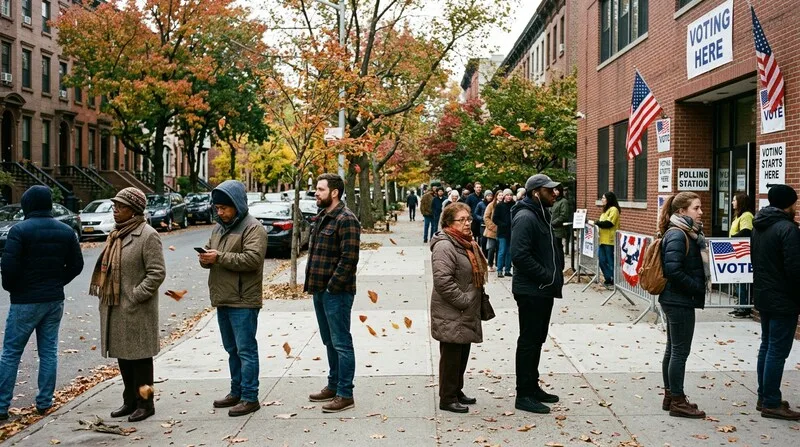
- 7 states passed abortion rights constitutional amendments in 2024, including the highly significant Missouri result — a conservative-leaning state where voters bypassed the Republican legislature
- Florida's Amendment 4 won 57% — a clear majority — but fell short of the state's 60% supermajority threshold; advocates are attempting again in 2026 with revised language targeting suburban Republican voters
- 61% of Americans support abortion access in most or all cases (AP-NORC); the gap between public opinion and Republican-controlled state legislation is the fundamental driver of ballot measure strategy
- Georgia and South Carolina have no citizen initiative process — Republican-controlled legislatures block ballot access; 2026 organizing efforts in those states focus on building infrastructure for future cycles and influencing governor/Senate races
State-by-State Abortion Amendment Tracker
| State | Status | Year | Result / Threshold | Notes |
|---|---|---|---|---|
| Missouri | Passed | 2024 | 51.6% — Simple majority | Most significant: conservative state flipped by direct vote |
| Arizona | Passed | 2024 | 61.6% — Simple majority | Reversed near-total ban exposure; key for 2026 Senate race |
| Colorado | Passed | 2024 | 62% — Simple majority | Reaffirmed existing state protections constitutionally |
| Nevada | Passed | 2024 | 64% — Simple majority | Requires second vote in 2026 to take effect (NV process) |
| Florida | Failed (57%) | 2024 | 57% — Needed 60% | New 2026 attempt organizing now; Gov. DeSantis term ends 2027 |
| Georgia | Potential 2026 | TBD | Simple majority — Hard to get on ballot | Legislature controls ballot access; Republican supermajority blocks |
| South Carolina | Potential 2026 | TBD | Simple majority — Legislature must approve | Six-week ban in effect; no citizen initiative process available |

Florida 2026: The 60% Problem
Florida's 2024 Amendment 4 earned majority support — 57% of voters backed it — but Florida requires 60% for constitutional amendments, a threshold designed to make popular constitutional change difficult. The 3-point gap matters enormously: advocates need to find an additional 300,000-plus voters in a midterm cycle, or persuade enough current No voters to switch. Midterm turnout typically favors the party out of power at the federal level, which in 2026 means Democrats. A Florida amendment on the ballot simultaneously with a U.S. Senate majority math (no competitive Senate race is scheduled in Florida in 2026) would need to generate its own enthusiasm.
Advocates face a separate challenge: Florida's petition process requires 900,000 valid signatures with geographic distribution requirements. The 2024 campaign cleared that bar, but it required enormous organizational investment. Rebuilding that infrastructure for 2026 while also campaigning for 60% approval is the central strategic question facing Florida abortion polling organizations.
Nevada's constitution requires that constitutional amendments pass twice in consecutive election cycles. The 2024 abortion amendment must pass again in 2026 to take effect — making Nevada a rare state where abortion appears on the ballot in both years.
Neither Georgia nor South Carolina has a citizen initiative process. Any constitutional amendment must pass the Republican-controlled legislature, making direct democracy pathways unavailable. Advocates focus instead on voter registration and judicial challenges to existing bans.
Exit polls from 2022 and 2024 consistently show abortion as a top-3 issue for Democratic base voters. States with abortion on the ballot in 2022 (Kansas, Kentucky, Michigan) showed Democratic overperformance vs. national generic ballot by 3-5 points. The turnout multiplier is real and measurable.