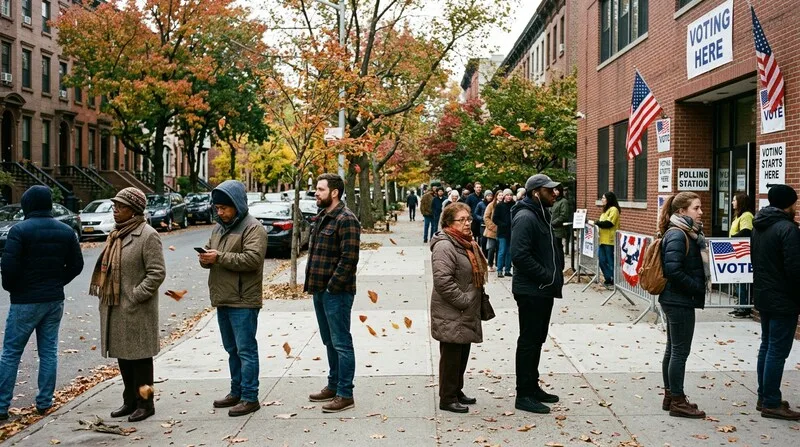
- 40+ significant statewide ballot measures are expected in 2026, with 8+ states featuring abortion-related initiatives and 5+ states considering minimum wage increases.
- Abortion ballot measures historically add 3–5 percentage points to Democratic turnout — enough to change outcomes in Senate and House races decided by narrow margins.
- Florida's abortion access measure (attempting to clear the 60% supermajority threshold that sank Amendment 4 in 2024) is the highest-stakes single initiative on the map.
- Arizona's immigration enforcement measure and Minnesota's voting rights expansion represent the competing ideological poles of 2026 direct democracy — both could drive significant turnout on their respective sides.
Major 2026 Ballot Measures by State
| State | Measure | Current Polling | Partisan Impact | Status |
|---|---|---|---|---|
| Florida | Abortion access (statutory) | 58% support | D turnout boost | Qualification in progress |
| Arizona | Immigration enforcement expansion | 54% support | Mixed; boosts R in rural | Legislative referral likely |
| Minnesota | Automatic voter registration | 62% support | D advantage | Likely on ballot |
| Colorado | Property tax relief | 67% support | Bipartisan | Legislative referral confirmed |
| Missouri | Abortion rights constitutional | 53% support | D mobilization | Petition drive underway |
| Nebraska | Medicaid protection (anti-cut) | 61% support | D mobilization | Petition drive underway |
| Nevada | Ranked-choice voting | 52% support | Third-party enabling | Second ballot required (RCV rule) |

Florida: The High-Stakes Abortion Rematch
Florida’s 2024 abortion amendment (Amendment 4) received 57% of the vote — a majority, but not the 60% supermajority required by Florida’s constitution for citizen initiatives. The measure would have established a right to abortion before viability. Its defeat despite winning a majority energized Florida abortion rights advocates to pursue 2026 alternatives.
For 2026, two strategies are under development: (1) a new constitutional amendment with different language that might attract above-60% support, and (2) a statutory initiative that only requires 50% + 1 but can be overridden by the Republican legislature. The statutory path is simpler but less durable.
Political impact: A Florida abortion measure would significantly increase Democratic base turnout in 2026, benefiting competitive House races in FL-7, FL-9, FL-13, and FL-27. Republicans are aware of this dynamic and some party strategists prefer there be no measure rather than facing another mobilizing loss.
How Ballot Measures Drive Turnout: The 2022 Template
The 2022 midterms were partly defined by abortion ballot measures in Kansas, Michigan, California, Vermont, and Montana. In Kansas, a Republican-dominated state voted 59-41 to reject a constitutional amendment that would have removed abortion rights. In Michigan, the abortion rights amendment passed 57-43 and analysts credited it with driving 200,000+ additional Democratic-aligned voters who also supported Gov. Whitmer’s re-election.
The 2026 template from 2022: abortion measures on the ballot in competitive states increase Democratic House candidate performance by approximately 3–5 points in affected districts. This effect is most pronounced in suburban and college-educated districts where abortion is a high-salience issue for persuadable women voters.
Ballot Measure Impact on Competitive 2026 Races
How statewide ballot measures may shift outcomes in the most competitive congressional and senate contests.
| State | Ballot Measure | Linked Competitive Race | Estimated Turnout Effect | Beneficiary |
|---|---|---|---|---|
| Florida | Abortion access | FL-7, FL-9, FL-13, FL-27 | +3–5 pts D suburban women | D candidates |
| Missouri | Abortion rights constitutional | Open Senate seat (if competitive) | +2–4 pts D mobilization | D candidates |
| Nebraska | Medicaid protection | NE-2 (Omaha swing district) | +2–3 pts D suburban | D candidate |
| Arizona | Immigration enforcement | AZ Senate, AZ-6 | +2–3 pts R rural, wash suburban | R candidates (rural) |
| Nevada | Ranked-choice voting | NV Senate | Structural change if passed; 2026 effect minimal | Third parties long-term |
| Minnesota | Automatic voter registration | MN-3, MN-7 (swing districts) | +1–2 pts D (new registrant lean) | D candidates |
| Colorado | Property tax relief | CO-8 (Evans competitive) | Bipartisan; reduces R tax argument | Neutral / slight D |
Minimum Wage Measures: 5+ States in 2026
Minimum wage ballot measures have a proven record: since 2004, they have passed in every state where they appeared on the ballot — including deep-red states like Arkansas (2018, 68%), Missouri (2018, 62%), and Florida (2020, 61%). The cross-partisan appeal is real: non-college Republican voters broadly support minimum wage increases, even while voting against Democrats.
In 2026, wage increase initiatives are expected in states including Alaska ($15 minimum), Ohio (indexing to inflation), Michigan (enforcement provisions), South Dakota, and potentially Nevada. Unlike abortion measures, wage measures do not strongly mobilize partisan turnout — they attract broadly positive coverage and add low-information voters who lean slightly Democratic in most states.
The strategic value for Democrats: wage measures make it harder for Republicans to nationalize races on culture-war terms. A voter who turns out for a wage increase and sees Democratic candidates on the ballot is more likely to split-ticket toward the center than to vote straight Republican. In Ohio and Michigan competitive House districts, wage measure co-voters could represent 2–3% of the electorate.


