- Ossoff holds a massive fundraising moat — $18M cash-on-hand as of Q1 2026 — built from the infrastructure of his 2020 race that raised over $100M total.
- Brian Kemp's decision not to challenge Ossoff is the most consequential Republican non-event of the 2026 cycle — Kemp was the one Republican who consistently polled ahead of Ossoff in Georgia.
- Without Kemp, the Republican field suffers from a candidate quality problem: remaining potential challengers carry Trump loyalty costs that increase primary electability but reduce general election viability.
- Ossoff's survival depends on a specific turnout equation: Fulton, DeKalb, and Gwinnett counties must deliver 85%+ of their 2020 Democratic totals to offset Georgia's 2024 presidential drift.
- The race is rated Toss-up because of genuine structural uncertainty — Georgia's 2024 results suggest Republicans can win statewide, but Ossoff's personal attributes and resources give him a fighting chance.
The Fundraising Moat
Ossoff's $18 million cash-on-hand figure as of Q1 2026 is not merely an impressive number — it is a strategic deterrent. The fundraising moat makes the race expensive to contest, discourages top-tier Republican entry, and allows Ossoff to define himself in the spring and summer before an opponent can mount a serious challenge. His 2020 campaign raised over $100 million, making him one of the best small-dollar fundraisers in Senate history. That infrastructure — the email list, the small-donor network, the ActBlue apparatus — does not dissipate between cycles. It compounds. Every month Ossoff raises $1.5-2M online, he is simultaneously extending his cash advantage and demonstrating to potential Republican challengers that the race will be brutally expensive.
Kemp's Decision and the Republican Field
Brian Kemp's decision not to run is the single most consequential development in the Georgia race. Kemp won re-election as governor in 2022 by 7.5 points — in the same cycle Herschel Walker lost the Senate runoff to Warnock. That differential demonstrated Kemp's unique capacity to win crossover voters who reject the MAGA brand while still running as a Republican. Against Ossoff in 2026, Kemp's ability to hold suburban Atlanta moderates, particularly college-educated women in Cobb and Gwinnett counties, would have made him the most competitive challenger in the field. Without Kemp, the Republican primary is likely to produce a candidate more ideologically aligned with Trump's base, which polls consistently worse in the Atlanta suburbs that determine Georgia statewide elections.
Barry Loudermilk, who represents Georgia's 11th congressional district north of Atlanta, is the most frequently discussed alternative. Loudermilk is a reliable MAGA vote in the House and has a regional base in the I-75 corridor. Doug Collins, who ran in the 2020 special Senate election against Kelly Loeffler before endorsing Trump's false election fraud claims, has statewide name recognition but carries the baggage of 2020. Neither is a statewide brand in the way Kemp was. Both would likely struggle to replicate Kemp's suburban crossover numbers.
The Turnout Equation: Fulton, DeKalb, and Gwinnett
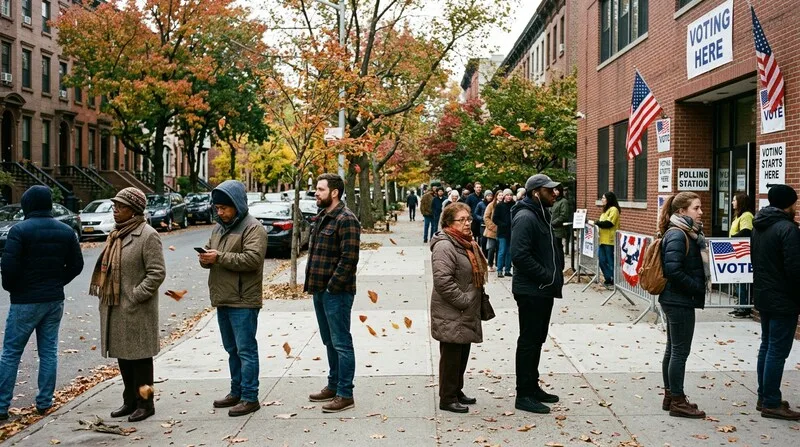
Ossoff won the 2020 runoff by approximately 54,900 votes. The margin was built almost entirely in the Atlanta metro, with Fulton and DeKalb counties contributing the core Democratic advantage. Fulton alone gave Ossoff a 230,000-vote net margin; DeKalb added another 150,000. Together those two counties — majority-Black, heavily Democratic — determine whether Georgia Democrats can win. In 2022, a slightly lower Black turnout relative to the historic 2020 runoff still produced a Warnock win, but by only 2.8 points rather than the runoff margin. For 2026, Ossoff's campaign is prioritizing early-vote and early voting infrastructure in these two counties. Gwinnett County, where the Asian American and Pacific Islander population has grown to over 12% of the electorate, is the additional swing variable: AAPI voters in Gwinnett have trended Democratic but are not as reliably mobilized as Black voters in Fulton and DeKalb. A concerted Ossoff AAPI outreach operation in Gwinnett could add 15,000-25,000 additional votes on top of the base.
Frequently Asked Questions
Why did Brian Kemp decline to run against Ossoff?
Kemp declined citing his preference to remain outside federal office. His absence is the most consequential development in the race — he was the only Republican with demonstrated crossover appeal in the suburban Atlanta counties that decide Georgia statewide elections.
What does current polling show for Georgia Senate 2026?
Early polling shows Ossoff with a D+3 lead against the likely Republican field. The race rates as Lean Democratic, though the R+2.2 presidential margin in 2024 means a strong Republican candidate in a favorable national environment could close that gap rapidly.
Why is Black voter turnout in Fulton and DeKalb decisive?
Ossoff won the 2020 runoff by roughly 55,000 votes statewide, with Fulton and DeKalb providing a combined 380,000-vote net margin. Any significant drop in Black turnout in those two counties directly erases the statewide margin. Gwinnett AAPI voters are the secondary swing variable.