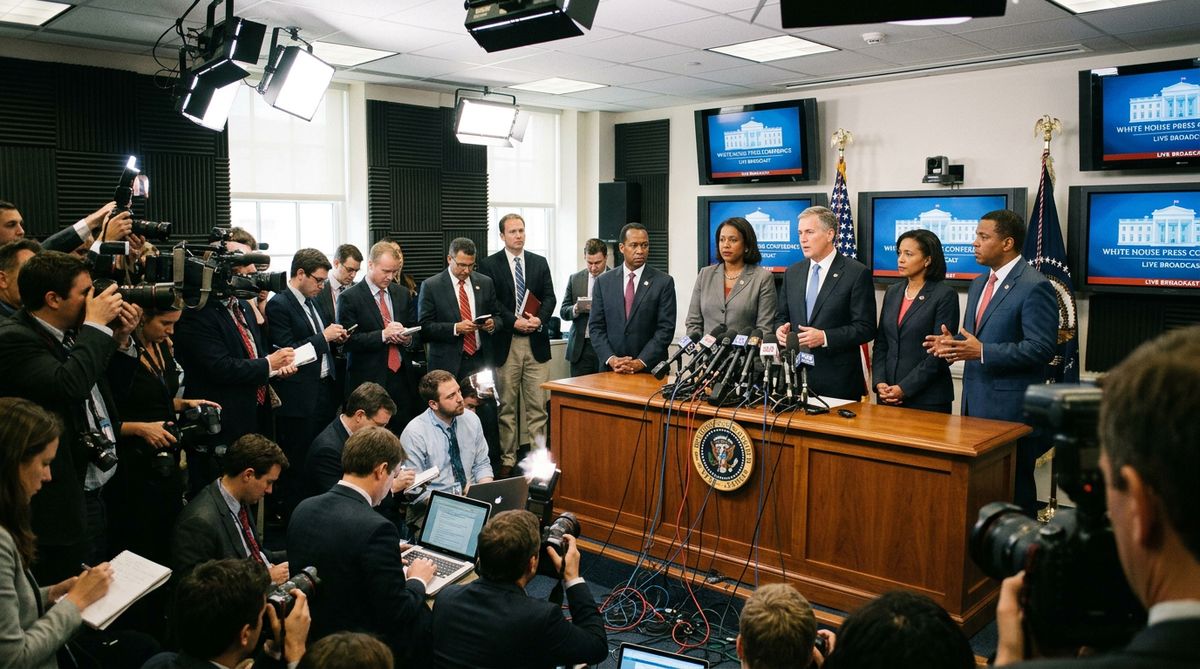

Biography
Joseph Robinette Biden Jr. was born in Scranton, Pennsylvania, into a working-class family whose financial struggles he invoked consistently throughout his political career. He attended the University of Delaware and Syracuse Law School, then won election to the US Senate from Delaware in 1972 at the age of 29 — one of the youngest senators ever elected. Five weeks after his victory, his wife Neilia and infant daughter Naomi were killed in a car accident. Biden was sworn in at his sons’ hospital bedsides and commuted by Amtrak from Wilmington to Washington daily to be home for Beau and Hunter each evening, earning the enduring nickname “Amtrak Joe.” His Senate career spanned 36 years and included chairmanships of both the Judiciary Committee — where he presided over the Bork and Thomas hearings — and the Foreign Relations Committee. He authored the Crime Bill of 1994, which mandated minimum sentences and funded 100,000 new police officers (later controversial), and the Violence Against Women Act. He mounted two failed presidential campaigns: in 1988, when he withdrew after a plagiarism scandal, and in 2008, when he dropped out after the Iowa caucuses.
Biden served as Vice President under Barack Obama from 2009 to 2017, overseeing the drawdown of US forces in Iraq and managing the administration’s economic recovery efforts. His son Beau died of brain cancer in May 2015, and he ultimately decided not to seek the 2016 Democratic nomination. He announced his 2020 presidential campaign in April 2019, survived a rocky primary in which he finished fourth in Iowa and fifth in New Hampshire, then won South Carolina decisively on the strength of support from Black voters, consolidated the moderate lane as rivals dropped out en masse before Super Tuesday, and defeated Trump 306–232 in the Electoral College. His presidency produced a historic legislative record: the $1.9 trillion American Rescue Plan addressed COVID-19 economic damage; the $1.2 trillion Bipartisan Infrastructure Law was the largest infrastructure investment in decades; the CHIPS Act committed $52 billion to domestic semiconductor manufacturing; and the Inflation Reduction Act ($369 billion in climate and clean energy investment) became the largest climate legislation in US history. He unified NATO allies in response to Russia’s February 2022 invasion of Ukraine and authorized the drone strike killing al-Qaeda leader Ayman al-Zawahiri in July 2022. Inflation, however, peaked at 9.1% in June 2022 — the highest in 40 years — and proved the defining drag on his approval ratings for the remainder of his term.
On July 21, 2024, Biden dropped out of the presidential race under intense pressure from senior Democratic officials, donors, and members of Congress following his disastrous June 27 debate performance against Trump, in which he appeared visibly confused and struggled repeatedly to finish sentences. He endorsed Vice President Kamala Harris immediately upon withdrawing. Biden left office on January 20, 2025, with a 38% approval rating according to Gallup — the lowest exit approval since Jimmy Carter. He retired to his home in Rehoboth Beach, Delaware. His decision not to step aside earlier — or to enter the race in the first place — is now debated as a key factor in Harris’s loss. His legacy will long be contested between two competing narratives: the president who restored democratic norms and passed transformational legislation on one side, and the candidate whose stubbornness and declining faculties cost his party the White House on the other.
Key Policy Areas
Economic Recovery & Infrastructure
The American Rescue Plan ($1.9T), Bipartisan Infrastructure Law ($1.2T), CHIPS Act ($52B), and Inflation Reduction Act ($369B climate) together represented more than $3 trillion in legislative investment. Supporters credit the legislation with record job creation; critics point to its role in fueling the inflation surge that peaked at 9.1% in June 2022.
Foreign Policy
Biden unified NATO and marshaled over $100 billion in Western military aid for Ukraine following Russia’s 2022 invasion. He completed the chaotic US withdrawal from Afghanistan in August 2021 — the images of the Kabul airport collapse inflicted lasting damage on his approval. He authorized the strike killing al-Zawahiri and managed escalating tensions with China over Taiwan.
Healthcare & Social Policy
Biden expanded ACA subsidies through the Inflation Reduction Act, capped insulin costs at $35 per month for Medicare recipients, and allowed Medicare to negotiate drug prices directly with pharmaceutical companies for the first time — a decades-long Democratic priority. His student loan forgiveness efforts were blocked by the Supreme Court in June 2023.
Historical Legacy
Biden won 81.2 million votes in 2020 — the most votes ever cast for a presidential candidate at the time. He was the first president since Herbert Hoover not to seek his party’s nomination for a second full term. His June 27, 2024 debate performance, described by Democrats as “heartbreaking,” ended his candidacy and set in motion the sequence of events that led to Kamala Harris’s nomination and eventual defeat. Whether his decision to step aside is judged as a noble act of self-sacrifice or as a catastrophically belated acknowledgment of cognitive decline that cost Democrats the election will define how historians assess his character — separate from his policy record.
His legislative accomplishments — particularly the infrastructure law and the climate investment in the IRA — rank among the most significant domestic policy achievements of any modern presidency. His foreign policy record on Ukraine and NATO will likely be viewed more favorably over time than his approval ratings during the inflation period suggest. The parallel collapse of his political standing and physical presence in the final year of his presidency make Biden one of the most complex and contested figures in recent American political history.
Frequently Asked Questions
Why did Biden drop out of the 2024 presidential race?
Biden withdrew on July 21, 2024, following his June 27 debate performance against Trump, in which he appeared visibly confused, lost his train of thought repeatedly, and struggled to articulate policy positions he had held for decades. Pressure from Democratic officials, congressional leaders, and major donors intensified rapidly in the days after the debate. He endorsed Kamala Harris immediately upon withdrawing. His exit came too late for any primary process — Harris was chosen by delegates without a competitive contest.
What did Biden accomplish as president?
Biden’s major legislative achievements include the American Rescue Plan ($1.9T COVID relief), the Bipartisan Infrastructure Law ($1.2T), the CHIPS Act ($52B semiconductor investment), and the Inflation Reduction Act ($369B climate — the largest climate legislation in US history). He also unified NATO on Ukraine, capped insulin costs, and enabled Medicare drug price negotiation. Inflation peaking at 9.1% and the chaotic Afghanistan withdrawal were the primary drags on his approval throughout his term.
How old was Biden when he left office?
Biden was 82 years old when he left office on January 20, 2025, making him the oldest president in American history to serve in the role. He was born November 20, 1942. His age and cognitive fitness became the dominant political issue of his final year in office, culminating in the June 2024 debate performance and his July 2024 decision to withdraw from the race.


Key Positions & Legacy
Infrastructure & Climate
Biden signed the $1.2 trillion Bipartisan Infrastructure Law and the Inflation Reduction Act — the largest climate investment in US history at $369 billion. Both passed with bipartisan support and represent the most significant domestic infrastructure and clean energy legislation in decades.
NATO & Ukraine
Biden unified the Western alliance following Russia's 2022 invasion of Ukraine, securing unprecedented military aid packages and expanding NATO to include Finland and Sweden. His management of the NATO coalition is widely credited by foreign policy analysts as his strongest foreign policy achievement.
Economic Recovery
The American Rescue Plan (2021) distributed $1.9 trillion in pandemic relief, including direct payments, child tax credits, and vaccine funding that drove one of the fastest economic recoveries among major economies. The CHIPS Act added $52 billion in US semiconductor manufacturing investment.