

US Primary Elections Explained: How Parties Choose Candidates
Before Election Day, each party must select its candidate. Primary elections are that selection process — and the rules vary dramatically by statidth:640px;margin:0;"> Before Election Day, each party must select its candidate. Primary elections are that selection process — and the rules vary dramatically by state. Understanding them is key to reading the 2026 election cycle.
- Primaries are elections where party members choose their nominees for general elections — creating two-stage electoral competition.
- Primary electorates are more ideologically extreme than general electorates — Democratic primaries skew more liberal; Republican primaries more conservative — pulling nominees away from the median voter.
- Incumbents rarely lose primaries — only 2-4% of incumbent House members lose primary challenges in a typical cycle — though the threat of primary challenges shapes voting behavior.
- The primary system has been blamed for congressional polarization — candidates who win by appealing to activist base voters have fewer incentives to compromise with the opposing party.
What Is a Primary Election?
A primary election is a contest held before the general election in which registered voters select their party's nominee for a given office. The winner of each party's primary then advances to the general election in November. Primaries exist at every level: presidential, US Senate, US House, governor, state legislature, and many local offices.
The primary system is a distinctly American invention. Most democracies allow party leadership to select candidates through internal party processes. In the US, primary elections — established progressively from the early 1900s onward — opened candidate selection to rank-and-file voters rather than party bosses. The McGovern-Fraser reforms after 1968 extended this democratization to presidential primaries.
The flip side: because primary electorates are smaller, more ideologically engaged, and less representative of the general electorate, candidates who win primaries have sometimes been poorly positioned for general elections. This tension between pleasing the base and winning in November is a central dynamic of every election cycle.
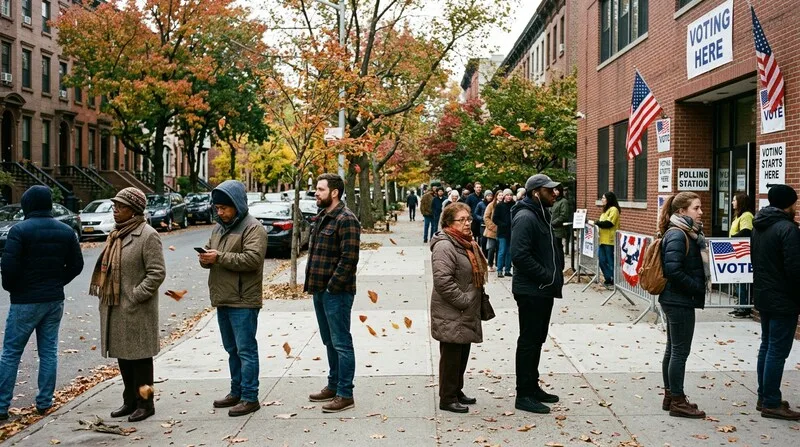
Open vs. Closed vs. Semi-Open Primaries
Closed Primaries
Only voters registered with a party may vote in that party's primary. States include New York, Pennsylvania, Florida, and New Mexico. Critics say this excludes independent voters (roughly 30-40% of the electorate in many states) and pushes nominees toward their party's ideological extreme. Proponents argue parties should control their own nomination processes.
Open Primaries
Any registered voter may participate in either party's primary, regardless of their own registration. States include Michigan, Wisconsin, Tennessee, and Texas. Open primaries can moderate nominees by allowing independent voters to participate. They also create the possibility of strategic crossover voting, where members of one party vote in the other party's primary to influence the opponent's nominee.
Semi-Open / Semi-Closed
Hybrid systems allow independent or unaffiliated voters to participate in one party's primary but require party registration for others. Massachusetts, for example, allows unenrolled voters to cast a primary ballot in either party but requires registered Democrats and Republicans to vote in their own party's primary. These systems try to balance inclusivity with party control.
Top-Two (Jungle) Primary
California, Washington, and Alaska use a top-two (or ranked-choice variant) system where all candidates from all parties appear on a single ballot. The top two vote-getters advance to the general election, regardless of party. This can produce two Republicans or two Democrats facing off in November. California's system has occasionally produced competitive general elections in heavily one-party districts.
Runoff Primaries
In approximately 11 states — mostly in the South — a candidate must win a majority (50%+1) of the primary vote to advance. If no candidate clears 50%, the top two candidates face a runoff election held several weeks later. States using runoff systems include Georgia, Alabama, Mississippi, Louisiana, South Carolina, and Texas.
Runoffs were originally designed in the South to prevent racially diverse fields from producing nominees with narrow pluralities. Their modern effect is to give party activists and donors a second opportunity to influence nominations, and to potentially elevate candidates who can consolidate support behind a single alternative to the primary frontrunner.
Runoff turnout is typically significantly lower than first-round primary turnout — sometimes 30-50% lower. This means the electorate in runoffs is often dominated by the most motivated, ideologically committed voters, which can produce different outcomes than would occur with a broader turnout.
Presidential vs. Congressional Primaries
Presidential primaries allocate delegates to national party conventions. The Democratic and Republican parties have different delegate allocation rules. Democrats use proportional allocation: candidates who reach a 15% threshold in a state or congressional district receive delegates proportional to their share of the vote above the threshold. This means close multi-candidate races can extend deep into the calendar. Republicans have a mix of winner-take-all and proportional rules that vary by state.
Congressional and state-level primaries typically elect a single winner by plurality or majority, depending on state rules. In most states, the candidate with the most votes wins — even with a plurality well below 50%. This means a crowded primary field can produce a nominee who received only 25-30% of the vote, potentially someone who is not the preferred choice of a majority of primary voters.
The 2026 cycle will feature high-profile Senate primaries in Georgia, Michigan, New Hampshire, and Virginia (Democratic) and potentially competitive Republican primaries in Nevada, Maine, and other states where incumbents may face challenges from the right.
Primary System Types at a Glance
| Primary Type | Example States | Who Can Vote | Key Effect | Runoff Rule |
|---|---|---|---|---|
| Closed | NY, PA, FL, NM | Registered party members only | Boosts ideological base; excludes ~30-40% of independents | Varies by state |
| Open | MI, WI, TN, TX | Any registered voter | Allows crossover voting; can moderate nominees or invite strategic voting | TX uses runoff at 50%+1 |
| Semi-Open / Semi-Closed | MA, OH, RI, NH | Party members + unaffiliated voters choose a party ballot | Partial inclusion of independents; varies significantly by state rules | Generally no runoff |
| Top-Two (Jungle) | CA, WA | All voters; one unified ballot | Top 2 advance regardless of party — can produce same-party general elections | No runoff; top-two advance |
| Ranked-Choice + Top-Four | AK, ME | All voters; rank multiple candidates | Reduces spoiler effect; rewards broad coalitions over base mobilization | RCV eliminates lowest in rounds |
| Runoff Primary | GA, AL, MS, SC | Open or closed depending on state | Requires 50%+1 to win; second round if no majority; lower turnout in runoff | Built into system |
Approximately 11 states — mostly in the South — use majority-threshold runoff rules. California and Washington use top-two for all offices; Alaska uses top-four with ranked-choice voting for state and federal races.
Frequently Asked Questions
When are the 2026 primary elections?
State primaries are staggered across the calendar from March through September 2026. Early states include Texas (March), Illinois and Pennsylvania (March/April), and Ohio (May). Most states hold primaries between May and August. A handful of states, including New Hampshire and Delaware, hold late primaries in September. Runoff primaries typically follow 3-6 weeks after the first round.
Can independents vote in primaries?
It depends entirely on the state. In open primary states (Michigan, Wisconsin, etc.), independents can vote in either party's primary. In closed states (New York, Pennsylvania, Florida), independents are excluded from party primaries entirely. In semi-open states, independents can often choose one party's primary to participate in. In California and Washington's top-two system, everyone votes on the same ballot regardless of registration. Some states allow same-day registration that effectively extends open-primary access to any voter who registers by Election Day.
What is a safe seat and how does it affect primaries?
A safe seat is a congressional or state legislative district where one party has such a structural advantage that the general election is not competitive. In safe seats, the primary is the decisive election — whoever wins the dominant party's primary will almost certainly win in November. This concentrates power in the smaller, more ideologically intense primary electorate and is a major reason why Congress has polarized: members in safe seats have strong incentives to please primary voters and weak incentives to appeal to the median general-election voter.



Stay ahead of the polls
Weekly updates: Generic Ballot, Trump Approval, 2026 race forecasts. No spam, unsubscribe anytime.
Double opt-in. GDPR-compliant. Unsubscribe any time.
We use cookies for analytics and functionality. Learn more