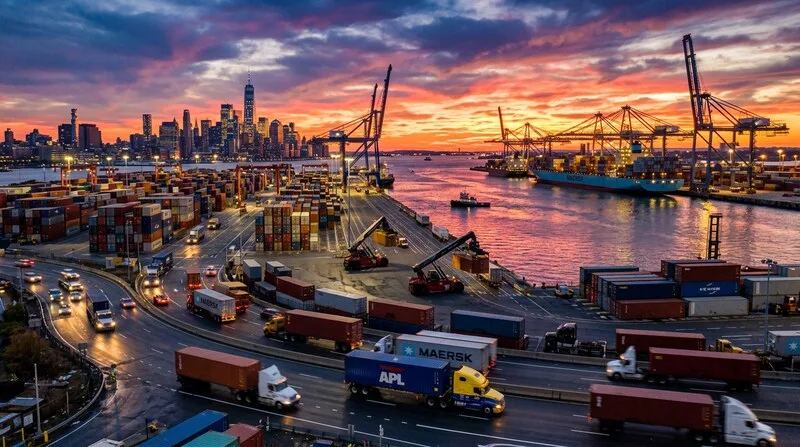
- New York is the most expensive House battleground — NYC metro ad rates are 3–5x higher than Pittsburgh or Columbus; per-seat campaign costs exceed $20M in the most competitive NY districts
- CLF (R super PAC) vs. HMP (D): HMP projected $250M+ total cycle spend — a financial advantage for D that concentrates resources in the highest-value competitive districts
- Digital and streaming ads are more cost-efficient than broadcast in NY markets — campaigns increasingly split budgets between TV and targeted CTV buys in specific zip codes
- House ad spending in competitive districts has crossed diminishing returns: the marginal voter reached in the last $10M is already saturated with political messaging from both sides
New York: The Most Expensive House Battleground
New York's five competitive House districts — clustered on Long Island, in the Hudson Valley, and in Staten Island-adjacent areas — are the most expensive seats in the country to contest. The NYC metro television market commands the highest ad rates nationally: a 30-second spot during local news in New York City costs 3-5 times the equivalent buy in Pittsburgh or Columbus.
Republicans captured several of these NY seats in 2022 by narrow margins — most famously NY-3 (the George Santos seat, later vacated by expulsion) and NY-4 in Nassau County. Democrats see flipping 3-4 NY seats as the fastest path to the House majority. Combined candidate, DCCC, NRCC, HMP, and CLF spending in New York markets is projected to exceed $200 million.
CLF vs. HMP: The Super PAC War
The Congressional Leadership Fund (Republican) and House Majority PAC (Democratic) are the dominant financial forces in competitive House races. Both organizations are structured to raise unlimited corporate and individual contributions, channeling them into advertising, voter contact, and opposition research in the most competitive districts.
In 2022, CLF spent over $220 million to help Republicans flip the House. In 2024, HMP outspent CLF significantly in defense of targeted Democratic seats. For 2026, both organizations are projecting $250M+ cycles. The arms race intensifies: every CLF reservation in a New York market prompts an HMP counter-reservation, driving up broadcast rates and making October buys increasingly expensive.
California: Multiple Expensive Markets
California's competitive seats span four distinct TV markets: Los Angeles (the second most expensive nationally), San Diego, Fresno, and Sacramento. A campaign running in CA-13 (San Joaquin Valley) buys in Fresno but also needs digital buys to reach Valley voters who consume LA media. CA-45 in Orange County buys primarily in Los Angeles. Running competitive campaigns in multiple California districts simultaneously requires coordinated media buying across several expensive markets.
D dark money for House races. Projects $250M+ in 2026. NY focus first, then CA and PA. Works parallel to DCCC campaign infrastructure.
R dark money for House races. Projects $250M+ defensive spend. CA and NY competitive seats, plus AK-AL and ME-2. Works alongside NRCC.
Connected TV and YouTube pre-roll are fastest-growing ad channels in House races. Allow voter-file targeting at TV-quality creative. Younger voters reached almost entirely digitally.
Frequently Asked Questions
Why does New York dominate House advertising spending?
New York has 4-5 of the most competitive House seats in the country, all in the NYC metro area — the most expensive TV market nationally. Ad rates are 3-5x higher than mid-sized markets. Democrats see flipping NY seats as the fastest path to the House majority, justifying maximum investment.
What is the Congressional Leadership Fund?
CLF is the primary Republican-aligned House super PAC, able to raise unlimited contributions. It spent $220M+ in 2022. Its Democratic counterpart is the House Majority PAC (HMP). Together they constitute the dominant financial forces in competitive House races, often outspending the candidates themselves.
How does California's ad spending differ from other states?
California has multiple competitive districts in different expensive markets (LA, San Diego, Sacramento, Fresno). Its all-mail voting system extends the campaign ad window by 30+ days. Both factors push California total House ad spending to approximately $150M across competitive races in 2026.