Biography
James Enos Clyburn was born on July 21, 1940, in Sumter, South Carolina, the son of a fundamentalist minister who instilled in him both a strong Christian faith and a fierce belief in racial justice. He came of age in the segregated South at precisely the moment when the civil rights movement was beginning to dismantle legal apartheid, and as a student at South Carolina State College he was drawn directly into the struggle. He participated in sit-in protests at lunch counters in the early 1960s and was arrested — and it was in the holding cell after one of those arrests that he met Emily England, who would become his wife of 58 years. The experience of organizing, of accepting personal risk for a moral cause, and of learning to build coalitions across fractured communities became the foundation of everything he would do in politics for the next six decades.
After college, Clyburn worked as a teacher and then as South Carolina's Human Affairs Commissioner, the state agency charged with enforcing civil rights laws — a position he held under four governors spanning both parties. He ran for Congress in 1992, when a new majority-Black 6th District was created following the Voting Rights Act, and won easily. He has held the seat ever since, building seniority and influence through the patience and coalition work that define his style. He was elected House Majority Whip in 2007 — becoming the third-ranking Democrat and the highest-ranking Black member of Congress — and held that position again from 2019 to 2023, overseeing the whip operation that passed the Affordable Care Act, the American Rescue Plan, and the Bipartisan Infrastructure Law.
His national significance crystallized in February 2020, when his endorsement of Joe Biden three days before the South Carolina primary essentially decided the Democratic presidential nomination. Biden was on the verge of political collapse; Clyburn's personal, emotionally resonant endorsement mobilized Black South Carolina voters who trusted him completely, Biden won by 28 points, and the race was over within a week. Clyburn served as a senior advisor to the Biden administration and remained one of the most consequential back-room forces in Democratic politics even as he aged into his mid-80s. His congressional seat is one of the safest Democratic seats in the country.
Key Policy Areas
Civil Rights & Voting Rights
Clyburn's political identity is inseparable from his civil rights background. As a young activist who was arrested during sit-ins, he brings a firsthand moral authority to voting rights issues that few contemporary politicians can match. He has been a consistent advocate for reauthorizing and strengthening the Voting Rights Act, particularly after the Supreme Court's 2013 Shelby County decision gutted its preclearance requirements, enabling a wave of state-level voting restrictions targeted at Black voters. He has framed voting rights as the central civil rights struggle of his generation: "The right to vote is preservative of all other rights," a sentiment that animates his approach to every federal election and redistricting fight. South Carolina's 6th district itself exists because of Voting Rights Act enforcement.
Rural & Minority Economic Development
Clyburn has championed what he calls "10/20/30" funding: directing 10 percent of federal program funding to counties where 20 percent or more of the population has lived in poverty for 30 years or more. This formula, which he embedded into multiple pieces of legislation including the American Recovery and Reinvestment Act and elements of the American Rescue Plan, disproportionately targets rural and minority counties across the South, Appalachia, and Native American territories that have been historically bypassed by federal economic development. It represents Clyburn's broader philosophy that the Democratic Party must deliver material results for its most loyal Black and rural constituencies, not merely offer symbolic representation. His 6th district, which includes portions of the rural South Carolina coastal plain, reflects the constituencies his policies are designed to serve.
Party Strategy & Moderation
Despite his liberal voting record, Clyburn has been one of the Democratic Party's most vocal internal critics of progressive overreach. After the 2020 elections, he publicly blamed the "defund the police" slogan for costing Democrats House seats in swing districts, arguing that radical messaging enabled Republicans to paint the entire party as extreme. He has consistently warned against positions he sees as politically self-defeating, from Medicare for All in swing-district primaries to progressive social media messaging that plays well in urban cores but alienates the moderate voters Democrats need to win. His willingness to criticize his own party's progressive wing from a position of unimpeachable civil rights credibility — an arrested sit-in veteran cannot be accused of indifference to justice — gives his strategic warnings particular weight within the caucus.
The Biden Endorsement: February 26, 2020
By late February 2020, Joe Biden's presidential campaign was in serious trouble. He had placed fourth in Iowa, fifth in New Hampshire, and second in Nevada. The campaign was running low on money. Internal polling showed him vulnerable even in South Carolina — a state he had long counted on as a firewall because of its large Black Democratic primary electorate. Bernie Sanders was the national frontrunner; Biden faced the real possibility of losing South Carolina and facing Super Tuesday without a single first-place finish.
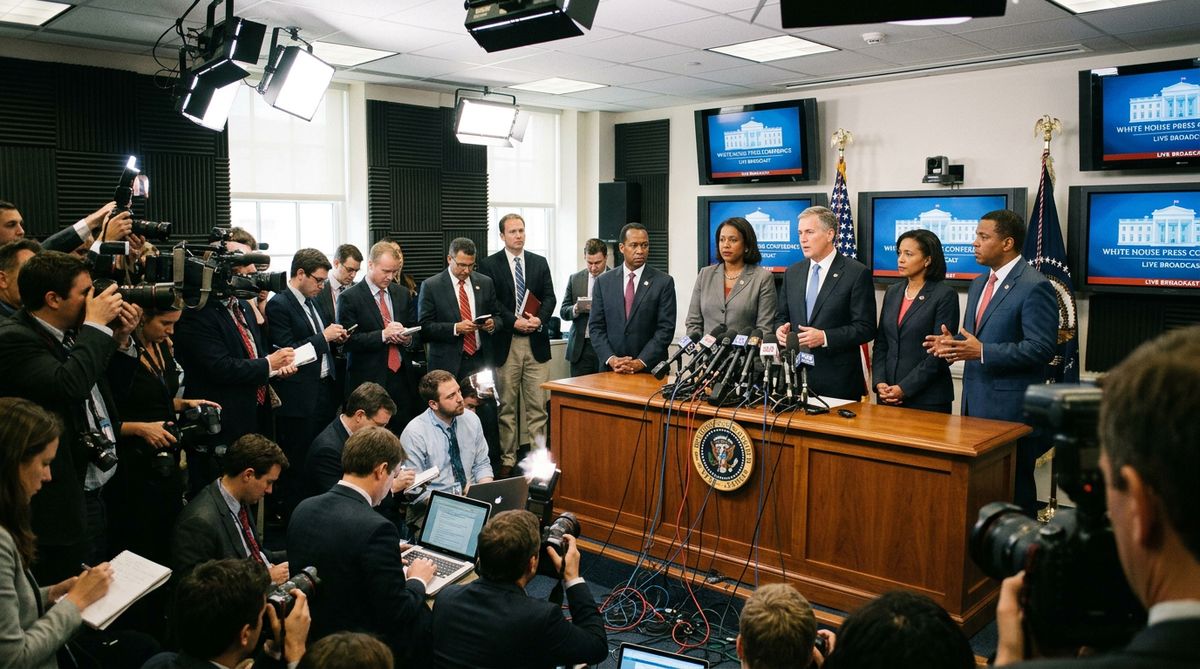
On February 26, 2020, three days before the South Carolina primary, Jim Clyburn stepped in front of cameras and delivered one of the most consequential endorsements in modern primary history. His words were direct and personal: "I know Joe. We know Joe. But most importantly, Joe knows us." For Black South Carolina Democrats who had trusted Clyburn for decades — who had watched him navigate the civil rights movement, build the state's Black political infrastructure, and deliver results from Washington — his endorsement was a certification: this is the man who will deliver for our community.
Biden won South Carolina by 28 percentage points. The day after the primary, Pete Buttigieg, Amy Klobuchar, and Beto O'Rourke all dropped out and endorsed Biden, consolidating the moderate lane. Biden swept Super Tuesday three days later and never relinquished the nomination lead. Political scientists who have studied the 2020 primary regard Clyburn's endorsement as a textbook case of elite cue-taking in which a single trusted figure's signal dramatically altered voter behavior across a critical electorate at a decisive moment. It is almost certainly the most consequential endorsement in the 2020 cycle and one of the most consequential in recent Democratic primary history.
Historical Standing & Legacy
Jim Clyburn's legacy is that of a bridge-builder who understood that durable political change requires both moral clarity and institutional power. His civil rights background gave him the moral authority to speak on race, justice, and voting rights with a credibility that no amount of political positioning can manufacture. His decades of legislative work gave him the institutional knowledge to translate moral commitments into enacted policy. The two together made him uniquely effective.
He is the longest-serving Black member of Congress from South Carolina and one of the most senior Black members in congressional history. His influence on the 2020 Democratic primary may be the single most consequential act of any congressional Democrat in the decade: by endorsing Biden at the right moment, he arguably determined who became president and therefore who appointed two Supreme Court justices, passed the Bipartisan Infrastructure Law, and managed the COVID-19 recovery. His "10/20/30" funding formula, embedded in multiple pieces of federal legislation, will direct billions of dollars to historically neglected communities for years.