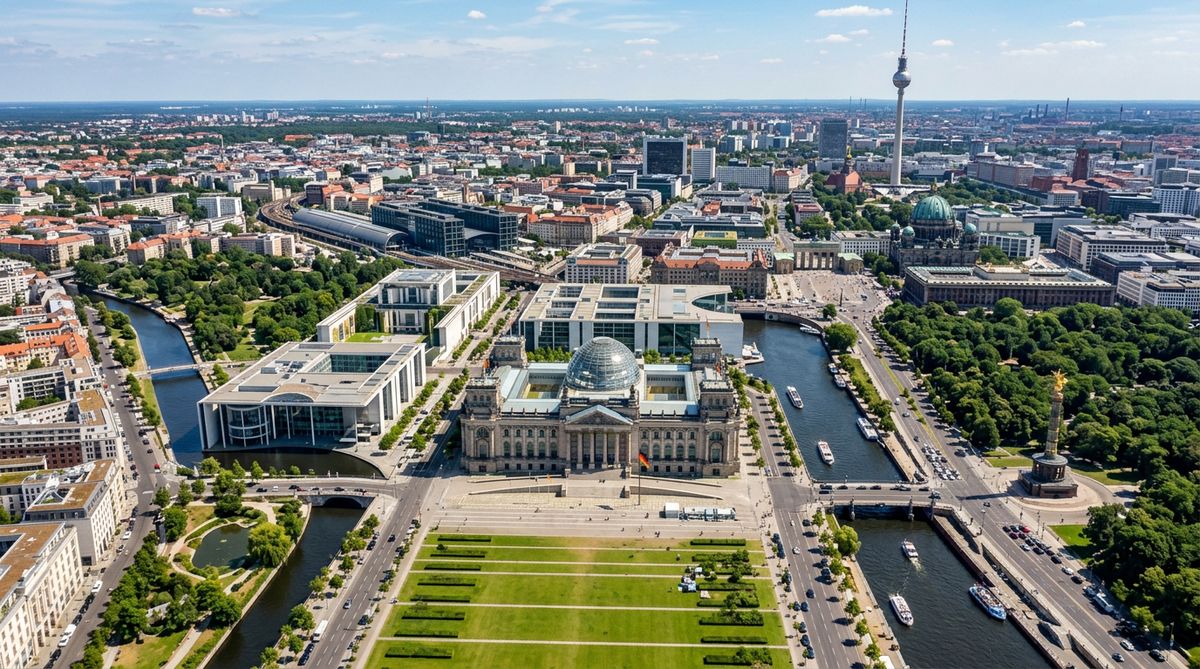
- The AfD won Mecklenburg-Vorpommern on September 20, 2026, with 38.3% to the SPD's 35.4% — while Germany's CDU, the party of Angela Merkel and current Chancellor Friedrich Merz, collapsed to 4.9% and was shut out of a state parliament for the first time in its history.
- Trump praised the AfD by name on Truth Social after its September 6 record win in Saxony-Anhalt, writing "THEY ARE ON THE RISE" and signing off "MGGA."
- Elon Musk publicly congratulated the AfD on the same Saxony-Anhalt win, and the party's winning candidate there — Ulrich Siegmund, now also victorious in Mecklenburg-Vorpommern — thanked Musk directly.
- Vice President JD Vance met AfD leader Alice Weidel in February 2025 after publicly attacking Germany's political "firewall" against the party, a meeting Berlin officials called election interference.
A Second State Falls to the AfD in Two Weeks
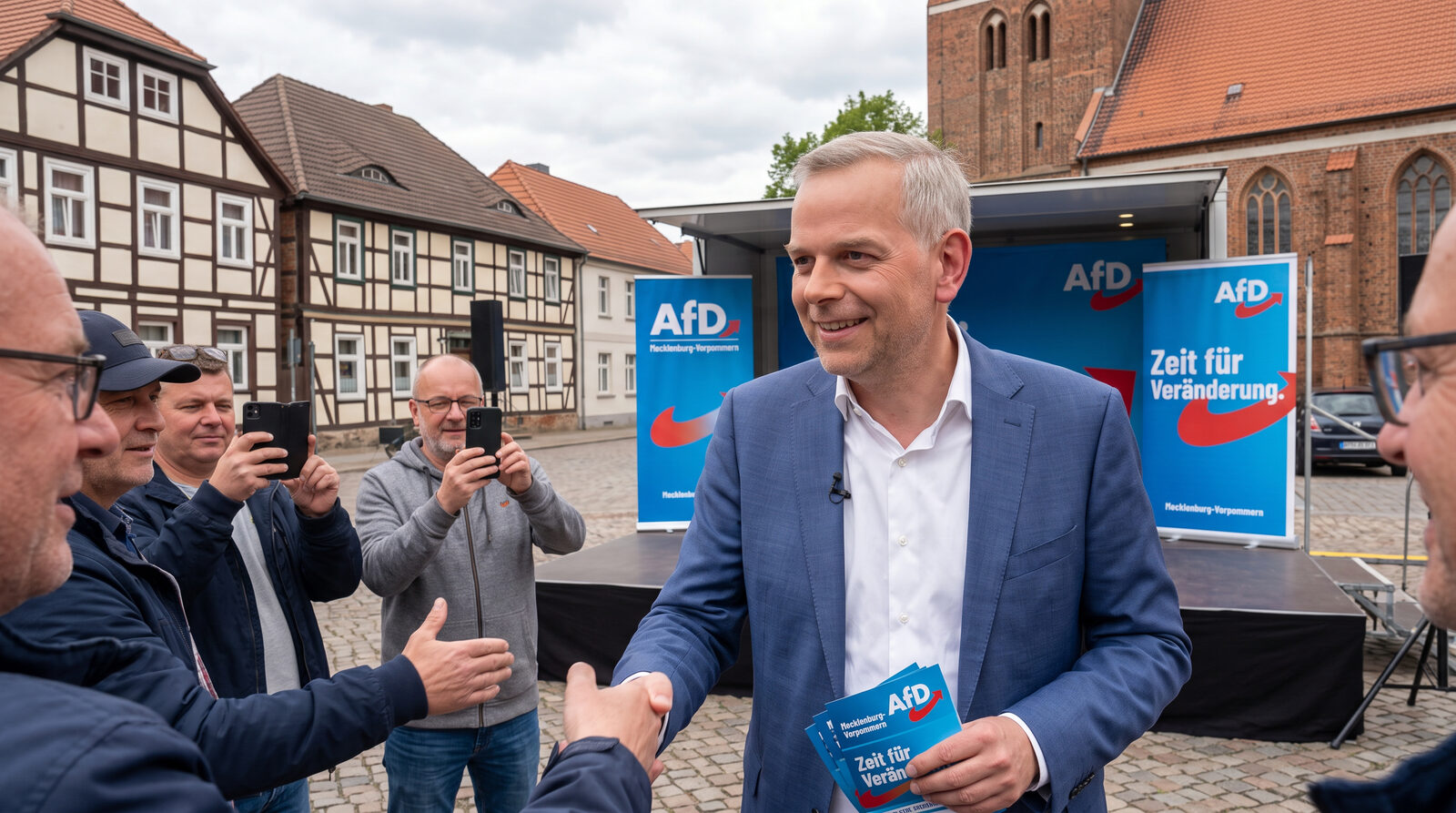
Germany held two more state elections on September 20, 2026 — in Berlin and in the northeastern state of Mecklenburg-Vorpommern — just two weeks after the AfD's record-breaking 43.8% win in Saxony-Anhalt. In Mecklenburg-Vorpommern, the AfD, led by Ulrich Siegmund, won again: 38.3% to incumbent SPD premier Manuela Schwesig's 35.4%. The bigger shock was further down the ballot: the CDU, the party that has produced eight of Germany's postwar chancellors, took just 4.9% — below the 5% threshold required for representation, and the first time in the party's 80-year history that it has failed to win seats in any German state legislature.
In Berlin the same night, the story ran in the opposite direction: Die Linke, a democratic-socialist party with roots in the old East German communist party, became the strongest force in the capital's parliament for the first time ever, with 25.5% of the vote. Both results point to the same underlying trend — the collapse of Germany's traditional center, CDU and SPD, squeezed from the right by the AfD and from the left by Die Linke.
Trump's "MGGA" Moment
The current pattern of American engagement with the AfD started well before this month. After the party's Saxony-Anhalt win on September 6, President Trump posted on Truth Social: "Wow! The Populist Party in Germany just had a really big night. They finally got tired of the absolutely horrible Immigration rules and regulations which have hurt Germany so badly. THEY ARE ON THE RISE, and not going to take it anymore! MGGA!!! President DJT" — playing on his own "MAGA" slogan (Fox News).
Elon Musk responded to the same result on X, replying "Gut gemacht!" (well done) to a post from AfD co-leader Alice Weidel congratulating Ulrich Siegmund on the Saxony-Anhalt win. Siegmund thanked Musk in English for his "clear and highly important perspective" on German politics. Musk has been publicly engaged with the AfD since at least January 2025, when he urged Germans directly to vote for the party ahead of that February's federal election (NBC News).
Vance, Munich, and the "Firewall" Speech
The most consequential American intervention came earlier, in February 2025. At the Munich Security Conference, Vice President JD Vance used his first major foreign policy speech to directly criticize the "Brandmauer" — the cross-party consensus among Germany's mainstream parties not to govern with the AfD, born out of the country's Nazi history. "Democracy rests on the sacred principle that the voice of the people matters," Vance told a room of stunned European officials. "There's no room for firewalls." He then met privately with Weidel for roughly 30 minutes at his hotel to discuss the war in Ukraine, German domestic politics, and free speech (Times of Israel). German officials publicly accused the Trump administration of election interference; the meeting happened anyway, ten days before Germany's federal election.
“Democracy rests on the sacred principle that the voice of the people matters. There’s no room for firewalls.”
— JD Vance, Munich Security Conference, February 2025
Why This Keeps Happening — And Why Washington Is Watching
The AfD's own leadership has actively courted the comparison to Trump's movement. Ulrich Siegmund, the party's winning candidate in both Saxony-Anhalt and now Mecklenburg-Vorpommern, has told CNN that the AfD's approach is comparable to the Trump administration's "America First" agenda. That framing helps explain why figures in Trump's orbit keep engaging publicly with a party that mainstream German politicians, including Chancellor Friedrich Merz, still refuse to work with — Merz called the Mecklenburg-Vorpommern result a "disaster" for German democracy (CNN).
For American observers, the pattern matters beyond German domestic politics. Germany is the EU's largest economy and a cornerstone NATO ally; a mainstream German party abandoning its own 80-year taboo on cooperating with the far right — something that has not yet happened, but is now discussed openly after two consecutive AfD state wins — would reshape European debates on Ukraine funding, NATO burden-sharing, and immigration that directly affect U.S. foreign policy.
