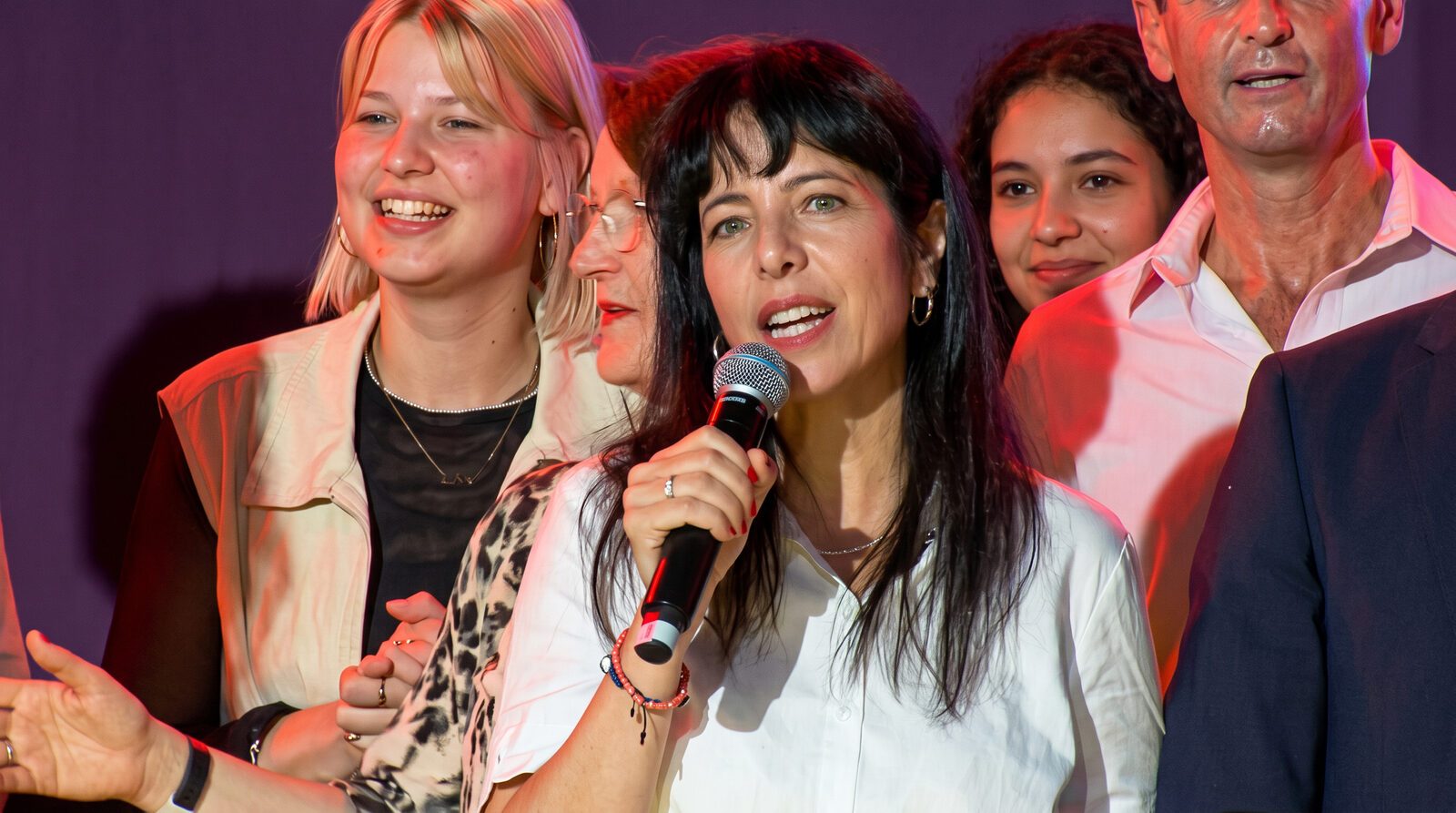
- Die Linke won Berlin outright on September 20, 2026, with 25.5% — the first time in the party's history it has finished first in the German capital.
- Josef Schuster, president of Germany's Central Council of Jews, said the win "deeply concerns" him, citing campaign-stage calls for the deaths of Israeli soldiers.
- A Berlin organized-crime figure attended two separate Die Linke election-night parties, accompanied by a man German reporting identifies as a leading domestic supporter of the PFLP, a U.S.-designated terrorist organization.
- Die Linke's own leadership disputes the antisemitism characterization, while acknowledging it did not vet the guest list at its Berlin party.
A Historic Win, Instantly Overshadowed
Die Linke — a German democratic-socialist party whose predecessor party, the PDS, was the direct successor to East Germany's ruling communist SED — won Berlin's state election on September 20, 2026, with 25.5% of the vote, a gain of more than 13 points since the last election in 2023. It is the strongest result the party has ever posted in the German capital, putting it in a position to lead Berlin's city government for the first time since German reunification, alongside coalition partners the SPD or Greens. Its top candidate, Elif Eralp, ran on a platform focused on housing and the "socialization" of large corporate landlords such as Vonovia.
The win was, by any normal standard, the story of the night. It did not stay that way for long.
"Deeply Troubled": The Central Council of Jews Responds
Within hours of the result, Josef Schuster, president of the Central Council of Jews in Germany — the country's main umbrella organization for its Jewish community — issued a sharply worded statement. "That a party, on whose campaign stage the deaths of people were openly called for, emerges as the winner of the election deeply concerns me," Schuster said, referencing incidents at Die Linke campaign events where, according to his account, attendees called for the deaths of Israeli soldiers and chanted for intifada while parts of the crowd danced. He said Die Linke has "no credibility whatsoever" in combating antisemitism, which he said the party "tolerates and freely allows within its ranks," and directly urged the SPD and Greens not to help the party into Berlin's city hall (Handelsblatt).
“In the fight against Jew-hatred, which this party tolerates and freely allows within its ranks, the Left has no credibility whatsoever.”
— Josef Schuster, President, Central Council of Jews in Germany
A Clan Figure, a PFLP Supporter, and a Party Scrambling to Respond
Compounding the story, Issa Remmo — head of one of Berlin's best-known Arab organized-crime clans, previously linked to Germany's largest-ever jewelry heist at the Bode Museum — showed up at not one but two separate Die Linke election-night gatherings, first in the Neukölln district and later at the party's citywide event. He told reporters he felt "supported by a Berlin party for the first time." Berlin's CDU mayor, Kai Wegner, called Remmo's appearance "a disturbing signal," saying any party seeking to govern the city "must make unmistakably clear that there can be no proximity whatsoever to structures that belong to organized crime."
More serious for Die Linke: German reporting from Tagesspiegel and the research organization democ identified a second man accompanying Remmo as Ibrahim Ibrahim, described as a leading German supporter of the Popular Front for the Liberation of Palestine (PFLP) — a group the U.S. State Department has listed as a Foreign Terrorist Organization since October 1997. Ibrahim reportedly appeared representing an umbrella group German domestic intelligence classifies as extremist, and had publicly called slain Hamas leader Yahya Sinwar a "steadfast leader" and "martyr hero" after the October 7, 2023 attacks. Die Linke's Berlin co-chair, Jorinde Schulz, said the party did not know who Ibrahim was and had not vetted its guest list.
Why This Sounds Familiar to American Ears
Since October 7, 2023, American politics has been living through its own version of this exact tension: how does the political left navigate accusations of antisemitism tied to Israel and Gaza, particularly on college campuses and within younger, more online-native progressive coalitions? Berlin's night did not resolve that debate — if anything, it is now Europe's most prominent live example of it. A rising socialist party, an electorate that handed it a historic mandate on housing and cost-of-living grievances that have nothing to do with the Middle East, and a controversy that had nothing to do with its actual platform arriving within hours of its win: the pattern will look familiar to anyone who has followed the DSA's own internal fights over the same question in the United States.
What happens next is a genuinely open question. Die Linke needs the SPD or Greens, or both, to actually govern Berlin — and Schuster's intervention puts direct public pressure on both potential partners before coalition talks have even begun.
