- 58% of Americans are worried that AI will eliminate jobs broadly in the economy (Pew 2025), but only 28% are worried about their own specific job — a "pre-disruption pattern" where the macro threat is recognized before personal impact is felt.
- AI job anxiety is highest among workers in clerical, administrative, data entry, and customer service roles (71% concerned) — precisely the lower-middle-income occupations that skew toward Democratic coalition members and swing voters.
- H-1B visa politics have complicated tech's political alignment: Trump's restrictionist immigration base clashes with Silicon Valley's demand for foreign tech workers, creating intra-coalition tension for Republicans who won big tech support in 2024.
- AI regulation is politically scrambled in 2026: conservative populists want worker protection regulation; progressive technocrats resist restraining innovation — neither party has a clean, unified AI policy message.
- The 2024 MAGA-tech alignment (Musk, Thiel, Andreessen, crypto PACs backing Trump) is under stress as Republican governance decisions — DOGE contracting cuts, H-1B policy uncertainty, regulatory unpredictability — conflict with tech industry interests.
The AI Jobs Anxiety
No technology issue polls with more urgency in 2026 than the fear of AI-driven job displacement. Pew Research finds 58% of Americans worried that AI will eliminate jobs broadly in the economy — but only 28% are worried about their own specific job. This gap is analytically significant. People recognize the macro threat while believing, for now, that their individual situation is more secure. Economic historians call this a pre-disruption pattern: workers sense the tide rising but have not yet felt it personally.
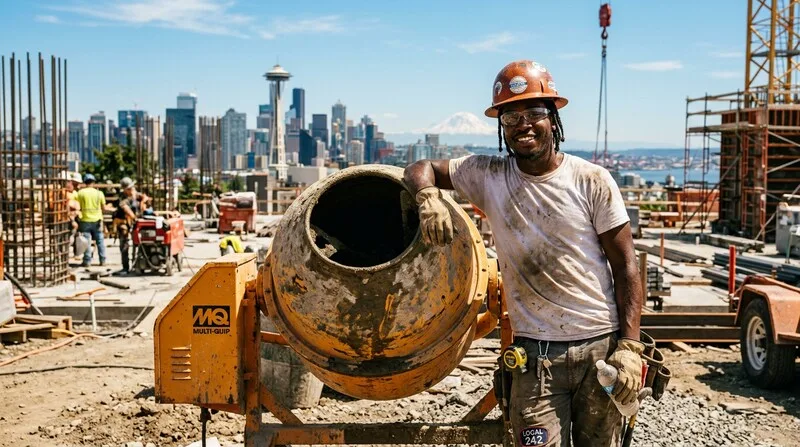
The concern is stratified by education and occupation in predictable ways. Workers without four-year degrees are more worried (67% concerned about economy-wide job loss) than college graduates (51%). Workers in clerical, administrative, data entry, and customer service roles — jobs that early AI deployment has most directly targeted — show the highest concern at 71%. Workers in physical trades (plumbing, electrical, construction) are least concerned, reflecting both the genuine limitation of current AI capability in physical tasks and a cultural distance from office-based technology anxiety.
The political implications are still forming. Democrats have historically been more comfortable with economic regulation and retraining programs; Republicans have been more skeptical of government intervention in technology markets. But AI is scrambling these alignments. Some conservative populists want aggressive AI regulation to protect American workers. Some progressive technocrats are reluctant to restrain innovation. The bipartisan awkwardness on AI policy is one reason the issue has not yet resolved into a clean partisan attack vector in 2026 campaigns.

The H-1B Flashpoint
The debate over H-1B visas — which allow American tech companies to hire foreign skilled workers — became an unusually public internal Republican conflict in late 2024 and 2025. Tech industry donors and executives, many of them aligned with Trump's second term, argued for expanding H-1B capacity as essential to American AI competitiveness. Populist conservative voices argued that H-1B visas displace American tech workers and suppress wages in the sector.
The dispute revealed a genuine tension in the Trump coalition: the tech billionaire wing (Musk, Altman, Andreessen) versus the working-class nationalist wing. Trump sided with the tech industry, defending H-1B visas in public comments that surprised his anti-immigration base. Polling on the underlying issue shows Americans roughly split: 47% favor maintaining or expanding H-1B visas for tech talent, 41% oppose. But the framing matters — when H-1B is described as "replacing American workers," opposition rises to 56%. When described as "keeping AI development in America rather than ceding it to China," support rises to 59%.
Tech Policy Polling — Partisan Breakdown 2026
| Policy Position | Overall | Democrat | Independent | Republican |
|---|---|---|---|---|
| Social media oversight / regulation | 61% | 71% | 60% | 52% |
| More AI company regulation | 54% | 67% | 54% | 40% |
| Break up large tech companies | 52% | 59% | 51% | 46% |
| Govt. action on AI job displacement | 63% | 75% | 62% | 50% |
| AI deepfake laws / criminal penalties | 78% | 81% | 77% | 74% |
| Maintain/expand H-1B visas (tech) | 47% | 54% | 46% | 40% |
| Ban TikTok / CCP-linked platforms | 54% | 49% | 53% | 61% |
| Platform liability for AI content | 58% | 66% | 57% | 49% |
Sources: Pew Research Center, Gallup, Reuters/Ipsos, YouGov/Economist. Polling averages, January–March 2026. "Overall" includes leaners.
Big Tech Antitrust: Bipartisan Populism
The 52% support for breaking up large technology companies is one of the more striking findings in 2026 tech polling, precisely because it is one of the few areas where significant Republican, independent, and Democratic support overlaps. The reasons differ radically by partisan group: conservatives worry about perceived censorship of right-wing speech on social media platforms; liberals worry about monopolistic pricing and labor market dominance; independents express a general sense that companies like Google, Amazon, and Meta have accumulated too much power over everyday life.
The Trump Justice Department has pursued some antitrust actions against tech companies, including continuing the Google search monopoly case that began under Biden. But the tech industry's growing financial ties to Trump\'s approval — including massive AI investment announcements in 2025 that were framed as job creation victories for the administration — have created awkward political dependencies that make full-throated antitrust action politically complicated. The result is populist rhetoric on Big Tech from both parties, matched with constrained actual policy action.
Criminal penalties for AI-generated deepfakes that deceive or defame reach 78% support across party lines. This is the highest polling consensus of any AI policy question and reflects visceral voter concern about AI-fabricated videos of public figures. After multiple high-profile cases of AI-generated political disinformation in the 2024 cycle, voters across partisan lines want legal accountability — one of the few AI issues that could generate actual bipartisan legislation in 2026.
Frequently Asked Questions
What do Americans think about AI and job displacement?
58% worry AI will eliminate jobs broadly in the economy (Pew, February 2026), but only 28% worry about their own job specifically. Concern is highest among workers without college degrees (67%) and in clerical/customer service roles (71%). 63% support government action to manage AI-related job displacement.
How much regulation of AI companies do voters support?
54% support more government regulation of AI companies (Gallup, January 2026), up from 47% in 2023. By party: 67% Democrats, 54% independents, 40% Republicans. A notable gender gap exists: 62% of women vs. 46% of men support additional AI regulation. Deepfake laws command 78% support across party lines.
Do voters support breaking up large tech companies?
52% support antitrust action to break up large tech companies — with unusual bipartisan breadth: 59% Democrats, 51% independents, 46% Republicans. Each group has different motivations (censorship concerns for conservatives, monopoly concerns for liberals) but arrives at the same position, making this a rare convergence in polarized opinion polling.