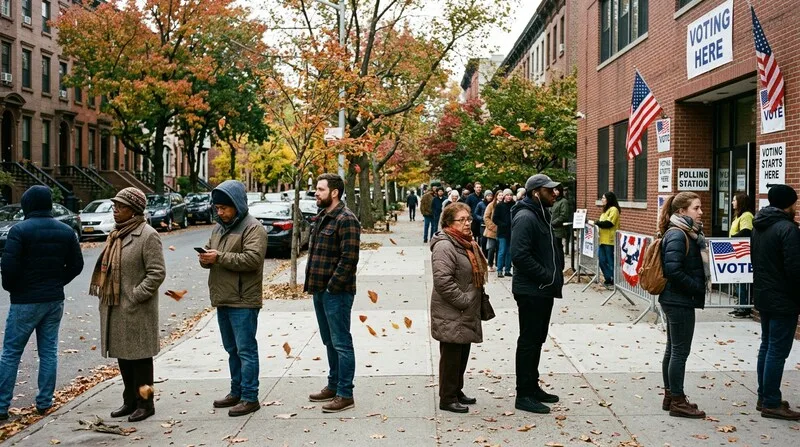
Voter registration is the precondition for every vote cast. The post-2024 registration surge — particularly among younger voters and in battleground states — is one of the most closely watched leading indicators of 2026 turnout potential. But the gap between who registers and who shows up in a non-presidential midterm is one of the largest and most consequential in American electoral politics.
- Youth registration in battleground states has increased +18% since November 2024, driven by post-election organizing and abortion rights mobilization — but only 27% of young registered voters turned out in the 2022 midterms.
- The turnout gap is the critical variable: voters 65+ show 69% turnout in midterms versus 27% for the 18–29 cohort — a 42-point difference that routinely cancels out registration gains among young voters.
- Pennsylvania Democrats have built a 33,000-registration advantage since November 2024, one of the strongest post-election registration surges in a battleground state in recent cycles.
- Over 20 states now have automatic voter registration, which structurally increases the registered population — but automatic registration does not automatically increase turnout, especially in midterm years.
- Registration trends are a leading indicator, not a guarantee: whether new registrants vote at higher rates in 2026 than in prior midterms will depend on candidate quality, issue salience, and ground game mobilization.
Post-2024 Registration by State: D vs. R Balance
| State | New D Registrants (Nov 2024-Mar 2026) | New R Registrants | Net D/R Advantage | 2026 Senate Race |
|---|---|---|---|---|
| Pennsylvania | 95,400 | 62,100 | D+33,300 | McCormick (R) defending |
| Wisconsin | 71,200 | 48,900 | D+22,300 | Baldwin (D) defending |
| Michigan | 88,700 | 61,300 | D+27,400 | Peters not up until 2028 |
| Georgia | 67,800 | 54,200 | D+13,600 | Ossoff (D) defending |
| Arizona | 52,100 | 51,700 | D+400 (even) | Kelly (D) defending |
| Nevada | 38,400 | 44,800 | R+6,400 | Rosen (D) defending |
| North Carolina | 61,200 | 58,900 | D+2,300 | Tillis (R) defending |
Registration data from state election boards through March 2026. Note: registration advantage is one factor among many — turnout rates, crossover voting, and third-party/unaffiliated registrants also affect electoral outcomes. Nevada's Republican registration advantage reflects continued state-level rightward trend.

Youth Registration: The Surge and the Turnout Gap
The post-2024 youth registration surge reflects a pattern that has appeared in every election cycle since 2016: young voters register at elevated rates in response to a high-salience presidential election, but the registration surge does not automatically translate into midterm turnout. In 2018, youth turnout spiked to approximately 36% — substantially above the 2014 midterm rate of 19.9% — but still significantly below the 52%+ turnout rate for voters over 45. The 2022 youth turnout of approximately 27% represented a regression back toward historical norms after the 2018 spike.
For 2026, youth-focused organizations are investing in conversion strategies that attempt to maintain post-2024 registration momentum through to actual November votes. The NAACP Youth and College Division, Campus Vote Project, and dozens of state-based youth voting groups have developed sustained engagement programs — campus organizing, digital reminder campaigns, early voting access facilitation, and peer-to-peer vote pledges — designed to bridge the registration-to-turnout gap. The core argument being made to young voters: the 2026 House and Senate elections will determine whether Medicaid gets cut, whether abortion restrictions expand, and whether Democratic priorities can be implemented — making 2026 directly consequential even without a presidential candidate at the top of the ballot.
Age Group Turnout: Historical Midterm Pattern
| Age Group | 2018 Turnout | 2022 Turnout | Est. 2026 Turnout | Party Lean (2026) | Share of 2026 Electorate (est.) |
|---|---|---|---|---|---|
| 18-29 | 36% | 27% | 32% (est.) | D+22 | 12% |
| 30-44 | 40% | 38% | 40% (est.) | D+8 | 20% |
| 45-64 | 55% | 53% | 55% (est.) | D+1 | 35% |
| 65+ | 65% | 69% | 70% (est.) | R+2 (down from R+8 in 2024) | 33% |
2018 and 2022 turnout from CIRCLE (Center for Information and Research on Civic Learning and Engagement) and Census Current Population Survey. 2026 estimates based on registration trends, enthusiasm polling, and historical midterm adjustment. Party lean from 2026 generic ballot polling by age group. Senior party lean shift reflects Medicaid/Social Security concerns.
Automated Registration and Structural Trends
Automatic Voter Registration Expanding
As of 2026, 23 states plus the District of Columbia have implemented automatic voter registration (AVR), which automatically registers eligible citizens when they interact with government agencies like the DMV. States with AVR have consistently higher registration rates and, in most cases, higher turnout rates than states without it. Several of the most competitive 2026 states — Michigan, Pennsylvania, and Nevada — have AVR systems that are adding voters to the rolls at higher rates than in previous cycles. AVR disproportionately benefits younger and lower-income voters who are less likely to proactively register through traditional channels.
Voter Roll Purges and Restrictions
Several Republican-controlled states have implemented aggressive voter roll maintenance programs, purging inactive voters at higher rates than in previous cycles. Georgia, Texas, and Florida have conducted large-scale purges in 2025-2026. Civil rights groups have challenged some of these purges as removing eligible voters who are still residents, particularly in communities of color where address changes due to housing instability are more common. The net effect of these purges — and the legal challenges to them — is uncertain, but they represent a structural counterforce to Democratic registration gains in some states.
Unaffiliated Registration Growing
The fastest-growing registration category in competitive states is unaffiliated or independent. In Pennsylvania, unaffiliated voters now constitute approximately 14% of registered voters — up from 9% in 2016. In Arizona, independents are the plurality registration category at approximately 35%, exceeding both Democrats and Republicans. Growing unaffiliated registration reflects dissatisfaction with both parties among younger voters and some older moderate voters. In 2026 generic ballot polling, unaffiliated voters are showing a D+9 lean — significantly better for Democrats than in 2022 — which is why both parties are prioritizing outreach to this group.


