- 35 states have some voter ID requirement; 20+ require strict photo ID — research shows disproportionate reduction in turnout among Black, Hispanic, young, and elderly voters
- 71% of Americans support automatic voter registration (AVR) — including Republican majorities — but implementation is blocked in most R-controlled states
- Only 24 states + DC have AVR; John Lewis VRA Advancement Act passed the House but blocked by Senate filibuster threshold
- Shelby County v. Holder (2013) ended VRA preclearance; Texas implemented strict voter ID within hours of the ruling — illustrating the structural impact
The Voting Rights Act: What Remains After Shelby
The Voting Rights Act of 1965 was the most consequential civil rights legislation of the twentieth century. Its Section 5 preclearance requirement forced states with a history of discrimination to get federal approval before changing voting laws. In Shelby County v. Holder (2013), the Supreme Court polling struck down the formula used to determine which jurisdictions required preclearance, effectively ending the preclearance system. In Brnovich v. Democratic National Committee (2021), the Court further narrowed Section 2, making it harder to challenge voting restrictions that disproportionately affect minority voters.
The result has been a significant rollback of federal oversight over state voting laws. Within hours of the Shelby decision, Texas announced implementation of a strict voter ID law that had been blocked under preclearance. North Carolina, Alabama, and other states moved quickly to implement restrictions that had previously required federal approval. Congress has repeatedly introduced the John Lewis Voting Rights Advancement Act to restore and update the VRA, but the bill has passed the House without reaching a Senate floor vote, blocked by the filibuster threshold.
- Shelby County v. Holder (2013): Struck down VRA Section 4(b) coverage formula, ending preclearance
- Crawford v. Marion County (2008): Upheld Indiana’s strict photo ID law
- Brnovich v. DNC (2021): Narrowed Section 2 VRA challenges to state voting laws
- Moore v. Harper (2023): Rejected independent state legislature theory; courts retain role in reviewing election laws
Voter ID Laws: State by State
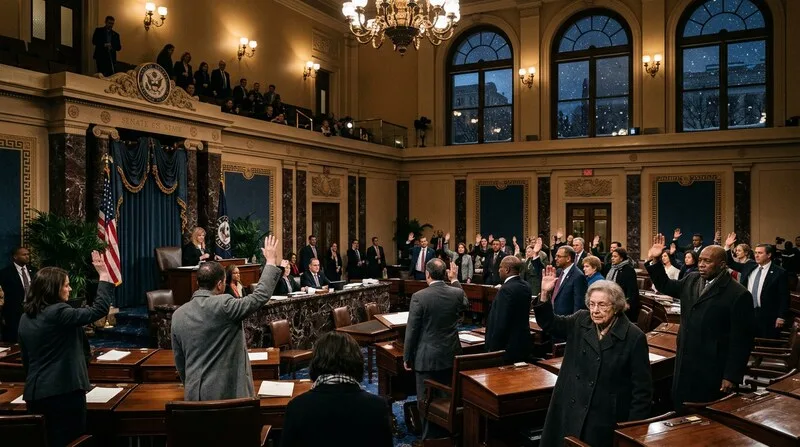
Voter ID laws range from no requirement to strict photo ID where voters without acceptable ID cannot cast a regular ballot. The most restrictive laws are concentrated in Republican-controlled states in the South and Midwest.
| Category | States | # States | Effect |
|---|---|---|---|
| No ID requirement | CA, NY, IL, MA, ME, VT, and others | 15 | Voters sign poll book; signature match or affidavit |
| Non-strict (non-photo) | AK, MN, RI, CT and others | 7 | Backup options available without photo ID |
| Strict non-photo ID | AR, ND and others | 4 | Strict enforcement; no photo required but ID mandatory |
| Non-strict photo ID | FL, MI, TX, AZ and others | 9 | Provisional ballot or alternative allowed without photo ID |
| Strict photo ID | GA, WI, IN, TN, MS, WY, NH and others | 20 | No ID = no regular ballot; limited alternatives |
Polling Place Closures and Mail Voting Restrictions
Polling Place Closures
Since the Shelby decision removed preclearance requirements, thousands of polling locations have closed across former preclearance states. A 2023 Leadership Conference analysis found over 8,000 polling place closures in states that were previously covered by Section 5 between 2012 and 2022. Closures are disproportionately concentrated in predominantly minority precincts. Texas closed more polling places than any other state. Georgia reduced polling locations in multiple counties, contributing to long lines in the 2020 elections. Defenders argue consolidation improves efficiency and that early voting and mail voting alternatives mitigate access concerns.
Mail Voting Rollbacks
Mail voting expanded dramatically in 2020 due to the pandemic, with 46% of Americans voting by mail. By 2026, multiple Republican-controlled states have restricted or reversed that expansion. Georgia's SB 202 (2021) limited the use of drop boxes, shortened the period for requesting mail ballots, and restricted ballot curing. Texas SB 1 (2021) eliminated 24-hour voting and drive-through voting and tightened mail ballot application rules. Florida banned drop boxes except during early voting hours with an election official present. Five states — Oregon, Washington, Colorado, Utah, Hawaii — conduct elections entirely by mail and have seen no evidence of significant fraud.
Automatic Voter Registration: 71% Support, Uneven Implementation
Automatic voter registration (AVR) is one of the few voting policy proposals with strong cross-partisan public support: polling consistently shows roughly 71% approval, including majorities of self-identified Republicans. Under AVR, eligible citizens are automatically registered when they interact with government agencies — primarily the DMV — unless they actively opt out. Oregon pioneered AVR in 2016; by 2026, approximately 24 states and Washington DC have adopted the policy.
States with AVR have seen significantly higher voter registration rates. Oregon’s voter rolls grew by over 300,000 in the first year. In Georgia, which adopted AVR in 2016, the policy dramatically increased registration, particularly among younger and minority voters, even as other voting restrictions were tightened.
Federal legislation — the Freedom to Vote Act and predecessors — would require AVR nationally, along with same-day registration, minimum early voting periods, and other access measures. These bills have passed the House but have not reached a Senate floor vote under current Senate rules requiring 60 votes to end debate.
Related Analysis
Voter Registration Trends 2026
State-by-state shifts in voter rolls heading into the midterms.
How House Elections Work
Districts, primaries, general elections, and the path to 218.
Election Integrity & Voting Rights 2026
How the election integrity debate shapes 2026 midterm politics.